

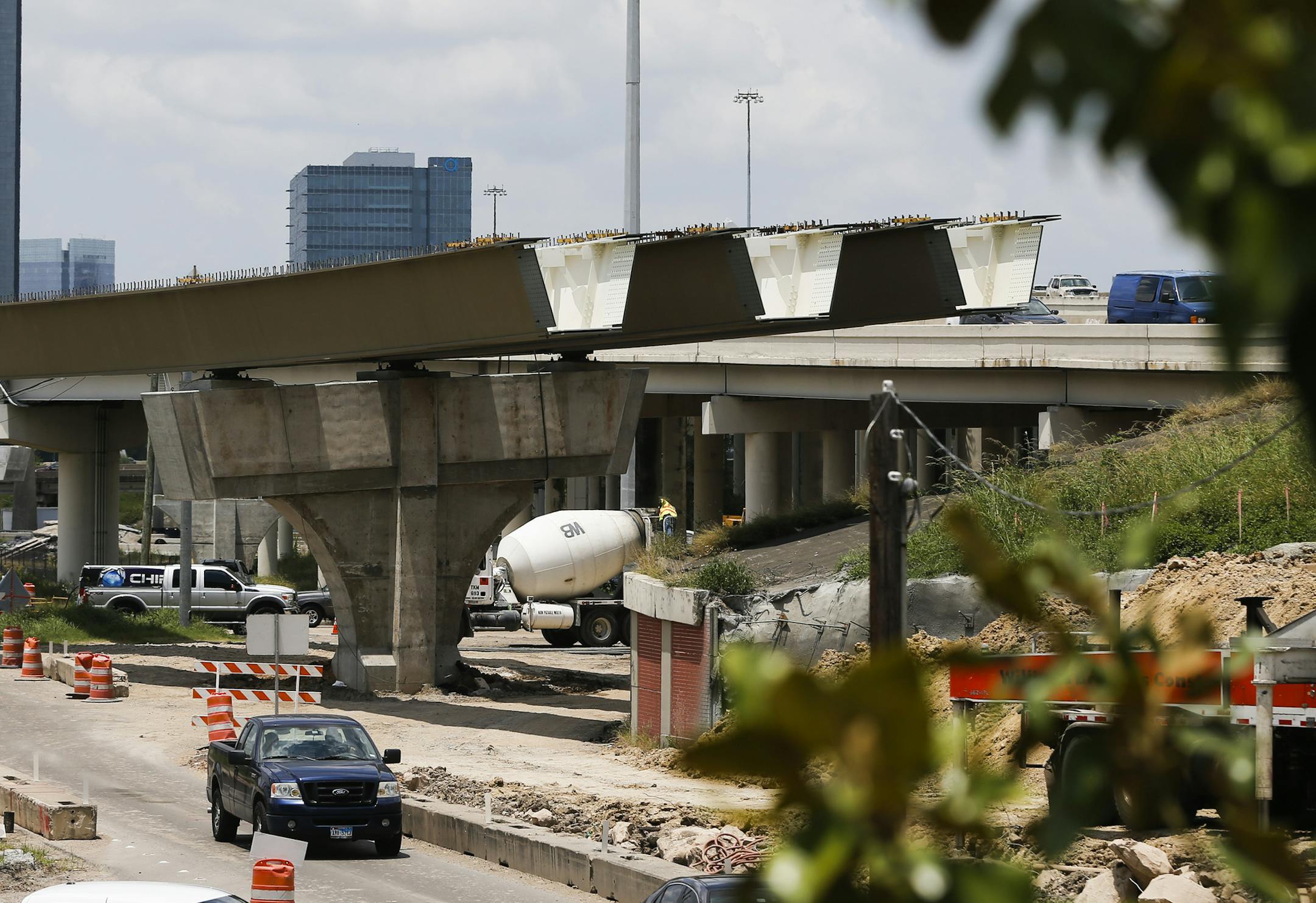
Donald Trump did many bad things as president, but he deserves a smidgen of credit for what he didn't do: go on an infrastructure spending binge. He vowed that under him, our roads, bridges and waterways would be "the envy of the world." He said that in 2016 and was still saying it in 2020. But his main achievement was to make "infrastructure week" a source of hilarity.
Now President Joe Biden is hoping to do what Trump didn't do, and he has support from such divergent groups as the AFL-CIO and the U.S. Chamber of Commerce. During his campaign, he made gaudy promises to "transform" our transportation networks, "revolutionize" railroads and urban transit, and upgrade water systems, broadband, bike lanes, home weatherization and just about anything else you could think of. Biden could make the Pledge of Allegiance an infrastructure issue.
His price tag for all this? Two trillion dollars. His plan to pay for it? Unspecified. The White House has indicated a preference for tax increases on the wealthy and corporations. When asked recently how she and her fellow Republicans would react to that idea, Sen. Susan Collins reportedly "burst out laughing."
But even if there were a good way to finance all this spending, there may not be good enough reasons. The need for a massive program has been greatly exaggerated, and so has the likely payoff.
We are told that our highways and bridges are falling apart from lack of investment and that upgrading them will not only create jobs but also boost our economic productivity. But the Reason Foundation, which issues a detailed report each year on the nation's highways, found that the percentage of urban interstates rated in poor condition was lower in 2018 than a decade earlier. Likewise with rural interstates. For other major rural highways, just 1.23% were in bad shape in 2018.
The foundation's most recent report found that "the general quality and safety of the nation's highways has incrementally improved as spending on state-owned roads increased by 9 percent, up to $151.8 billion" compared with the previous year.
Bridges? Notes Brown University economist Matthew A. Turner in the Milken Institute Review, "There were more bridges in good condition and fewer crumbling bridges in 2017 than in 1992." Mass transit? The average age of public transit buses has declined during that period. "All told," writes Turner, "investment in the interstate, in bridges and in public transit buses has matched or exceeded depreciation over the past generation."
As with most things that require money, infrastructure projects are subject to the law of diminishing returns. "Countries with undeveloped infrastructure are likely to benefit from a relatively high level of investment," said a 2018 report by the nonpartisan Congressional Research Service. "Countries with well-developed infrastructure, like the United States, are likely to benefit much less from a disproportionately large investment."


