

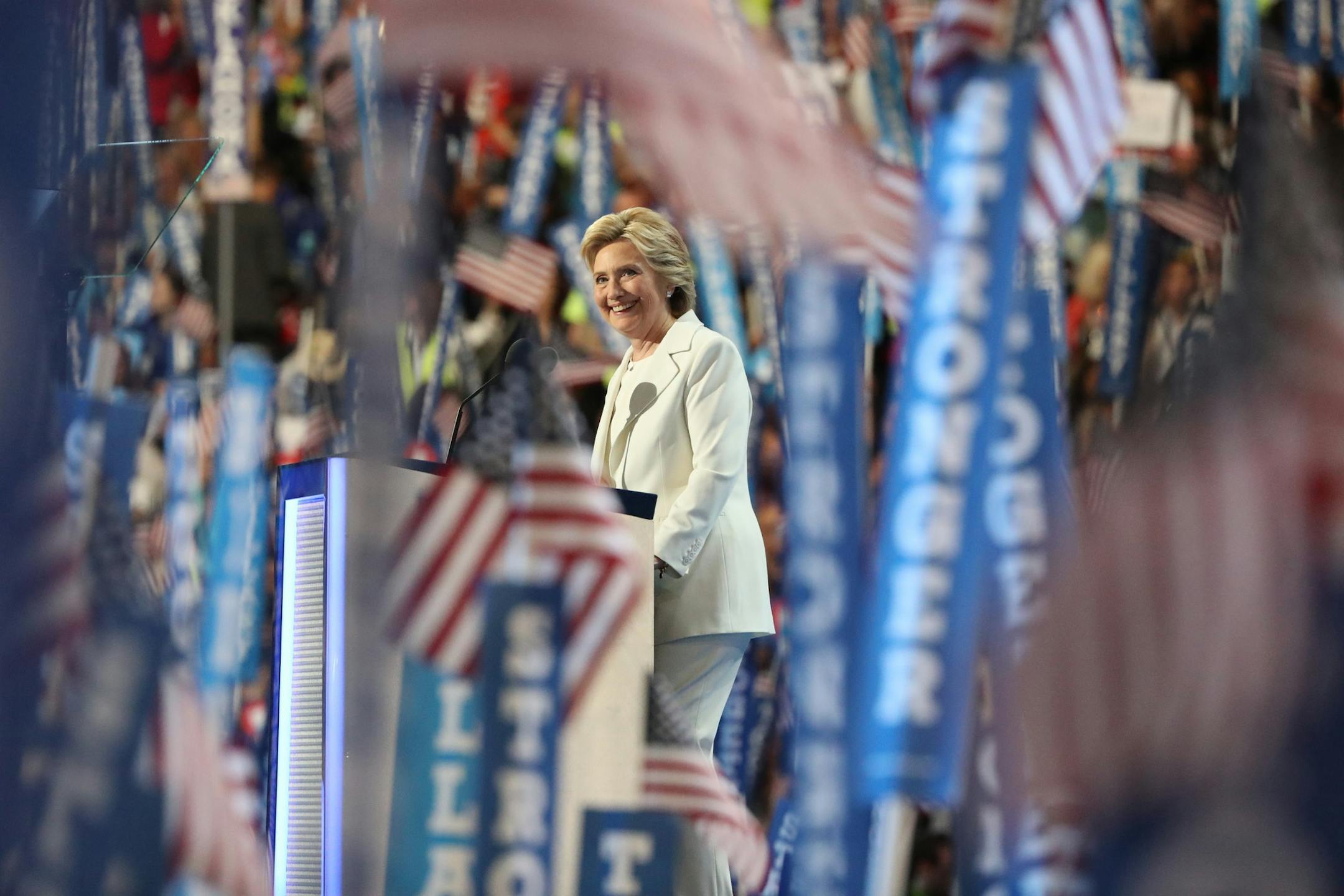
Hillary Clinton fulfilled the ambitions and dreams of generations of women on Thursday night when she became the first woman to accept a major-party nomination for president of the United States. It is a moment that marks a welcome milestone in this country, whatever the outcome in November.
Clinton's speech was a reflection of her: direct, to the point, a summation of the challenges she's tackled over a lifetime. The details must come, but Clinton hit on the issues most concerning to Americans: better jobs, more opportunity, a focus on terrorism, along with a vow to make Wall Street and 1-percenters "pay their fair share." Indeed, the potential costs of her long list of promises are concerning.
She has set herself an enormous task — that she will somehow be able to forge bipartisan compromise to accomplish these goals. But she also deftly made the case that as a veteran of fighting for change, she could bring a lifetime of experience to the cause of changing the status quo.
"We are clear-eyed about what our country is up against, but we are not afraid," she said.
Clinton did something shrewd in this convention. She relied on others to tell her story — to show the deep connections and lasting relationships she has forged over a lifetime of public service. She did much to reintroduce herself to the American public by turning the convention into a remarkable display of the nation's rich diversity, and an open embrace of patriotism, veterans, fallen police officers, Black Lives Matter, immigrants, and a spirit of can-do optimism sorely missing from last week's Republican gathering.
She hit rival Donald Trump where he is most vulnerable — the idea that a billionaire with a string of bankruptcies and a record of naked self-interest could be an authentic champion of working-class Americans. Trump's election-year conversion to populism would be more believable had he had not spent much of this year alienating key segments of America's working class: blacks, Hispanics, immigrants and women.
Clinton's challenge will be to deliver on a new kind of Democratic politics, one that goes beyond the old coalition of special interests to the buoyant vision of America outlined Wednesday night by President Obama, one bound by common values and a bedrock faith in self-governance. In her speech, she rightly acknowledged the suffering that has many voters disillusioned with establishment politics and the genuine fear rooted in the growing pace of terrorist attacks here and abroad.
After more than a quarter-century on the national stage, Clinton will be hard-pressed to prove that she can, indeed, shake up the status quo and take on entrenched interests — a clear priority for many voters. Her most daunting obstacle will be a trust deficit that continues to dog her.


