

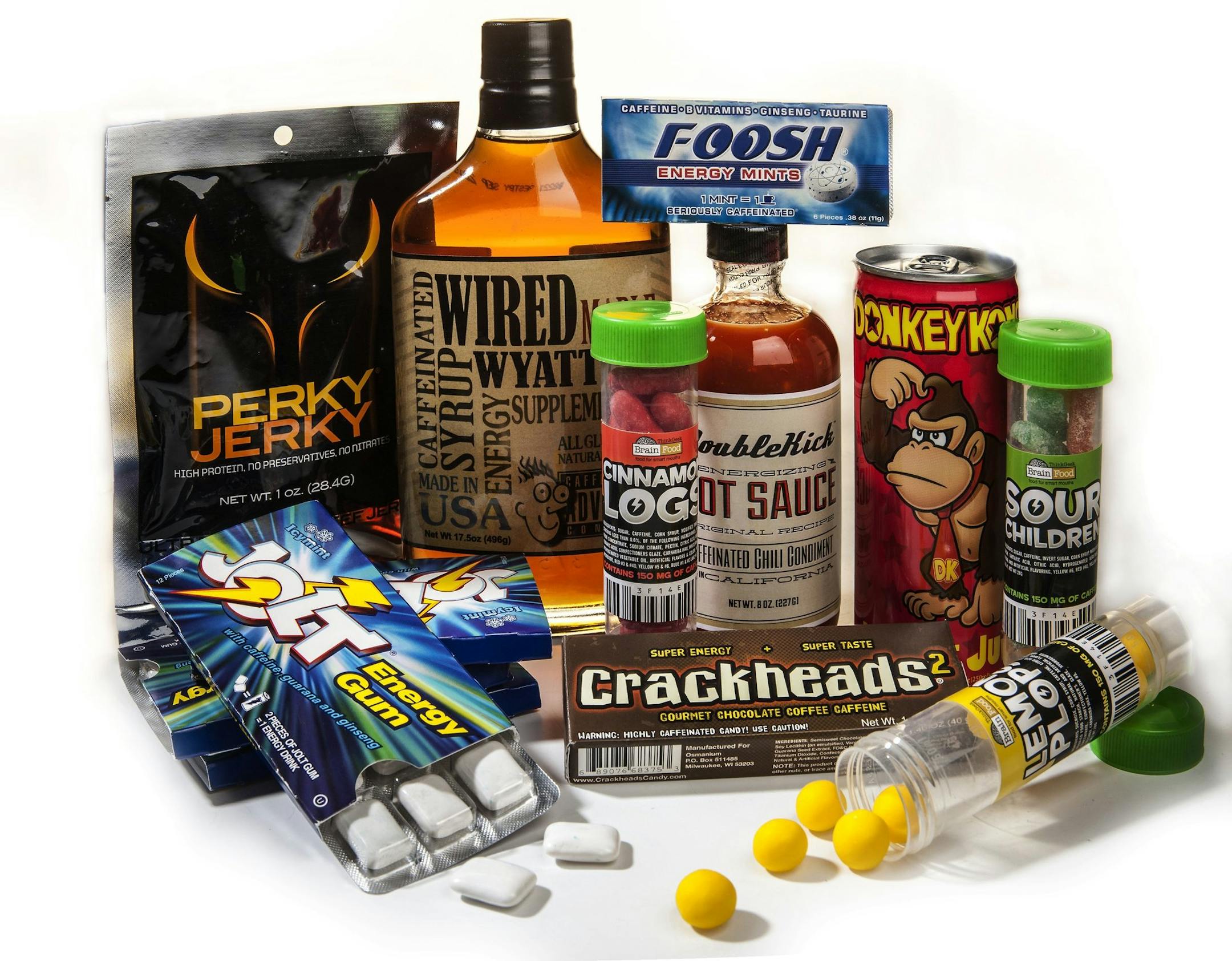
Caffeine-infused waffles and maple syrup are being promoted as energizing alternatives to a morning mug of coffee.
But the recent craze of adding caffeine to a range of kid-friendly snack foods — including popcorn, chewing gum, candy bars, mints, Cracker Jack, jelly beans and ice cream — is raising enough concern that the U.S. Food and Drug Administration (FDA) has launched an investigation of caffeine's possible health effects on children and adolescents.
The effort, which comes amid the heated debate over whether energy drinks with stimulants are safe for children, marks the agency's first close look at the world's most popular psychoactive drug since its use in cola was approved in the 1950s.
Most healthy adults can safely tolerate moderate doses of 200 to 300 milligrams, which is about two to four cups of brewed coffee, the National Institutes of Health said. But the United States lacks official guidelines or limits for children, whose smaller bodies and developing brains may be more vulnerable to caffeine's effects, including the risk of physical dependence and addiction.
Part of what worries the FDA is the changing nature of how caffeine is delivered — through a greater array of products that may appeal to younger consumers and in higher doses than in the past.
Chewing a pack of Jolt Energy Gum, for example, would have effects similar to downing six energy drinks, according to the package.
"It's a question of finding caffeine in new and different places," said Michael Taylor, the FDA's deputy commissioner for food. "There are concerns over the perhaps subtle developmental impacts on kids and whether they become regular users of a central nervous system stimulant. What are the cumulative effects?"
Meanwhile, parents can't necessarily tell how much caffeine kids are getting. Caffeine levels aren't required to be disclosed on food labels, and if the caffeine occurs naturally — as in tea or cocoa — it isn't listed among the ingredients. In the case of energy drinks, many are sold as dietary supplements and don't have to disclose caffeine levels if the ingredient is part of a "proprietary blend."


