

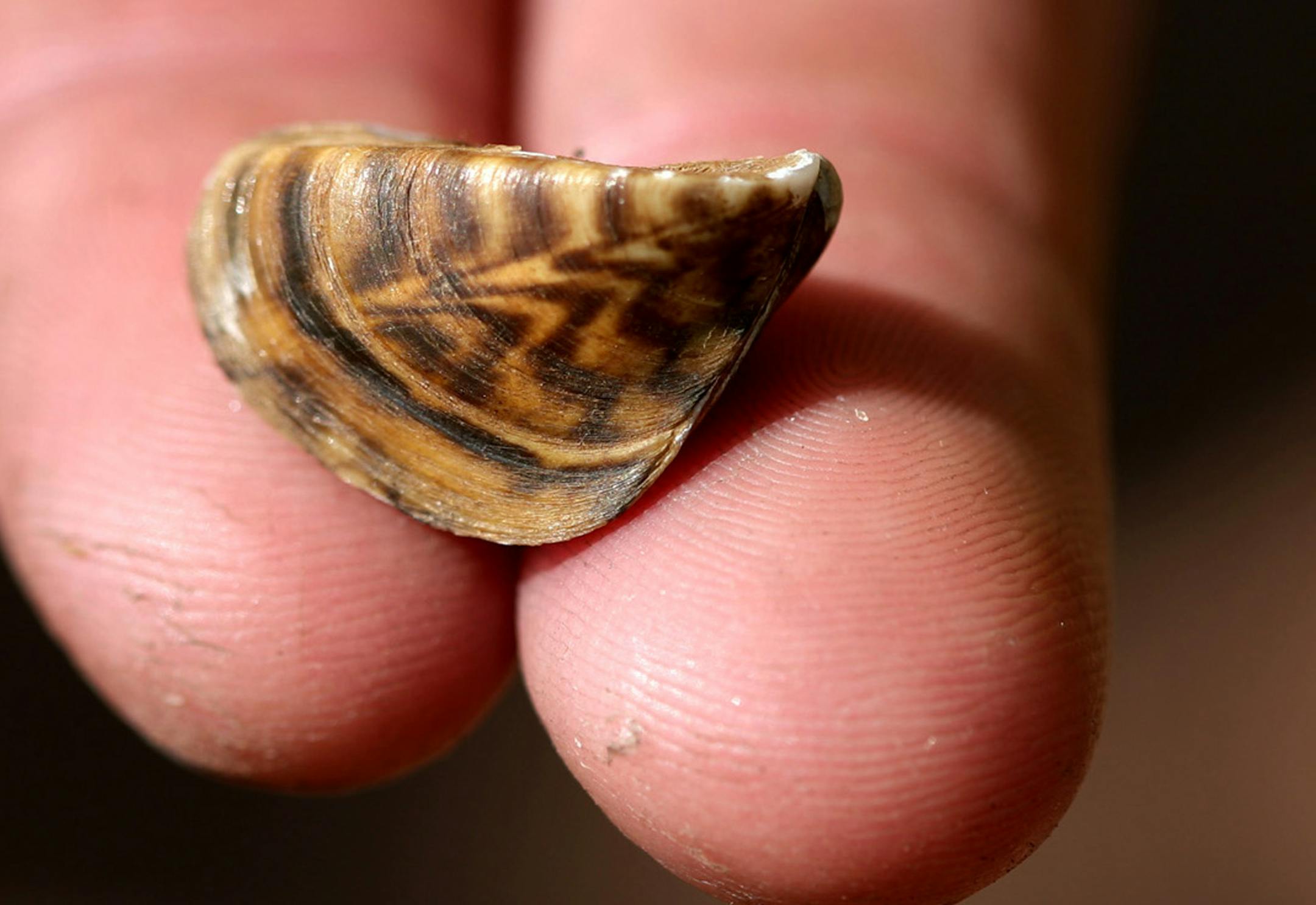
In a blow to state fisheries that some saw as inevitable, zebra mussels have been found in Cass Lake, a popular fishing and boating destination and one of the state's largest lakes. The find was reported to state Department of Natural Resources officials by a beachgoer who had been picking shells earlier this week along Cedar Island, one of the lake's five islands.
The suspected mussels were tested and verified at a DNR fisheries office in Bemidji. The find marks the first time that adult zebra mussels have been found in the Bemidji area.
"We were not dramatically surprised, but we are disappointed," said Henry Drewes, DNR regional fisheries manager in Bemidji.
The find means Cass Lake will now be designated as infested with zebra mussels, as will eight connected lakes, including Buck, Andrusia, Wolf, Pug Hole, Kitchi, Little Rice and Big Rice lakes and Pike Bay.
The zebra mussel is native to the Black Sea area in Europe but was discovered in the Great Lakes watershed in 1988, likely spreading to the United States in ship ballast water, said Nicole Kovar, DNR northwest region invasive species specialist. The mussels have since moved across the Upper Midwest, most often hitching rides on trailered boats pulled from an infested lake and launched into an uninfested area. The mussels were discovered in Mille Lacs in 2005. The DNR found zebra mussel larva in Lake Winnibigoshish last year.
The mussel reproduces quickly, with females releasing up to a million eggs a season. It feeds on plankton it filters out of the water, competing for food with native species. Unlike native mussels that burrow in the ground, the zebra mussel attaches to docks and pipes, sometimes clogging water intakes. Its sharp-edged shell can be an unpleasant surprise for someone brushing up against a dock or walking barefoot on a beach littered with the mussel shells.
After the initial discovery this week, DNR staff searched along Cedar Island and found zebra mussels in a variety of sizes, meaning they're reproducing, Kovar said. The larva can float for three to five weeks before they settle and grow a shell, making it difficult to stop the mussel from spreading throughout the lake and connected waterways. There's no effective treatment to stop the spread other than to encourage boaters and others who use the lake to clean off and dry their boats before moving them to another location.
"You need to be that much more diligent," Kovar said.


