

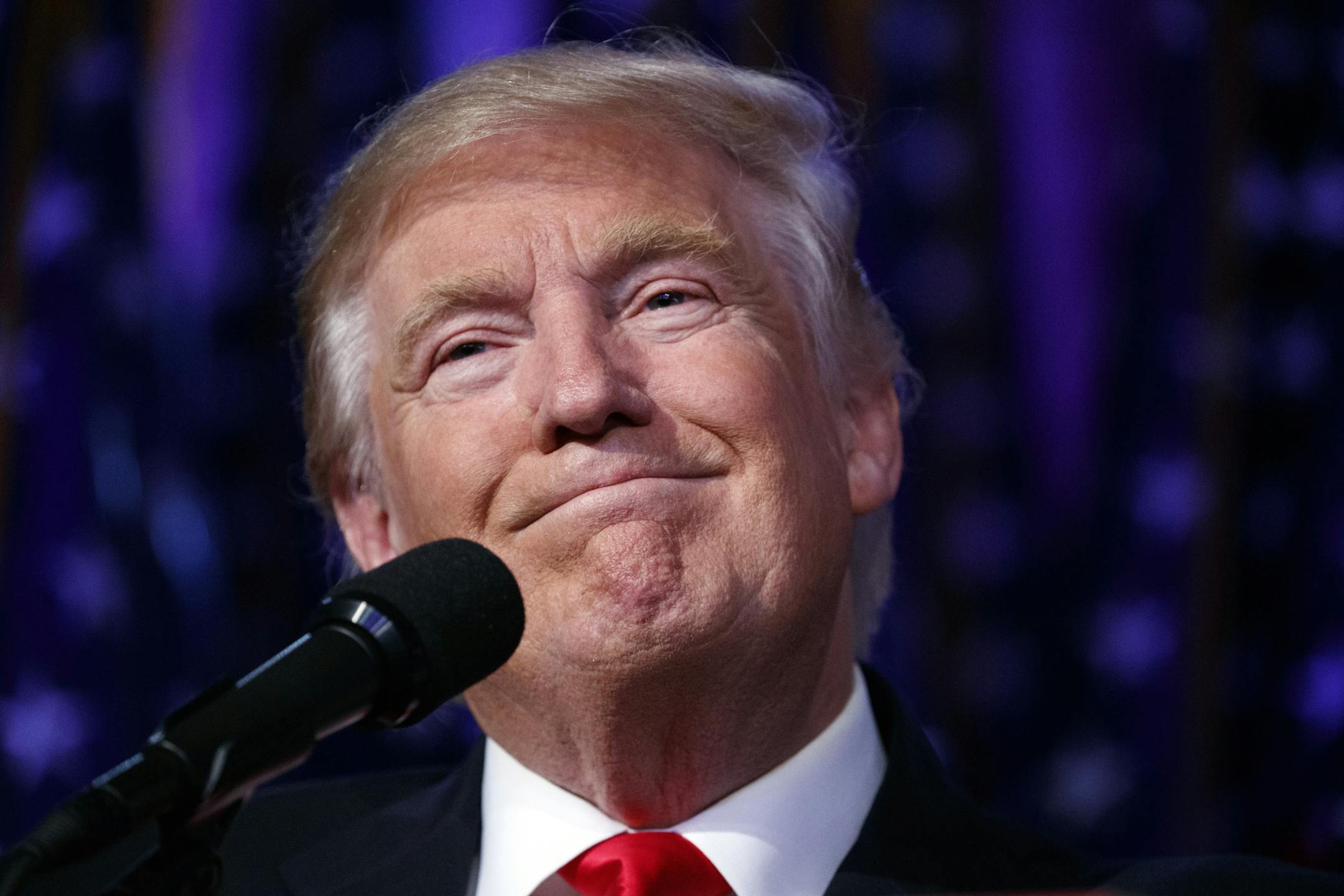
The New York Times announced Wednesday — it was the paper's top story, above the fold — that Donald Trump is unpopular. The Times' news coverage and editorial page have castigated and second-guessed virtually everything the president-elect has said or done, so the story reads more like an after-action review than a news item. But fair enough. Polls conducted by several different organizations really do place Trump's approval ratings in the low-to-mid-40s.
Why is this, according to the Times report?
"Where other presidents used the weeks before their inauguration to put the animosities of the campaign behind them and to try to knit the country together again, Mr. Trump has approached the interregnum as if he were a television wrestling star. He has taken on a civil rights icon, a Hollywood actress, intelligence agencies, defense contractors, European leaders and President Obama. The healing theme common at this stage in the four-year presidential cycle is absent."
I'm not sure I need reporters to supply madcap similes to help me understand the situation they're describing, and that phrasal verb "taken on" sounds a little weaselly to me; the president-elect "took on" John Lewis and Meryl Streep because they "took on" him. Still, it's true that Trump hasn't indulged in the usual rhetoric of unity and healing. He hasn't pretended he could "knit the country together," as the Times reporter put it.
And what a relief that has been.
The healing theme would have sounded comically false from Donald Trump, for one thing. He is an adversarial candidate and an adversarial personality; his aims are disruptive and negative.
There's something intrinsically false about the rhetoric of healing and unity, no matter who it comes from. A friend of mine, a professor of English with left-of-center tendencies in politics, likes to say that "the rhetoric of consensus is always coercive." Any time you talk about what "we" believe as Americans — what "this country" was founded on, who "we are" as a nation — you're forcing a certain kind of unity that many of your listeners, maybe most of them, are excluded from. The rhetoric of consensus may be appropriate on occasions of high ceremony — an inauguration, a State of the Union address — but otherwise it sounds false and cheap to everybody but the winners. It may turn out to be one of the happier unintended consequences of Trump's election that we won't hear very much of it for the next four years.
Now that I reflect on it, there is something brutally, refreshingly realistic about Trump's manner, or about the whole Trump persona. He is a deeply flawed man, but he doesn't try very hard to pretend otherwise. Even his most enthusiastic supporters, or many of the ones I've talked to, are happy to acknowledge Trump's failings. They may argue about which traits are failings and which are mere foibles hyped by his critics, but they did not vote for him because they thought him scrupulously honest or because they believed his character to be unimpeachable. Indeed, there must be very few people on either side who believe Trump to be a thoroughly good man. Effective in his way, maybe. Capable of disrupting what ought to be disrupted, almost certainly. But good?


