

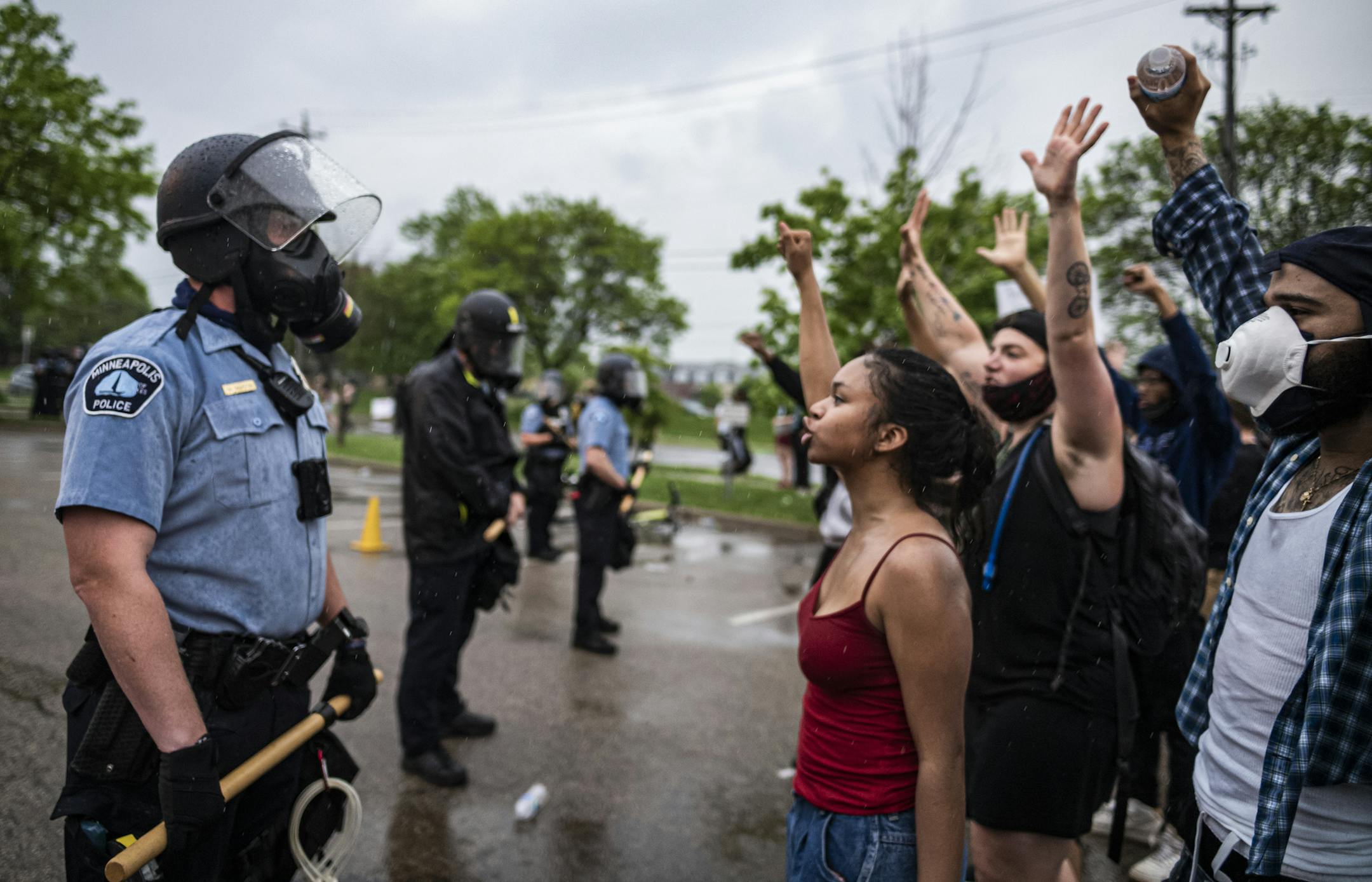
In the wake of horrible killings like that of George Floyd, activists and academics decry police violence against black males. For my fellow social scientists and others on the left, it is an article of faith that in Trump's America, police have declared war on African-Americans.
On the right, conservatives and Trump backers generally reject any criticism of police.
Virtue signaling from the left and right is emotionally and politically rewarding. For professors it can even get you a grant. Yet political posturing ignores facts, and does nothing to make things better.
If we want to stop yelling at each other and improve policing, here are four things to consider:
First, we know less than we think. As Franklin Zimring writes in "When Police Kill," police use of lethal force takes more than 10 times as many lives as legal executions. Yet while considerable scholarship studies the death penalty, there is "an almost complete lack of recent ... research on police killings and ... policy analysis about how different rules might influence the level of violence by police."
This represents a horrendous failing — on the part of police, but also on the part of my fellow professors, who are too busy chasing grants, tenure and politically correct fantasies to solve actual social problems.
Until recently, we could not even estimate how many civilians were killed by cops. As then-FBI Director James Comey complained after civil unrest in Ferguson, Mo., his agency had no idea whether police in Ferguson "shot one person a week, one a year, or one a century."
Second, police violence was almost certainly far more common in the past. In my hometown, Baltimore, within living memory, cops routinely shot African-Americans needlessly and got away with it, as Howell Baum notes in "Brown in Baltimore." New York was no better. In "Beat Cop to Top Cop," police veteran John Timoney recalls that back in the early 1970s, the NYPD killed up to 100 civilians annually, many without cause and most of them black. A few trigger-happy cops did most of the shooting.


