

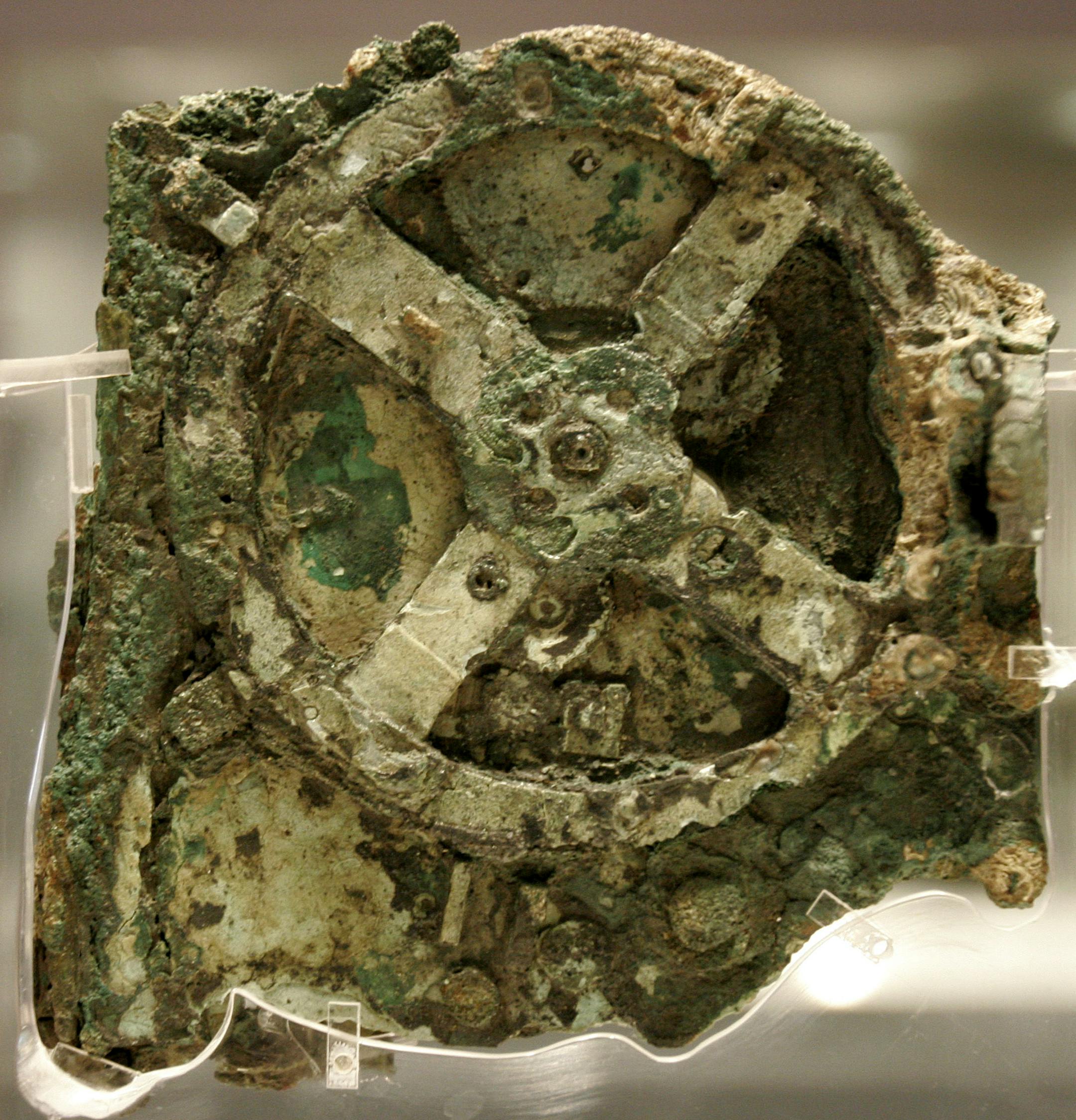
The shoebox-size chunk of bronze didn't attract much attention when divers retrieved it from an ancient shipwreck off the Greek island of Antikythera in 1901. Archaeologists had their hands full with far more impressive finds, including life-size statues of warriors and horses, delicate glass bowls and scores of ceramic vessels called amphorae.
Decades would pass before scientists realized that the nondescript bronze — now called the Antikythera Mechanism — was the biggest treasure of all.
The device consisted of a series of intricate, interlocking gears designed to predict eclipses and calculate the positions of the sun, moon and planets as they swept across the of the sky.
The machine exhibited a level of technological sophistication no one dreamed was possible when it was built, at least 2,000 years ago. Europe produced nothing to equal it until the geared clocks of the Medieval period, more than a thousand years later. Some scholars describe the Antikythera Mechanism as the world's first analog computer.
"The amazing thing is the mechanical engineering aspect," said James Evans, a physicist and science historian at the University of Puget Sound in Tacoma, Wash. He is part of an international group working to crack the puzzle of the device's origins and purpose. Evans recently added a new twist with an analysis that suggests it dates to 205 B.C. — as much as a century earlier than previously believed.
If he's right, it is more likely that the Antikythera Mechanism was inspired by the work of the legendary Greek mathematician Archimedes. It would also mean the device was built at time when scientific traditions from multiple cultures were coming together to create a new view of the cosmos. "Pushing the date back is exciting," Evans said. "We think it would be highly significant because it could change the picture of the development of Greek astronomy."
Scientists think the ship was a merchant vessel that foundered around 60 B.C.
Archaeologists eventually identified more than 80 corroded fragments believed to be part of the Antikythera Mechanism, including the shoebox-size piece with dials and gears clearly visible on the surface.


