
Volunteer tinkerers are the spark behind fix-it clinics

More than 700 people have brought in broken lamps, toasters and small appliances for a quick fix at Hennepin County's free repair clinics.

February 18, 2014 at 7:08PM
Several volunteers work on fixing a patron's broken lamp at the Fix It Clinic at the Bakken Museum in Minneapolis on January 11, 2014. ] Photo by Leslie Plesser / Star Tribune
Volunteer fixers Paul Dingels, left, and John Barron worked on a broken lamp at a Fix-it Clinic in January at the Bakken Museum in Minneapolis. (The Minnesota Star Tribune)

Are you not so handy? Does your technical know-how end at "righty tighty, lefty Lucy"?

During your save-it-or-scrap-it spring cleaning sort, folks at Hennepin County suggest you make a third pile: fix it.

You can join hundreds of others and take those broken lamps, toasters and other small appliances to a Hennepin County Fix-it Clinic.

The free monthly events connect volunteer tinkerers with local residents who have broken items in need of a quick fix.

The clinics started in fall 2012 and have a growing following. During 2013, their first full year of operation, more than 700 people stopped in. Items range from the pedestrian — broken mixers, fans and vacuums — to the more eclectic, including cuckoo clocks and antique radios.

While some repairs require specialized tools — to pry open a malfunctioning iPod Nano, for example — others, such as a cracked antique or a torn dress, just take a little glue or thread and some know-how.

"We do a lot of gluing of things," said Nancy Lo, a waste reduction and recycle specialist with Hennepin County Department of Environmental Services.

The clinics are held at different locations around the county each month. More than 70 people lined up at this month's clinic at Arc's Value Village in New Hope. Spring clinics are planned in Minneapolis and Osseo.
This isn't a drop-off program. Residents who bring in items for repair collaborate with the volunteer Fix-it crew.

"The ultimate goal is to reduce waste and to have people learn how to fix their own belongings," Lo said. "Volunteers show the residents how to fix their own things. They hand them the screwdriver and they are actively expected to participate in the dismantling, diagnosis and the possible fix. People have a lot of fun."

Saving money motivates some to bring in their items. Often, however, sentimental attachment or an environmentally driven sense of right and wrong is what prompts participation.

"Their reasoning is it's the right thing to do. They say, 'It would be a shame to just throw this out,' " said volunteer fixer John Barron.

Being free, the clinics also help fill that niche where an item seems too good to toss, but too expensive to fix.

Genesis of a tinkerer

Like many of the volunteers, Barron started tinkering as a child.

He remembers taking apart neighbors' old lawn mowers starting around age 10. He didn't learn how to put them back together until he was 14. Hearing the roar of the lawn mower he'd just repaired was a high. The thrill of making something work is still there 40 years later.

He said friends ask him: "Why would you eat up the juiciest part of a Saturday once a month to do this?"

"I love doing it. I get into a zone when I fix. Time sort of stands still. I am singularly focused, " said Barron, who is retired from the printing business and started a part-time handyman business at http://tinyurl.com/mgsuyxb. "I know there is a huge prize at the end. God willing, it will be a fixed device."

Barron, of Minneapolis, said some fixes take 3/10 of a second (the cord wasn't plugged in all the way). Others take a box of tools and years of experience. He said he often replaces faulty cords and blown fuses.

He enjoys the teaching aspect of the job. Some folks start from scratch learning the difference between a flathead and a Phillips head screwdriver.

Dan Patton is also a veteran volunteer who started tinkering as a boy. Now a finance guy by day, Patton said he relishes the tangible results of fixing a broken coffee pot or lamp. He especially enjoys when curious children would like to help. It's the perfect opportunity to learn.

"It's already broken. You can't make it worse," reasoned Patton, of Minneapolis.

After several minutes of diagnosis and repair, there's nothing better than to see a light bulb go on.

"It really is fulfilling," he said.

Shannon Prather • 612-673-4804


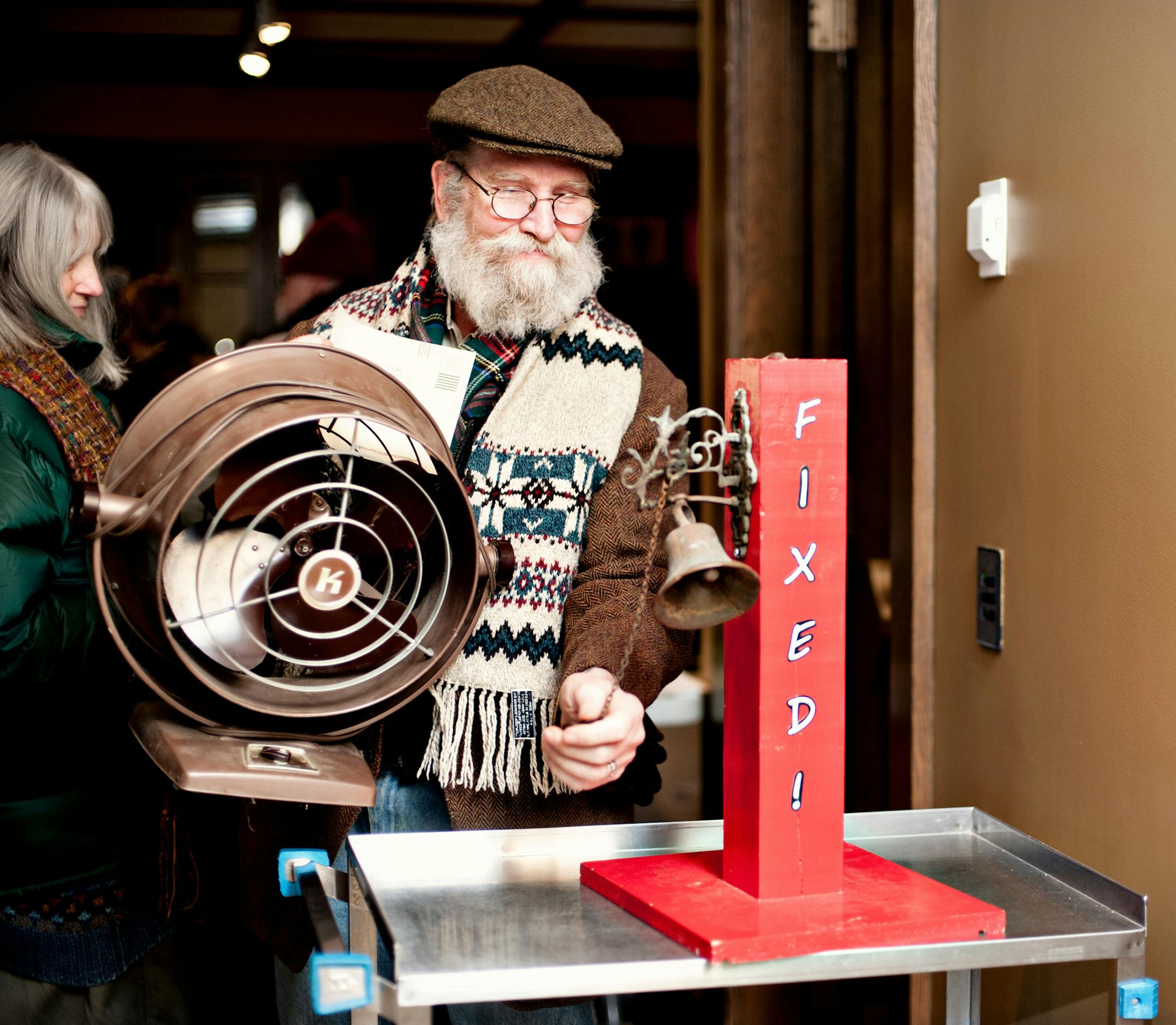
A patron leaves The Fix It Clinic at the Bakken Museum with his newly repared fan, ringing the "fixed" bell as he exits. Photo by Leslie Plesser / Star Tribune
A patron rings the “fixed” bell as he leaves the Fix-it Clinic at the Bakken Museum. (The Minnesota Star Tribune)
about the writer

about the writer

Shannon Prather

Reporter

Shannon Prather covers Ramsey County for the Star Tribune. Previously, she covered philanthropy and nonprofits. Prather has two decades of experience reporting for newspapers in Minnesota, California, Idaho, Wisconsin and North Dakota. She has covered a variety of topics including the legal system, law enforcement, education, municipal government and slice-of-life community news.

See Moreicon

More from No Section

See More
FILE -- A rent deposit slot at an apartment complex in Tucker, Ga., on July 21, 2020. As an eviction crisis has seemed increasingly likely this summer, everyone in the housing market has made the same plea to Washington: Send money — lots of it — that would keep renters in their homes and landlords afloat. (Melissa Golden/The New York Times) ORG XMIT: XNYT58
Melissa Golden/The New York Times

It’s too soon to tell how much the immigration crackdown is to blame.