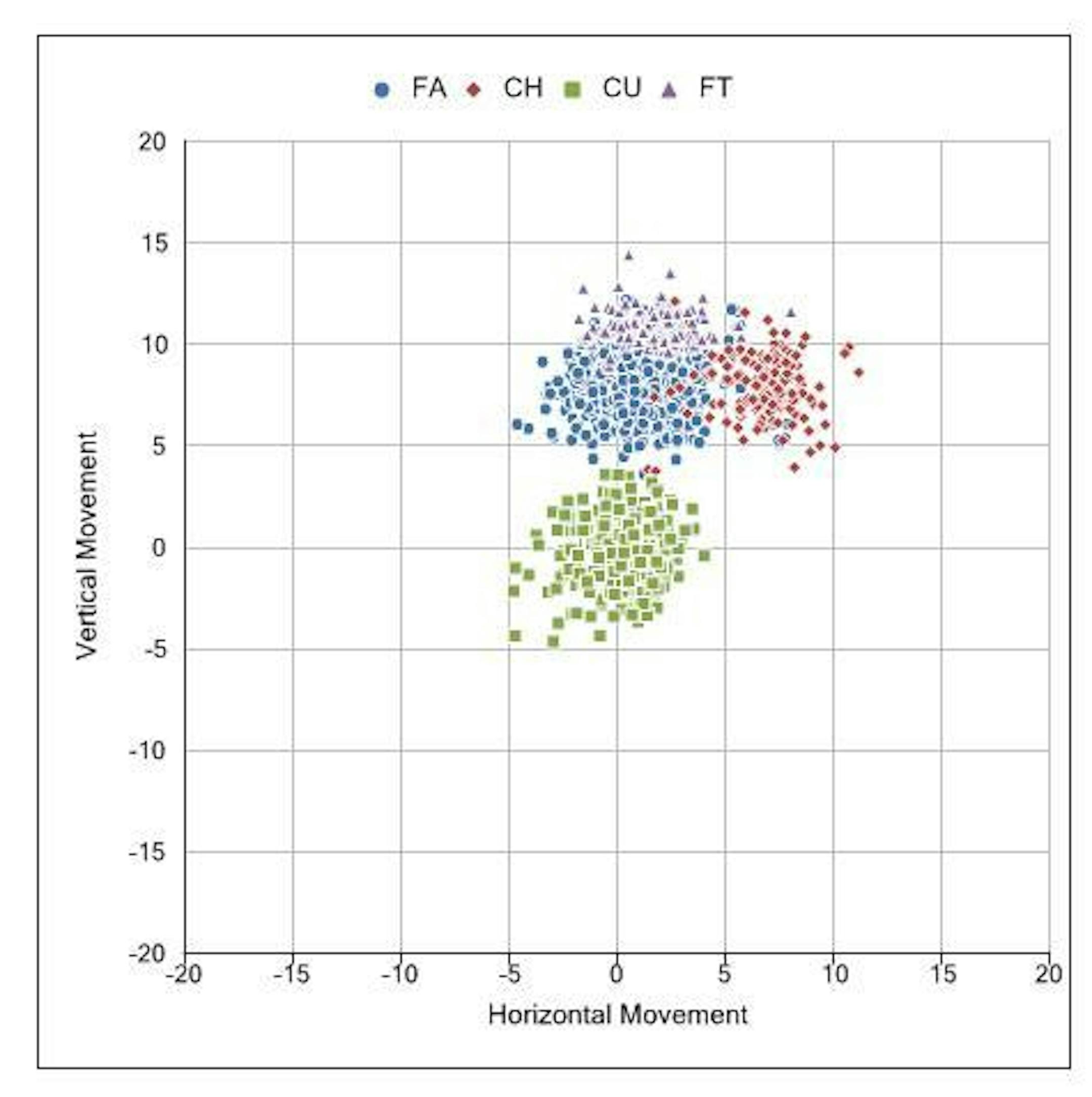

One of the biggest surprises of the Twins season has to be the performance of starter Scott Diamond. Written off by many as just another "soft tossing pitcher" in the organization, Diamond has shown mastery of the strike zone and has been getting ground outs by the barrelful. This has led to a 10-5 record and a 2.91 ERA – the sixth best in the American League.
While radar gun enthusiasts and strike out fanatics are not likely thrilled by his skill set, Diamond is proving that it is not necessary velocity that makes the pitcher. Let's examine a bit more on what has made him so successful this year.
(1) Release Point/Plane Change
Diamond's over-the-top release point gives him a very high angle. Pitch F/X, which captures the first data of atcher's pitch at 55 feet, shows that Diamond's pitches are at approximately six-feet-four inches on average – which, by comparison, is slightly higher than the taller lefty teammate Tyler Robertson. Combine that with crossing the plate at the knees or lower regularly and you have a solid recipe for grounders.
As 1500ESPN.com's Phil Mackey pointed out recently in a great piece detailing Diamond's outstanding game preparation, the majority of his misses are low. Mackey cites a stat that said just 6% of his entire offerings this season have missed the strike zone high. This downward trajectory ensures that he is changing planes and making it more difficult for hitters to do anything besides hit the top of the ball thereby inducing a high percentage of ground balls.
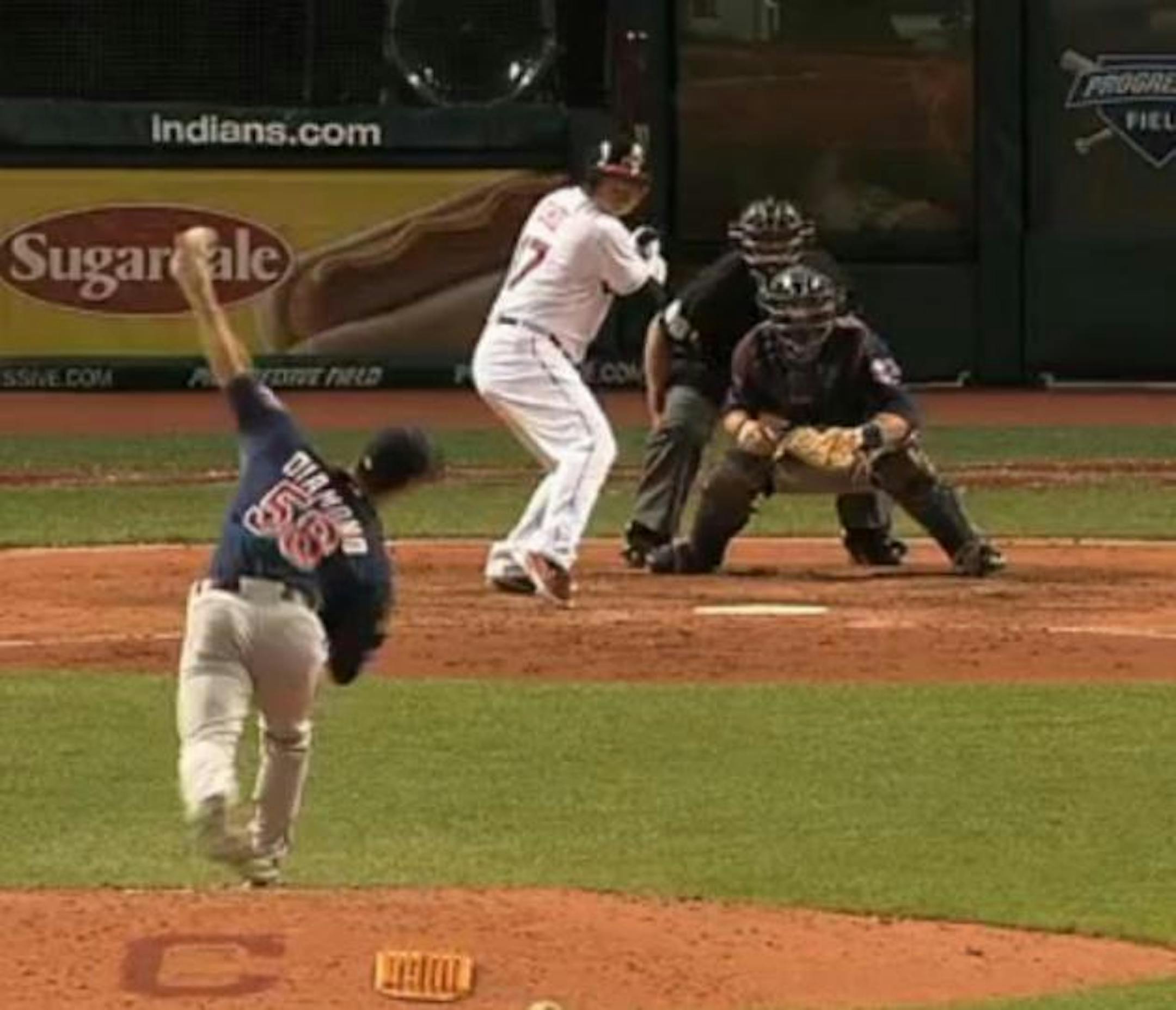
There's more than just his ability to keep the ball down in the zone that has made him effective this year. His curveball, which may be his best pitch, may be the key behind elevating his fastball from pedestrian to impressive.
(2) Noon-to-Six Curveball/Effective Velocity
His curve is released at the same point as his fastball but, unlike other pitchers' sweeping version, Diamond throws his with a 12-to-6 break (north-south movement versus the east-west type). Because the path of his curveball follows the same trajectory as his fastball before it dips – as opposed to many 11-to-4 curves which deviate off of the fastball's path sooner - hitters will have a more difficult time deciphering between the two offerings. This is what has been one of the practices of the "Effective Velocity" teachings.