

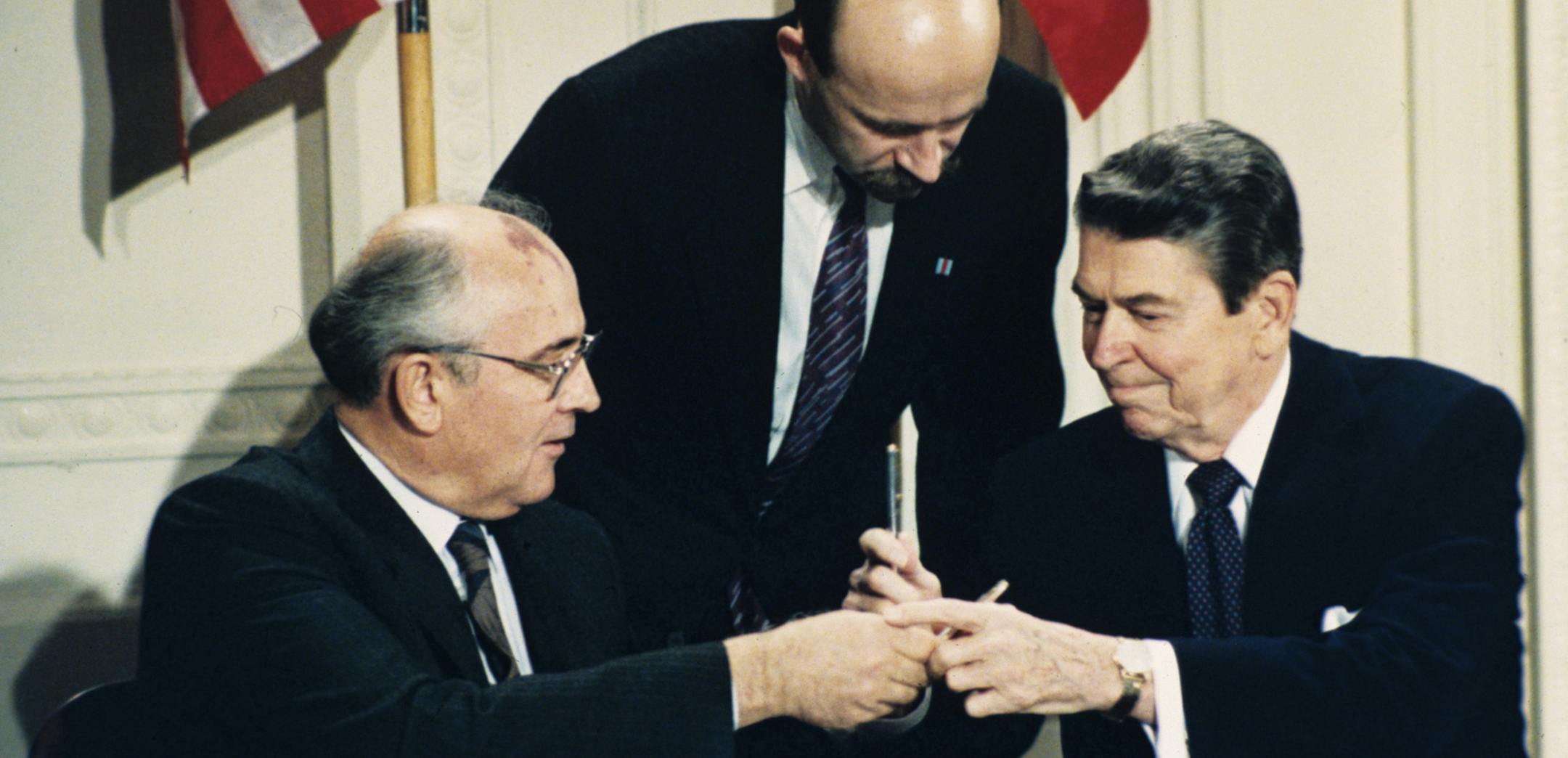
The 1987 pact, negotiated by President Ronald Reagan and his Soviet counterpart Mikhail Gorbachev, resulted in the eventual elimination of an entire class of ground-launched ballistic and cruise missiles with a range of 300 to 3,400 miles. Overall, the Soviets destroyed 1,846 missiles and the United States destroyed 846. And while the INF Treaty didn't end nuclear-weapons proliferation, the accord helped cool Cold War tensions, including differences with Western allies resistant to deploying the missiles on European soil.
Not surprisingly, today's allied leaders are alarmed over Trump's announcement, since such missiles present a more direct threat to their nations (and because many will recall how the spectre of basing U.S. missiles convulsed the continent back in the 1980s).
But they understand the context, and maybe even the motivation behind Trump's frustration with the INF Treaty. Indeed, his complaint that the Russians are cheating is legitimate. Former President Barack Obama also accused Moscow of noncompliance.
Additionally, China, which is not party to the pact, has aggressively developed this class of nuclear weapons, which make up the majority of its arsenal.
But abrogating the treaty isn't likely to solve those problems.
Rather, Russia would be able to blame the U.S. and continue proliferating apace. And what little pressure there is on China regarding nuclear arms would likely dissipate, too.
Congress might, and indeed should, balk at spending on a new arms race. And even if the U.S. chose to keep pace with Russian and Chinese proliferation, NATO nations and Asian allies like Japan and South Korea would be highly reluctant to host a new generation of land-based U.S. missiles.


