

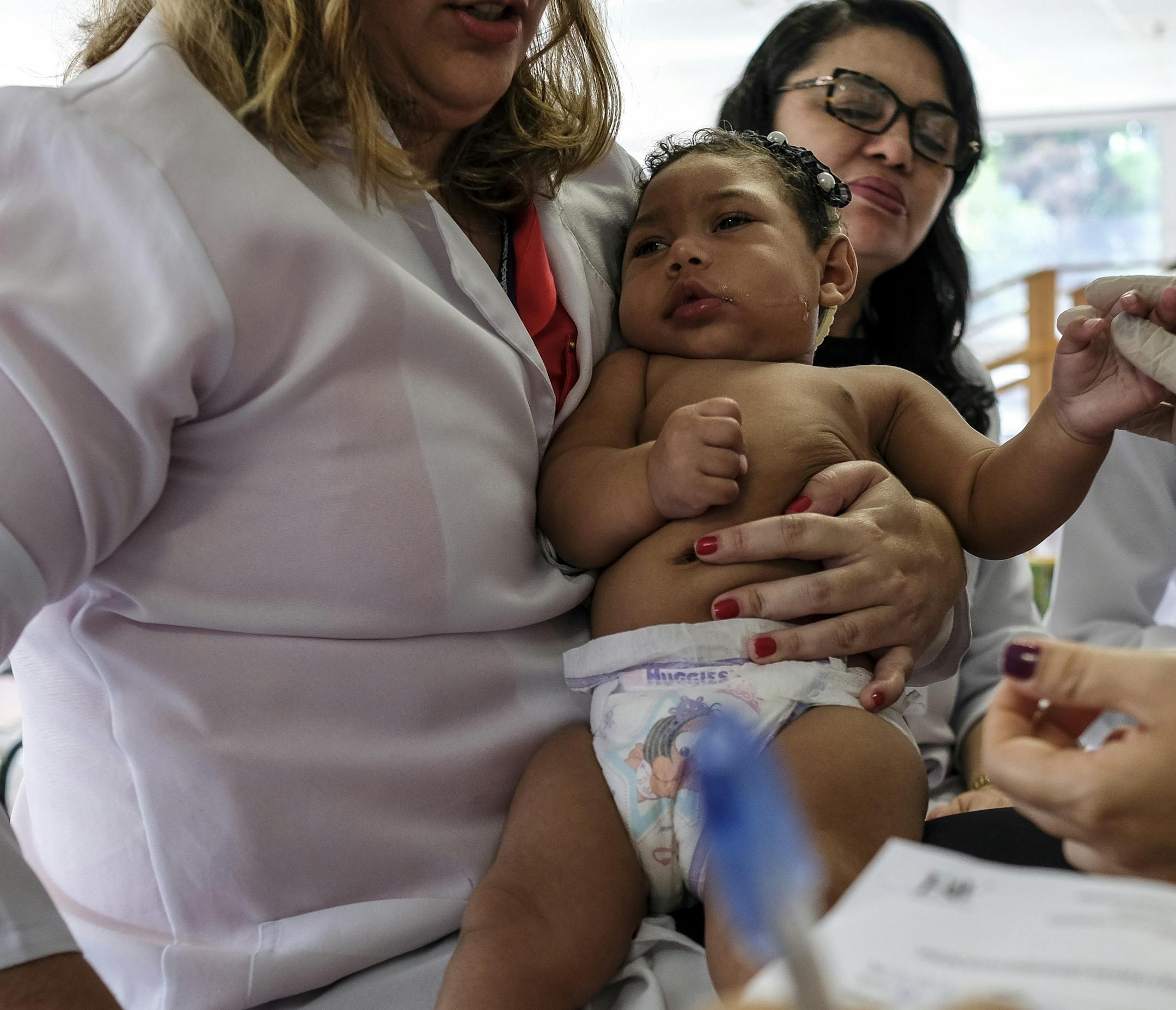
It's been more than a year since the Centers for Disease Control and Prevention issued the first warning about travel to Brazil and the Caribbean because of the Zika virus. From January to August of 2016, it dominated headlines and sent travel agents and hoteliers into a frenzy. Hotels in Zika zones saw losses of up to 30 percent.
But for the past few months, Zika has been out of sight and out of mind. Does that mean you should stop worrying about it? Probably not.
Zika was never eradicated from the 30 Caribbean islands and 18 countries in South America where it appeared last year, and the disease is now showing up everywhere from Southeast Asia to the South Pacific.
Between November and January, the CDC has logged almost 4,000 new cases of Zika in the U.S., Puerto Rico, the U.S. Virgin Islands, and American Samoa.
"The disease as we understand it now is scarier than we originally thought," said Kristin Lamoureux, associate dean of New York University's Jonathan M. Tisch Center for Hospitality and Tourism. "We know we're going to see Zika again in the spring," she said.
The good news: Miami has served as a useful case study. When the city saw its first few cases of Zika transmission last summer, the local government acted quickly, enforcing a strategy of aerial spraying, manual spraying, and local awareness that eradicated the disease. "Miami Beach is a beacon of hope that Zika can be contained," said Lamoureux.
Other locales have managed to stay free of Zika altogether. Bermuda has never appeared on the CDC travel notice list, and neither have Uruguay, Chile, and Hawaii. There's evidence that Puerto Rico has curtailed the number of cases dramatically.
Even better, according to former Food and Drug Administration chief and public health expert Dr. Jesse Goodman, nearly a dozen Zika vaccines are currently in trial phases, and at least one of them is entering early human studies. Eventually, Zika will be no different from malaria: a mosquito-borne virus that can be reliably combated whenever exposure puts you at risk.


