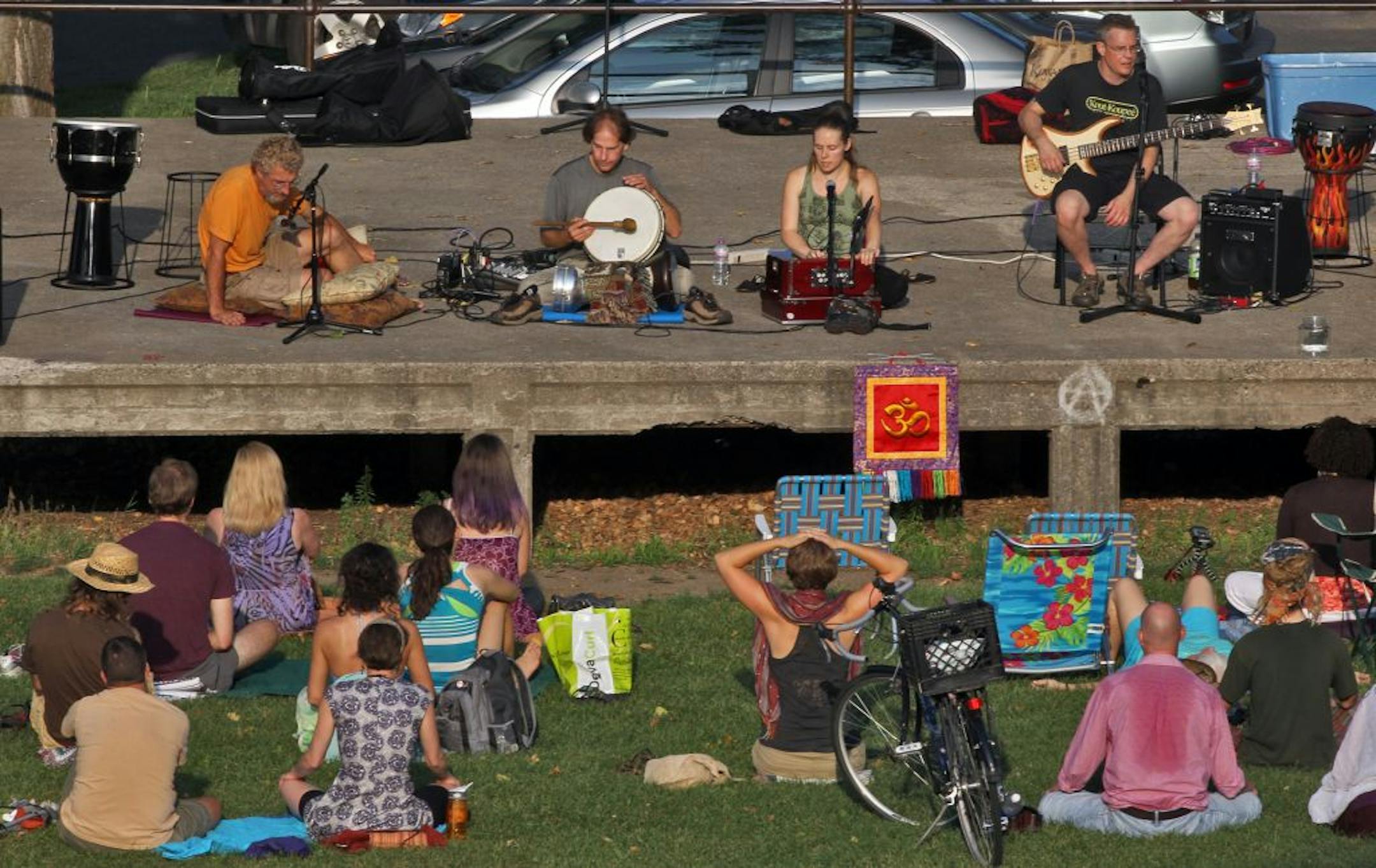
With their eyes closed, about 50 people sat on the grass in Powderhorn Park and swayed their bodies as they listened.
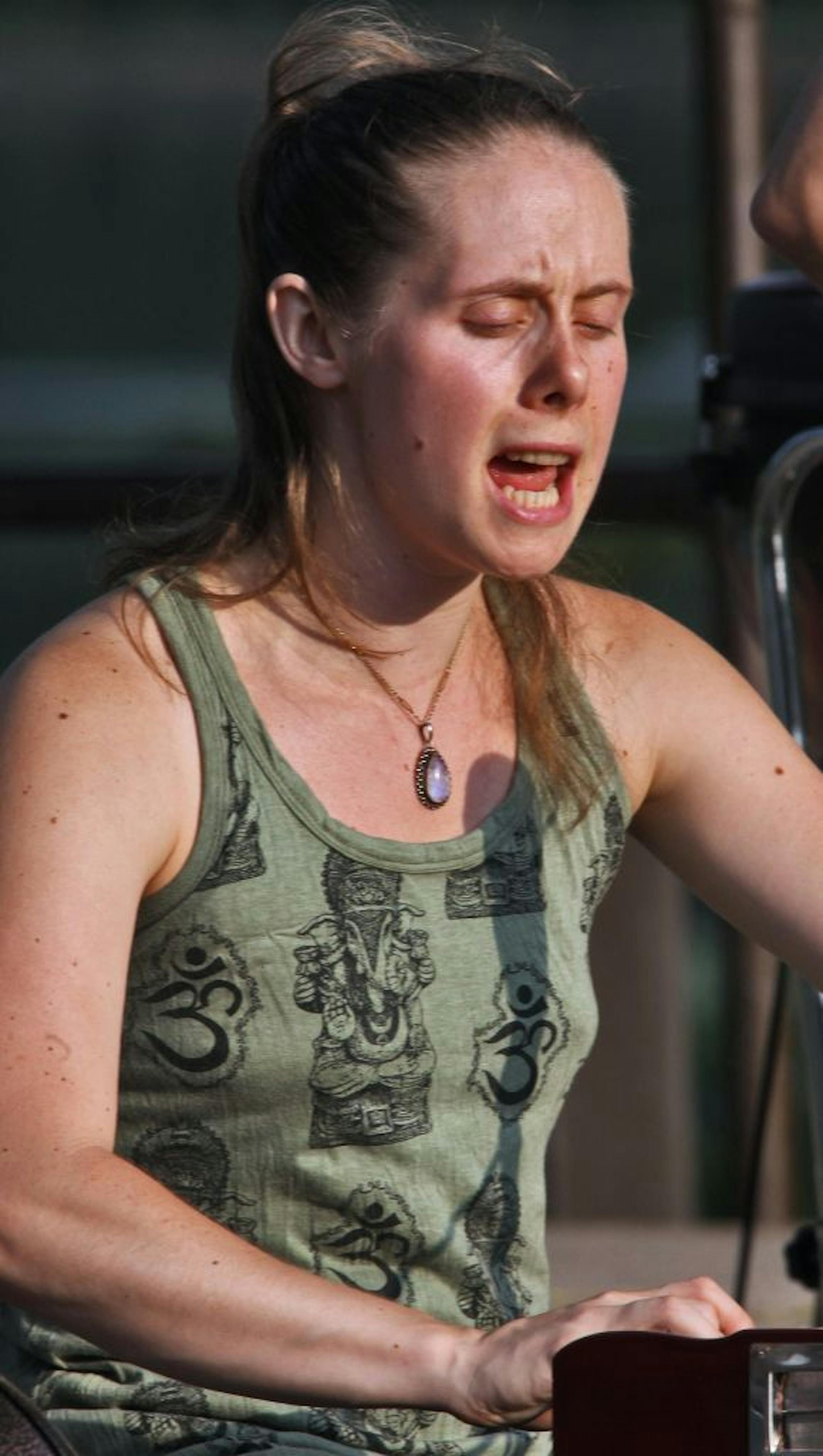
Minneapolis singer Pascale LaPoint called out to them in a clear, though untrained, voice, "Sita Ram, Sita Ram, Sita Ram, Jai Sita Ram." Her expression was calm, but there was an urgency in LaPoint's performance -- as if the words were the most important she had ever spoken.
The crowd repeated the mantra back to LaPoint in just the same melody, "Sita Ram, Sita Ram, Sita Ram, Jai Sita Ram."
They maintained this call-and-response for several minutes, gradually speeding up the tempo to a rousing finish.
The end of the chant is marked by silent contemplation. There is no clapping or talking.
The group gathered in the park was practicing the ancient art of kirtan, a spiritual concert of sorts dating to 15th-century India. Kirtan is integral to the practice of bhakti yoga where you chant or sing mantras -- words and phrases believed to have blissful transcendental effects on those who repeat them.
In the past four years or so, a few professional and amateur musicians have formed kirtan bands to lead bhakti yoga gatherings. The current Twin Cities bhakti movement started at least a decade ago when teachers introduced the practice to their fitness yoga students. Today, this spiritual method is still mostly practiced in yoga studios, but it has taken on a life of its own, creating a distinct musical scene.
"There's a hybrid musical form developing here and around the country," said David Schmit, 57, a longtime Twin Cities folk musician. "Each kirtan group is forging their own path in terms of how pure you remain to the original [Indian] tradition and how you adapt it to the American context."