

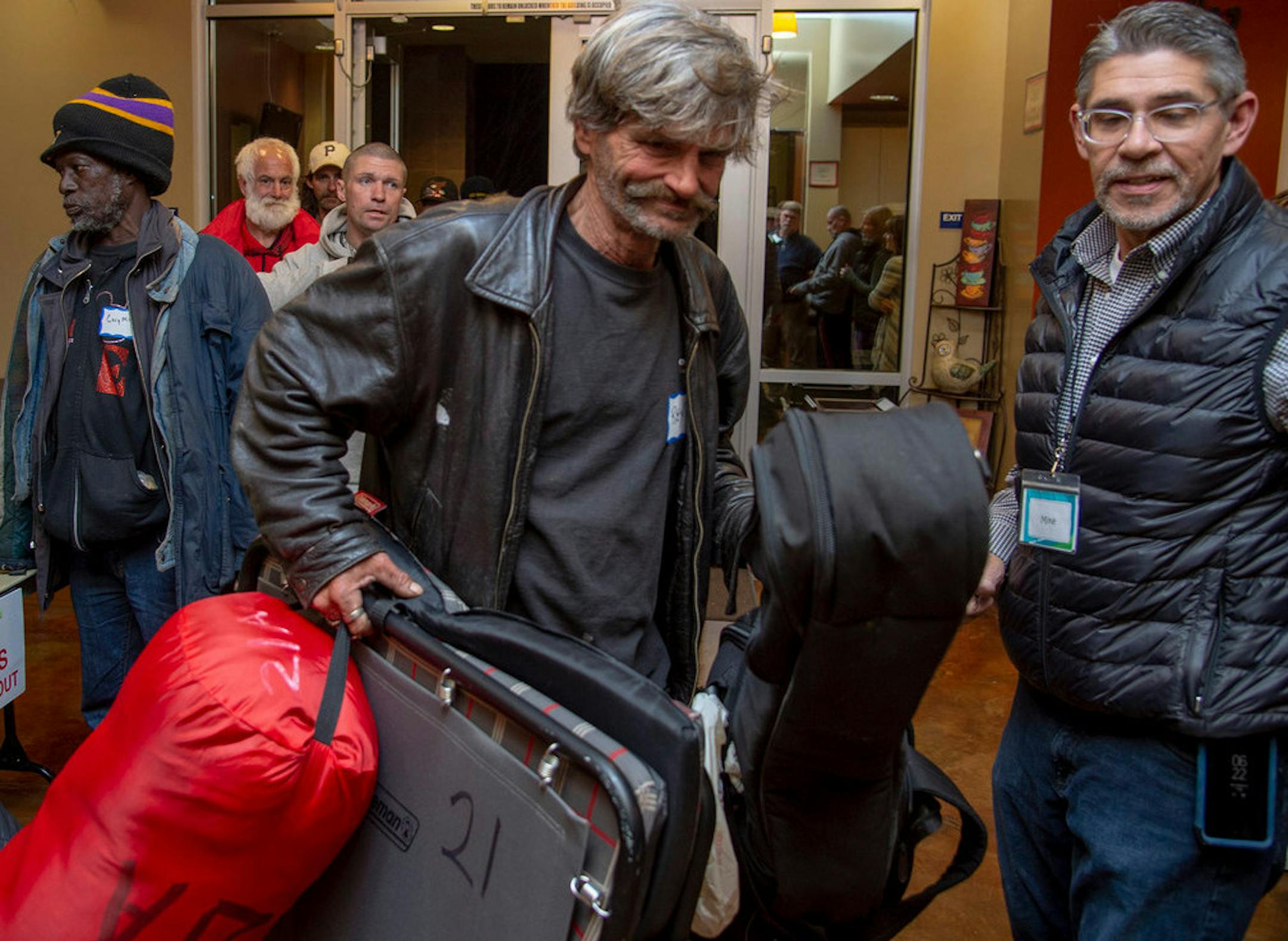
SACRAMENTO – Michelle Cook thought the dark blotches in the wound on her leg were just scabs until nurses from Mercy San Juan Medical Center told her, no, it was infected.
Cook, a lifelong resident of the Sacramento suburb of Carmichael, met the nurses after seeking shelter for a night at Carmichael's Christ Community Church. Homeless since Jan. 1, Cook said she's looking into programs that offer transitional housing.
"I can't stay on the streets. I'm 53 years old, and I just can't do it. It tears me up," she said. "It's embarrassing to be out there, the way people look at you and treat you. I didn't choose this, but they still stereotype. It's hurtful."
A number of churches in this unincorporated area of Sacramento County take turns helping Cook and other locals experiencing homelessness as part of a nine-week shelter program known as Winter Sanctuary. Each church offers meals, showers and a night's lodging for the coldest months.
Yet one of the greatest challenges facing people who are homeless is accessing primary medical care and following the medical instructions they're given, said Scott Young. He's president of Carmichael's Homeless Assistance Resource Team (HART), one of the groups running a Winter Sanctuary program. That's why he wanted Mercy San Juan nurses on hand three years ago when the cots began unfolding at Carmichael churches.
"We see a lot of skin infections, and so it's really a blessing to have Mercy nurses here to attend to their needs," Young said. "They can wrap wounds. They can also give referrals if somebody is in need of something beyond what they are able to do on a Thursday night. They can refer them to a doctor or tell them to go to an emergency room."
It's challenging for people in the midst of homelessness to manage their medical care, Young said. They have no way to keep wounds clean. They can't afford medications or, if they can get them, have nowhere to store them, especially things such as insulin that require refrigeration. They can't follow doctor's orders to stay off their feet or to take it easy. Extreme temperature changes aggravate their medical conditions.
During medical interventions with Bay Area residents who were homeless, case managers found that the number of emergency room visits dropped by 34 percent for those who found permanent lodging, vs. 12 percent for their peers who had no shelter. The costs of care for those with homes dropped 32 percent, compared with a 2 percent decline for those who didn't.


