

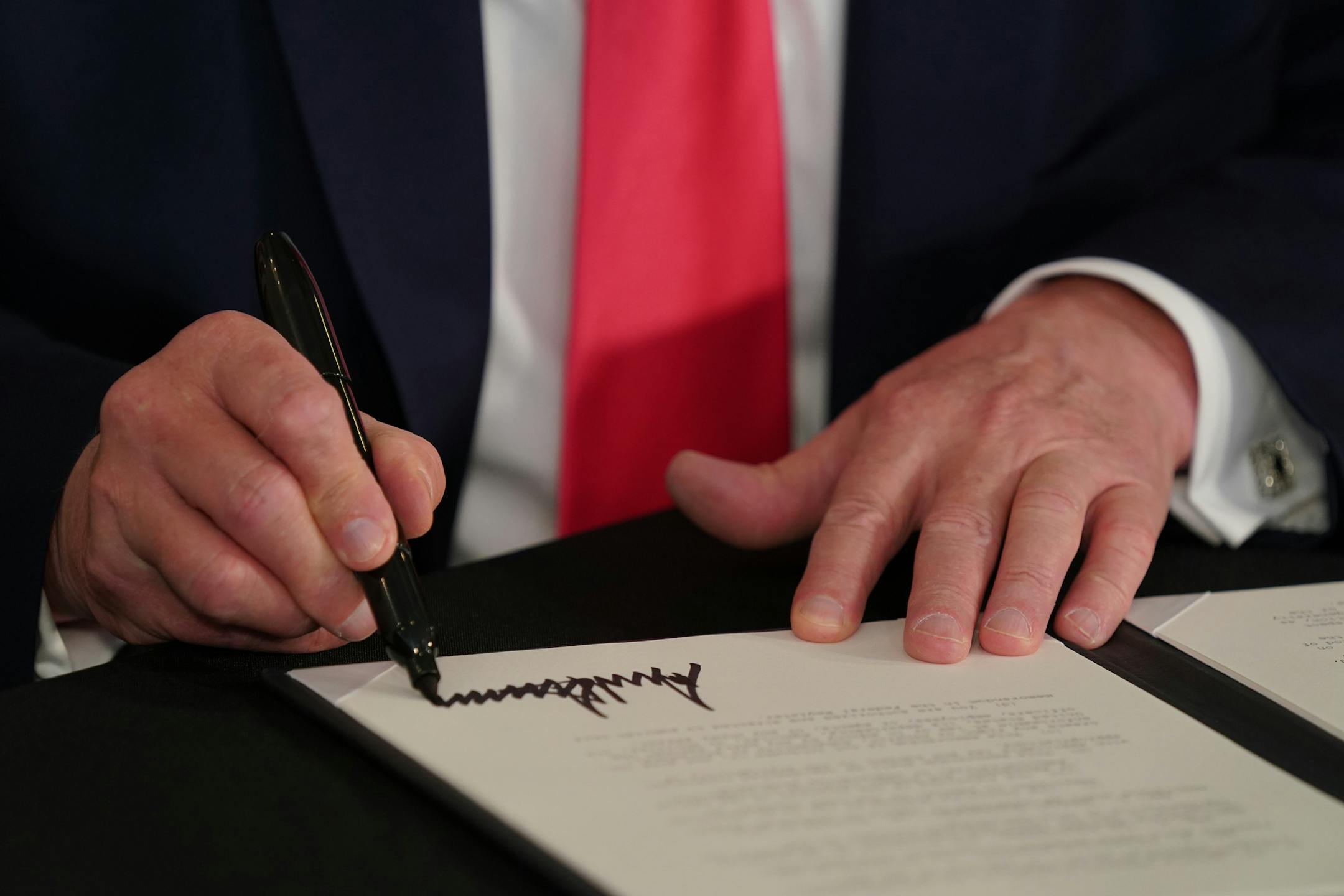
Here are three popular myths about executive orders:
They are a way to bypass Congress. They are an insult to the Constitution. They are new and a product of the imperial presidency. Even among serious and experienced observers, there is widespread belief in these falsehoods. That's a big problem because President-elect Joe Biden is about to issue a bunch of executive orders. Citizens need to understand what they are and what they do.
Executive orders often take the form of directives from the president to his subordinates. For example, Biden might tell the secretary of homeland security to adopt new immigration policies. Or he might direct his secretary of education to reverse President Donald Trump's civil rights policies.
Executive orders do not bypass Congress. Typically, they rely on statutes that Congress has already enacted.
If Biden directs the Environmental Protection Agency to issue new regulations to reduce greenhouse-gas emissions, he will be relying on the Clean Air Act, which is already the law. In domains including education, occupational safety, COVID-19, clean water and civil rights, Congress has given plenty of power to executive agencies. Executive orders from the Biden administration would rely on the power that agencies already have.
For that reason, they are hardly an insult to the Constitution. So long as what they order is within the bounds set by congressional enactments, they are a perfectly legitimate exercise of executive power — which is, after all, the power to execute the law.
Nor are executive orders new. They go all the way back to George Washington. Abraham Lincoln issued them, too.
In the 20th century, here are a few numbers: Herbert Hoover issued 995; Franklin Roosevelt issued a whopping 3,728; Harry Truman issued 896; Dwight Eisenhower issued 496; Lyndon Johnson issued 324; Richard Nixon issued 346; Ronald Reagan issued 381; Barack Obama issued 296. To date, Trump has issued 205.


