

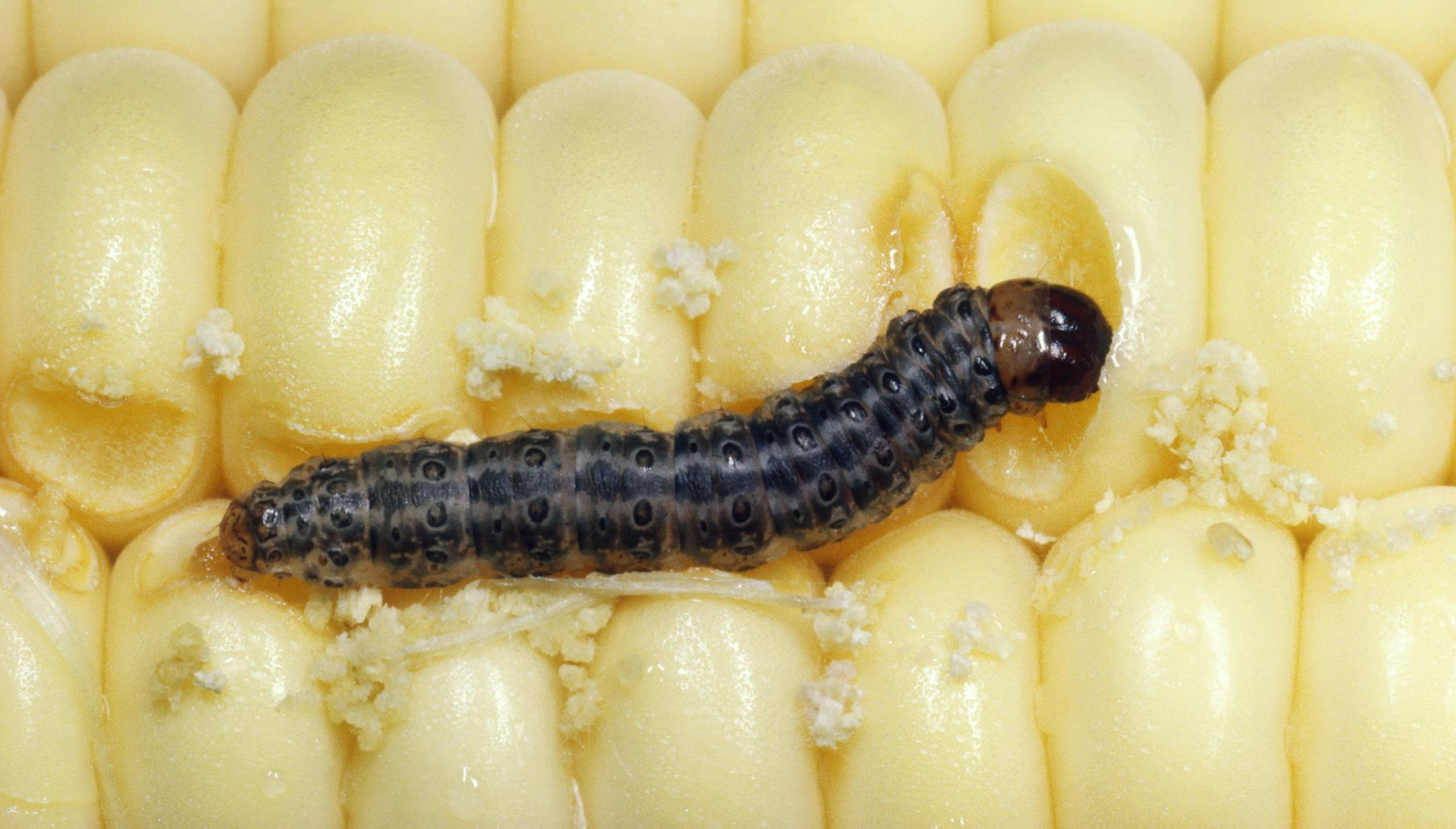
Ever since humans learned to wrest food from soil, creatures like the corn earworm, the grain weevil and the bean fly have dined on our agricultural bounty. Worldwide, insect pests consume as much as 20 percent of the plants that humans grow for food, and that amount will increase as global warming makes bugs hungrier, said a study published in the journal Science.
That could encourage farmers to use more pesticides, which could harm the environment, scientists said.
For every degree Celsius (2 degrees Fahrenheit) that temperatures rise above the global historical average, the amount of wheat, corn, and rice lost to insects will increase by 10 to 25 percent, the study said. Temperate agricultural regions, like those in the United States and Western Europe, would be particularly hard hit.
The international Paris Agreement is designed to keep warming below 2 degrees Celsius, but countries are far from meeting that goal.
By eating such a large amount of crops in the field, "insects have consumed something like one out of every eight loaves of bread before it even gets made," said Curtis Deutsch, a professor of chemical oceanography at the University of Washington and an author of the study. "If we warmed 4 degrees, which is what climate models typically predict for the end of this century, then that amounts to insects eating two of our eight loaves of bread instead of one."
Higher temperatures speed many insects' metabolisms, making them eat more. Their life cycles also get faster, causing them to reproduce more quickly. Both effects would diminish crop yields even as the human population increases, the study said.
To arrive at their estimates, the team used statistical models to simulate the effects of global warming on insect feeding and reproduction. They focused on wheat, corn and rice crops because they account for 42 percent of the calories directly consumed by humans.


