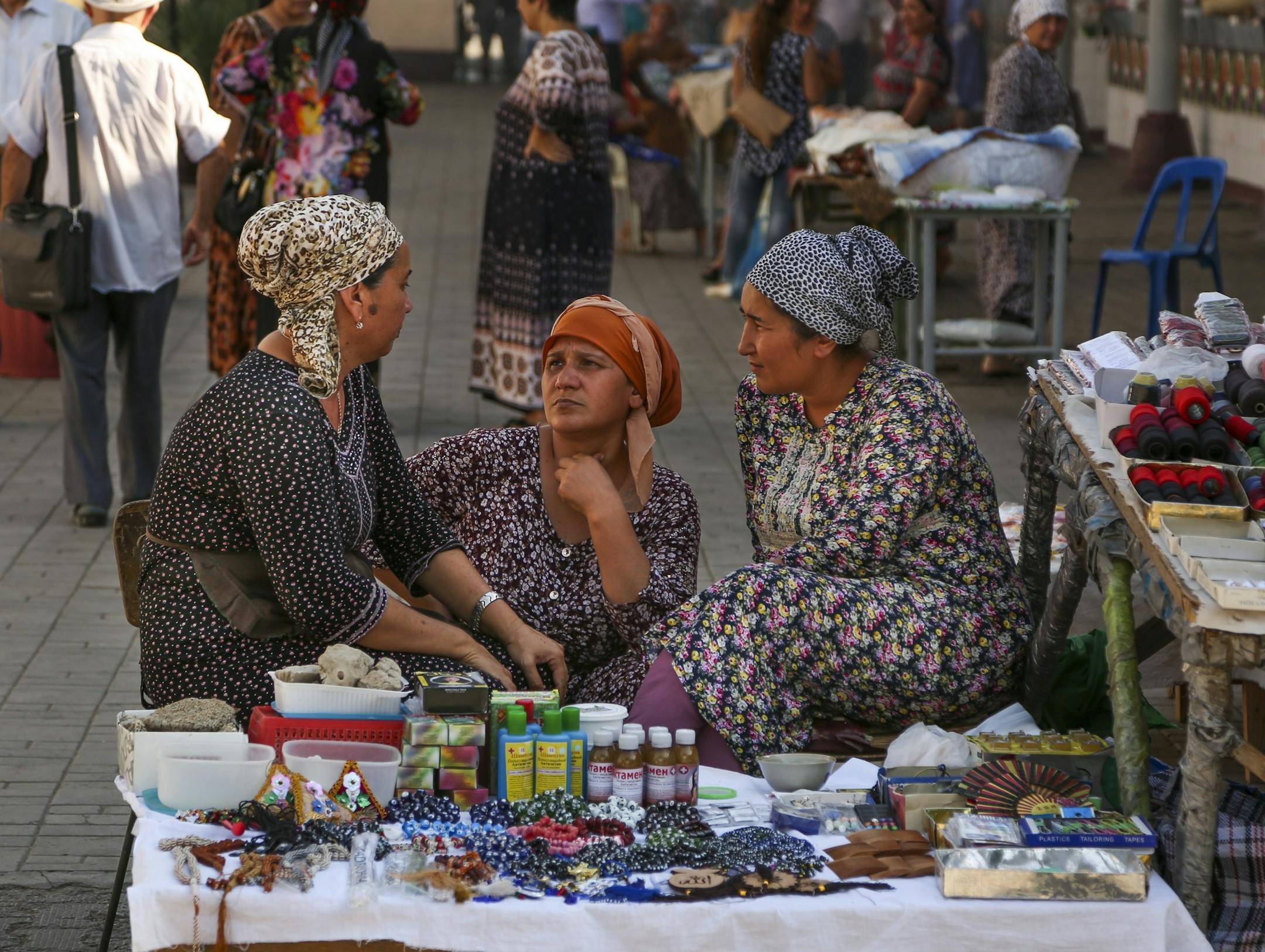
When ministers from faraway countries tour Western financial centers to tout their plans for economic reform, their presentations are often drearily predictable. There is typically lots of talk about "fiscal consolidation," improving infrastructure and the soundness of the banking system.
Not Djamshed Kuchkarov, finance minister of Uzbekistan: he is proudest of what his government is not doing.
The most important economic reform since Shavkat Mirziyoyev succeeded Islam Karimov as president in 2016, he said, is a three-year moratorium on business inspections. Government could do businessmen no greater favor, he implied, than getting out of their way and letting them get on with things, without fear of extortion.
In a region full of state-dominated, bureaucratic, corruption-riddled economies, it is a revolutionary thought.
Karimov was already running Uzbekistan when it became independent from the Soviet Union in 1991. He preserved all sorts of Soviet economic policies, including an inflated official exchange rate, currency controls and an enormous role for the state in industry and farming. To that he added such standard post-Soviet abuses as the expropriation of any private business that looked worth seizing.
Few had expected Mirziyoyev to change much of this. He had, after all, served as Karimov's prime minister for 13 years. But since coming to power he has set about renovating the economy, as well as initiating more limited political reforms. Uzbekistan, with 32 million people, is the most populous country in Central Asia. Until recently, it was also one of the region's most stagnant and repressive — in a competitive field. Overnight, it has become a showcase for reform.
Mirziyoyev has sharply devalued the currency, the som, bringing the official and black-market rates into alignment. Exporters are no longer required to sell a quarter of their foreign-currency revenue to the government.
This is important not just to cross-border businesses, Kuchkarov argued, but also to ordinary Uzbeks, since the past shortage of hard currency had led to a shortage of cash, as businesses hoarded notes with which to buy dollars on the black market. That had left pensioners and salaried workers struggling to cash their monthly bank transfers.