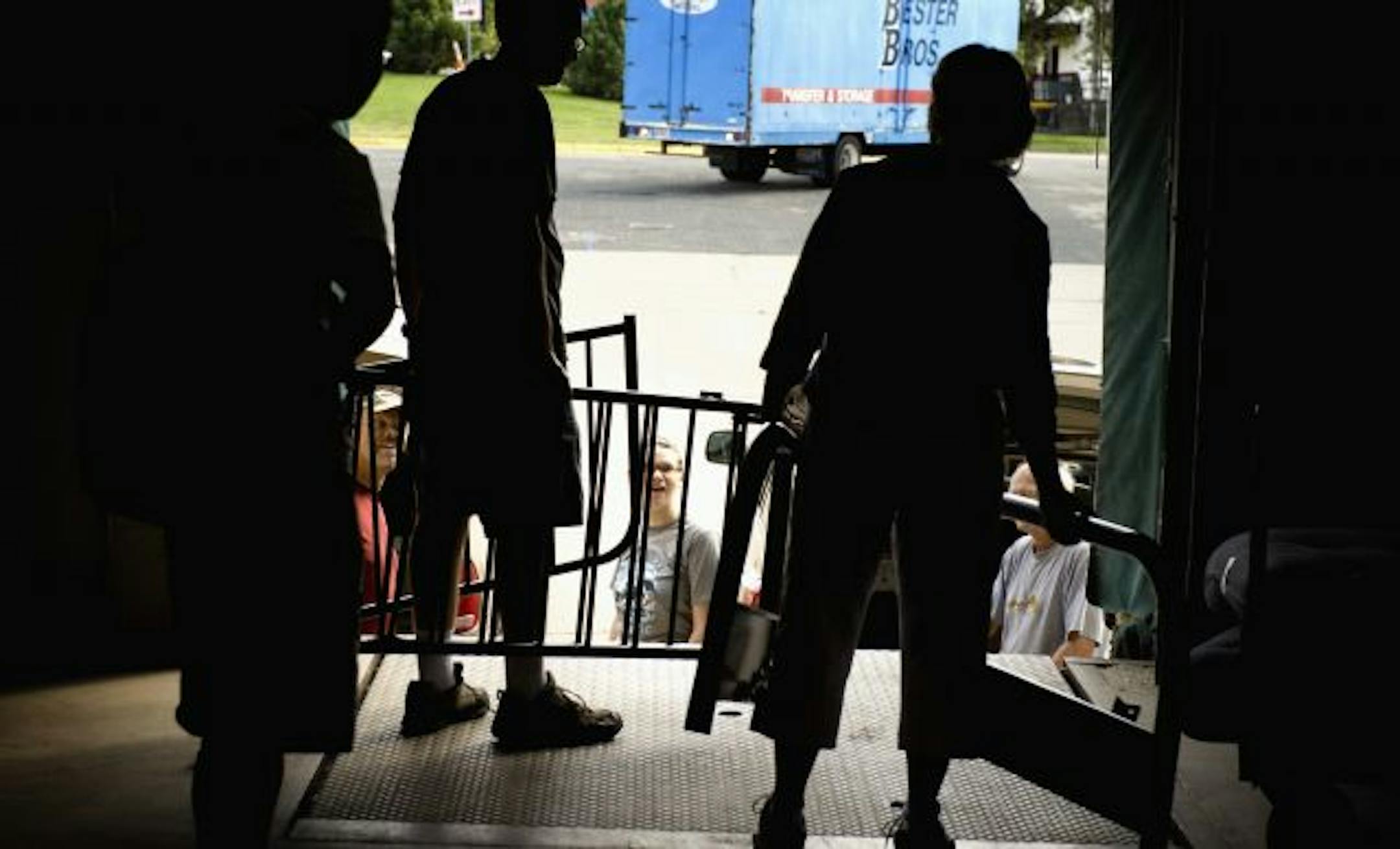
With their husbands in school, Grace Huang and Lori Luo don't have a lot of money to spend furnishing their University of Minnesota apartments. But there they were Tuesday, struggling to carry a 45-piece china set, some crystal bowls, a photo album and a candelabra to student family housing. The price tag? There wasn't one.
The duo went shopping at the neighborhood free store, a pilot program developed by the Southeast Como Improvement Association in an effort to keep unwanted furniture and household goods left behind by students off lawns and out of dumpsters.
Piles of furniture turned garbage dot the streets of college towns around the country come moving day. With money tight and going green all the rage, college campuses and neighborhood groups are working to curb the problem. Some schools, such as West Virginia University, collect items for a massive rummage sale with the proceeds going to charity. Others donate unwanted goods directly to charity. Minnesota State University works with a local thrift store.
A neighborhood group bordering the University of Minnesota's Twin Cities campus created the MIMO free store (MIMO stands for move-in, move-out) to keep the curbs clean and appeal to budget-conscious students.
It's moving week, and the furniture cluttering Wendy Menken's neighborhood could furnish many of the rented houses in the area. An upturned side table. A computer monitor. An assortment of tacky couches, all waiting for scavengers or the city's garbage trucks to make the rounds. Some years it's worse -- like when it rains, warping particle board shelves and fizzing electronics, or when vandals destroy perfectly usable items.
"It gets to the point where the rest of the city is having a nice, long Labor Day weekend while we're sitting here surrounded by garbage," said Menken, 49, the neighborhood association's board president. "What a way to end the summer."
With college debt at a record high and scant job opportunities for graduates, one would think students would hang onto their big ticket possessions. But that's not always a possibility, Justin Eibenholzl, MIMO's coordinator explained.
Maybe the truck that the renters planned to borrow falls through and they can only move what fits in their car. The friend who claimed to want their desk never shows. A roommate with a nicer microwave moves in. Or a lamp doesn't fit with the new design scheme. Whatever the reason, "the end result is it ends up curbside," he said.