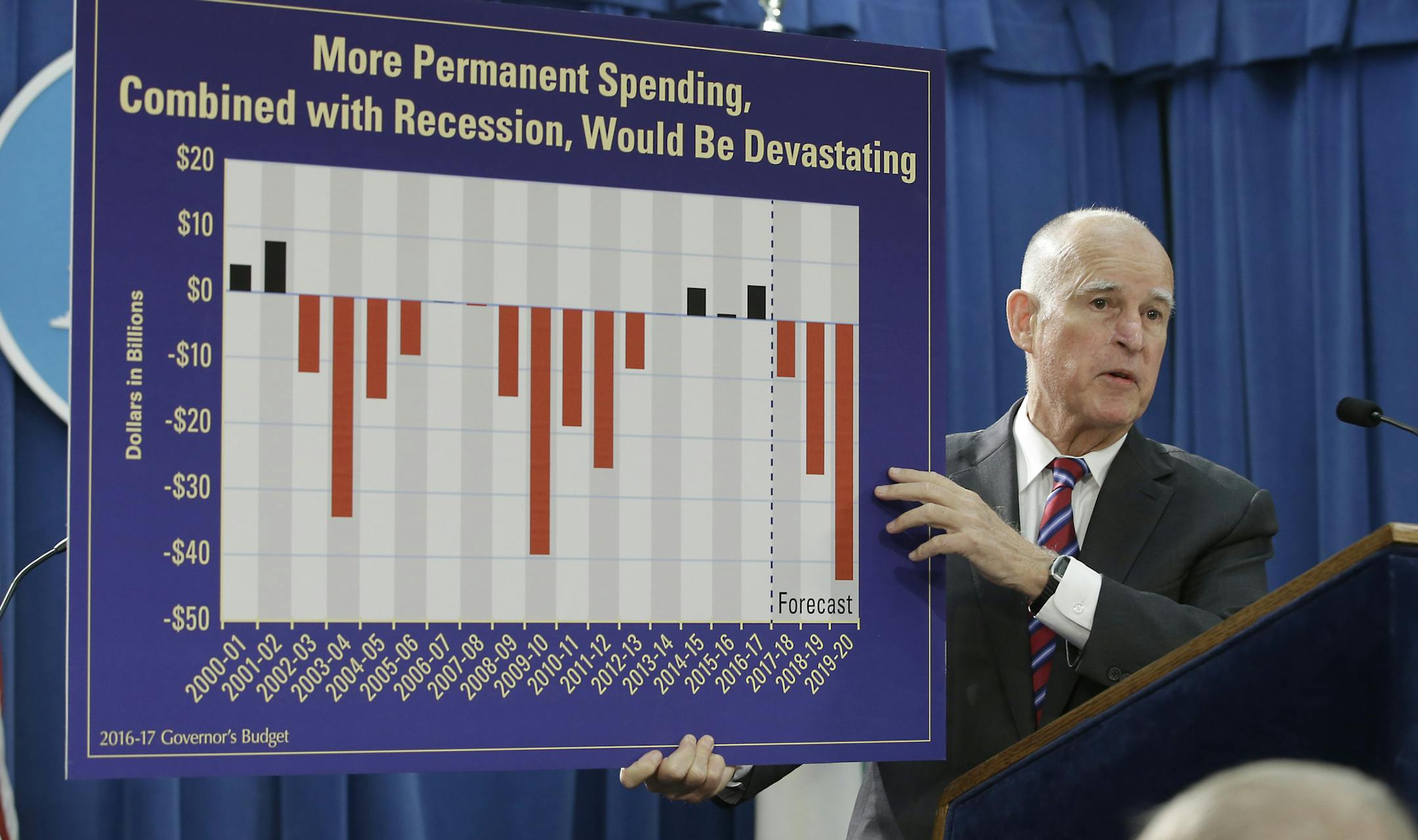
California should be popping champagne over a budget surplus, but isn't. Virginia, another state with a surplus, wants to invest, but strategically. Meanwhile, Alaska and a few other states facing red ink are trying to figure out where to cut spending or which taxes to raise.
Most state budgets are nicely in the black, but predictions of weak economic growth are leading states to spend cautiously or to stockpile funds. And in the half-dozen states with deficits, lawmakers increasingly are looking to raise sales taxes, although they could be a weak source of revenue.
Many forecasters predict an economic downturn in the next couple of years, which has made many states reluctant to commit to big, expensive programs — even if they have surpluses. Recent volatility and stock market losses foreshadow less income-tax revenue. And the trend in sales-tax receipts is weakening as consumers turn to untaxed Internet sales and cautious buying habits.
In legislative sessions that start this month, lawmakers face many revenue demands. Education spending, which has not returned to prerecession levels in many states, is among them. Transportation, health care and children's welfare also are priorities.
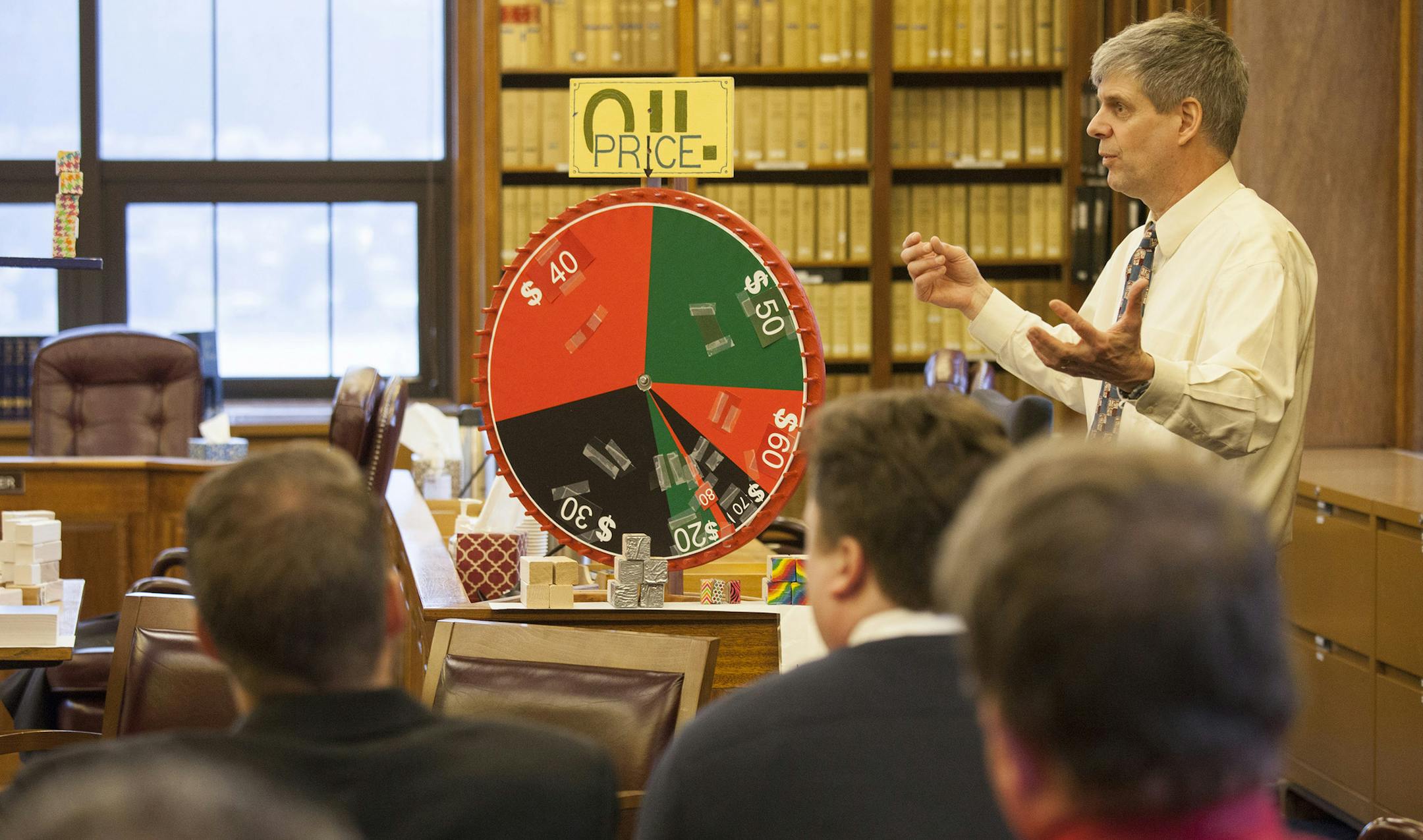
Oil-patch states are struggling with budget shortfalls. As the price of oil plummets, Alaska, Oklahoma and Louisiana get less revenue from energy taxes. But they aren't alone.
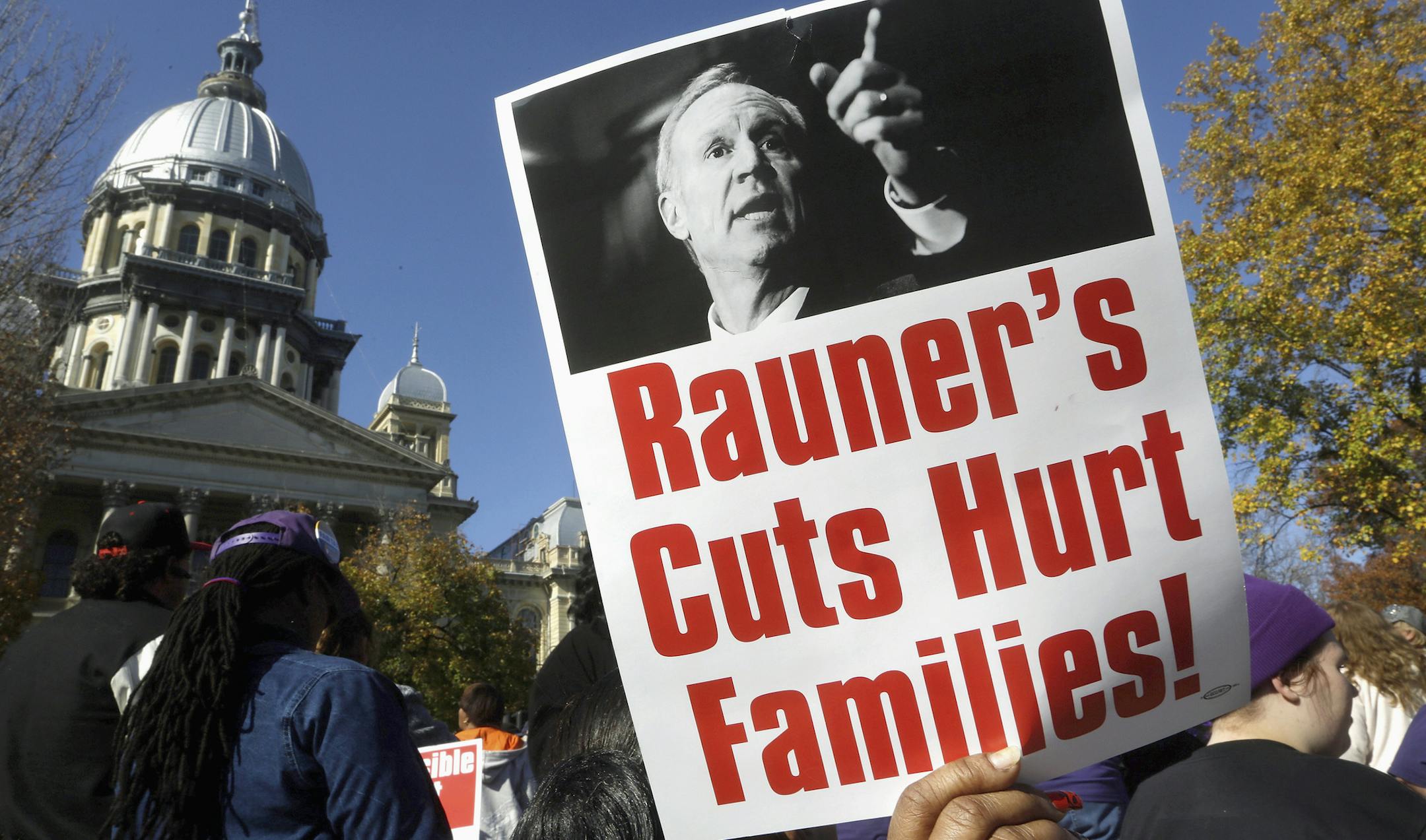
More spending cuts loom in Kansas, despite a sales-tax increase. And in Illinois, already mired in a deficit, lawmakers cannot agree on a budget for this fiscal year, let alone the next.
But most states have surpluses, and while that's a good thing, optimism is tempered by tepid forecasts.
"Many states are worried that states will continue seeing weakness in income and general sales tax revenue collections, in part due to changes in demographics and … spending habits," said Lucy Dadayan, policy analyst for the Rockefeller Institute of Government.