

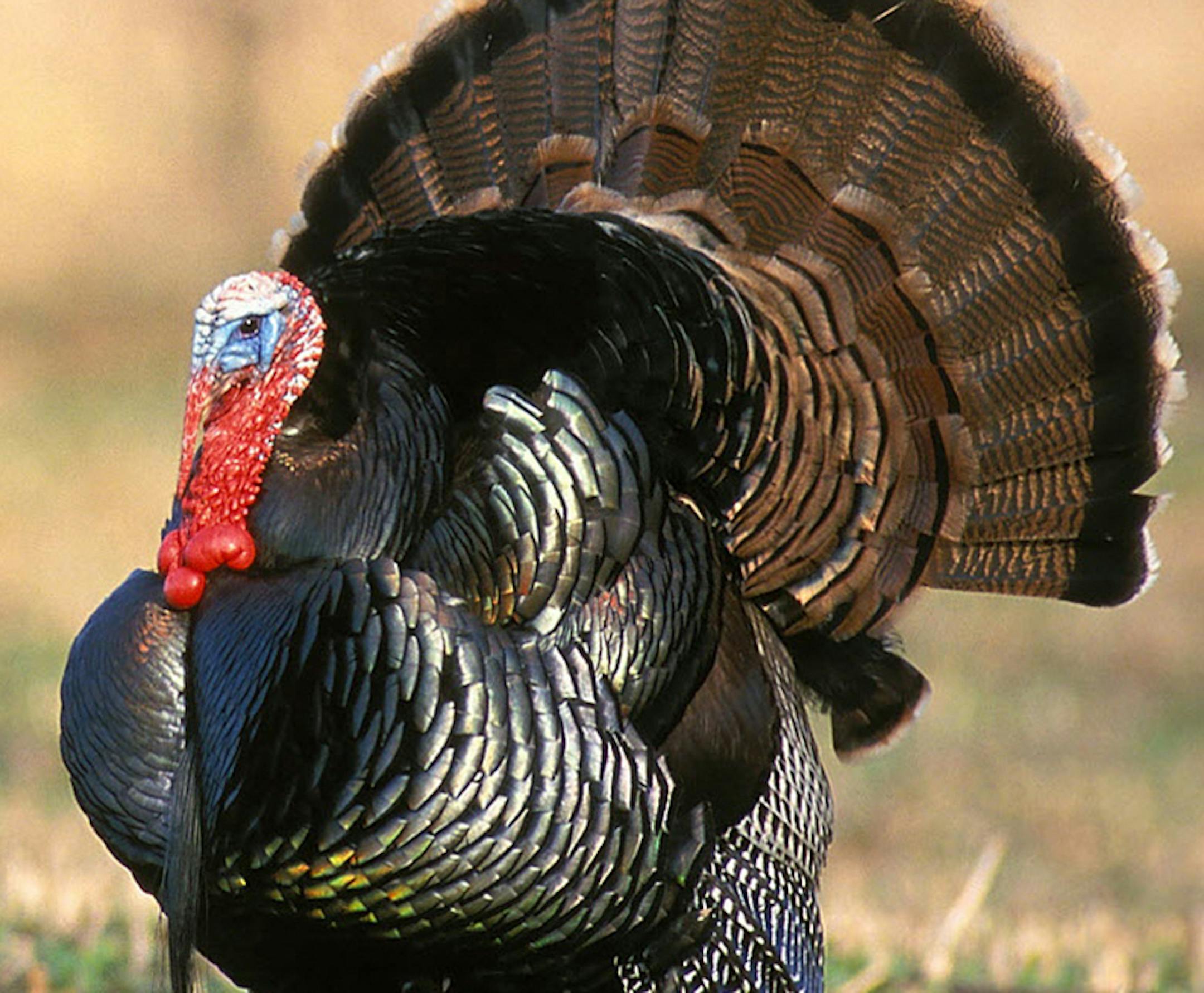
Minnesota's wild turkey hunters mostly just want to see or hear a turkey during their hunts, but more than half say killing a tom is important, too, according to a new survey of state hunters.
The scientific survey, the most comprehensive ever done of Minnesota turkey hunters, also indicates 80 percent of hunters are generally satisfied with their turkey hunting experience, though less than half were happy with their turkey harvest last year. That's perhaps not surprising, considering only 39 percent of those surveyed bagged a bird in 2014.
Hunters also are largely content with the current season structure, though 60 percent favored allowing unsuccessful turkey hunters to buy a second license during a later time period. But they strongly opposed allowing a successful turkey hunter to buy a second license.
Results from the random survey of 1,400 turkey hunters age 18 and older conducted last year by the University of Minnesota will be used by the Department of Natural Resources to consider changes to the hunting season. The season structure — with eight time periods and 12 permit areas — offers a limited number of early-season licenses in a lottery drawing. The season has been generally unchanged for years, since modern turkey hunting began here in 1978.
"We've been very conservative from the start," said Steve Merchant, DNR wildlife program manager. "Turkeys historically were very limited in geography and numbers. We just don't have that situation now." Turkey numbers have increased and gobblers are now found throughout two-thirds of the state.
"It's good to take a fresh look at the whole thing," Merchant said.
The DNR plans to form a citizen advisory group to decide whether to recommend hunting season changes. Respondents were asked about several options, including eliminating the different time periods and going to a single 45-day season (42 percent support, 45 percent oppose), eliminating the 12 different permit areas and allowing open hunting throughout the state (36 percent support, 44 percent oppose), or various combinations.
The current system is designed to distribute hunting pressure.


