

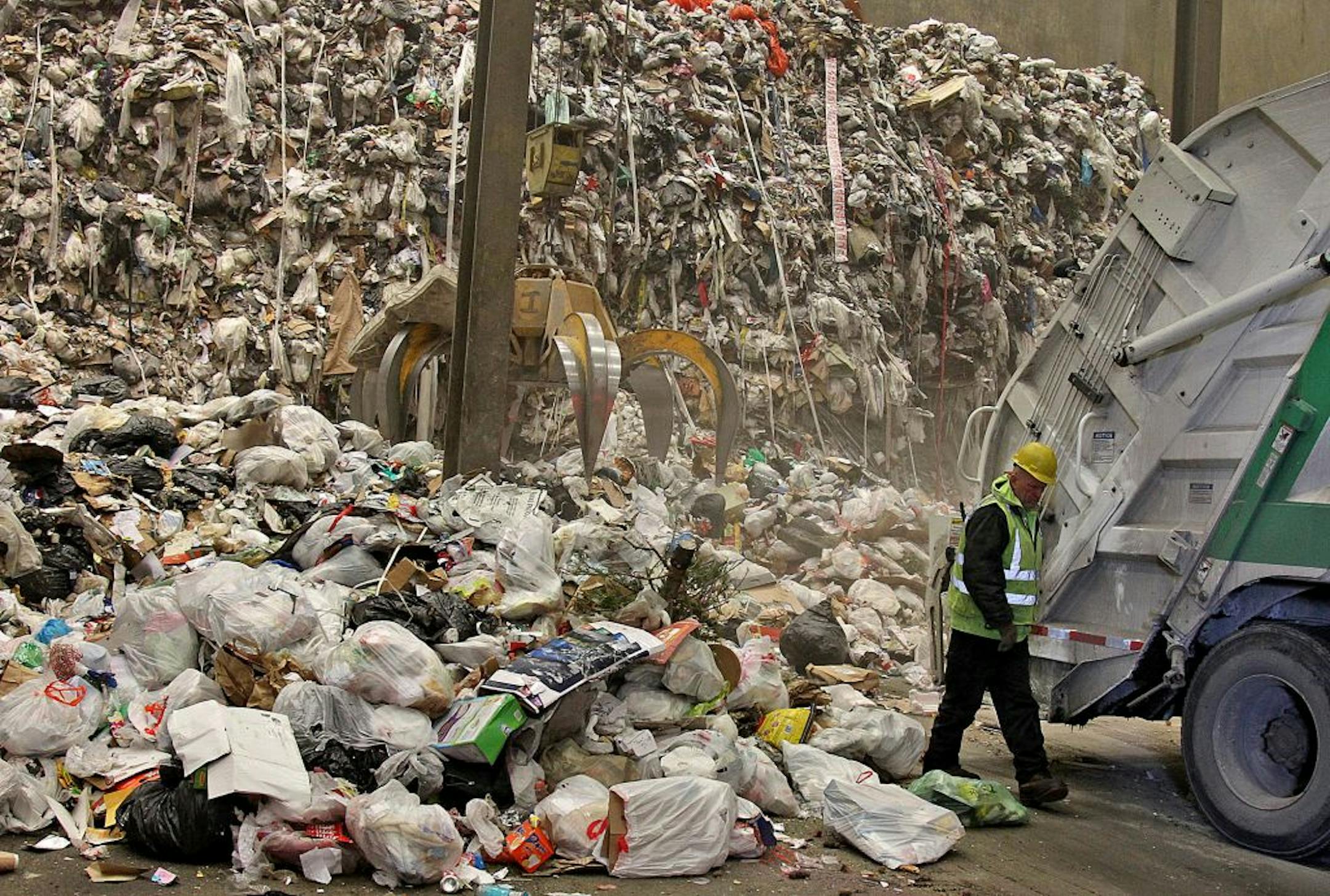
Burning more of Minnesota's garbage and putting less in landfills has been the state's goal for years, but every day in Elk River, full garbage trucks rumble past a garbage-to-energy recycling center to dump their contents at the landfill next door.
Last year alone, an extra 140,000 tons of waste from the metro area went into landfills, which are cheaper for haulers, instead of the more environmentally friendly burners.
But the state is getting ready to crack down on the practice. Next month it will start forcing haulers to use the metro area's four waste-to-energy burners to their full capacity and make old-fashioned landfills, which leave a destructive environmental legacy for decades, an option of last resort.
It's part of a push to wean the state off its stubborn reliance on landfills, which remain the destination for about 25 percent of the metro area's trash. The rest is burned, recycled or otherwise processed.
"Landfills serving the metropolitan area ... are going to fill up someday, and that capacity really needs to be restricted to the stuff that we can't recycle or can't use for energy," said Sigurd Scheurle, sustainable materials manager for the Minnesota Pollution Control Agency (MPCA).
In 1991, only about 10 percent of metro garbage went to landfills, and state officials are pushing aggressive new goals that get landfill use back down to that level or lower by increasing recycling and other forms of waste processing. Landfill use jumped between 1991 and 2002 because of population growth and economic expansion, officials say.
The metro area has three landfills for garbage -- in Elk River, Burnsville and Inver Grove Heights -- and four waste-processing centers, in Minneapolis, Elk River, Newport and Red Wing.
Starting in mid-February, only when the processing centers are full -- and receiving enough garbage to allow them to operate at their maximum energy-producing capacity -- will it be legal for haulers to take trash to a dump.


