The Starbucks Reserve store that opened quietly at Seattle's University Village in October bears little resemblance to the other three Starbucks that already inhabit the shopping mall.
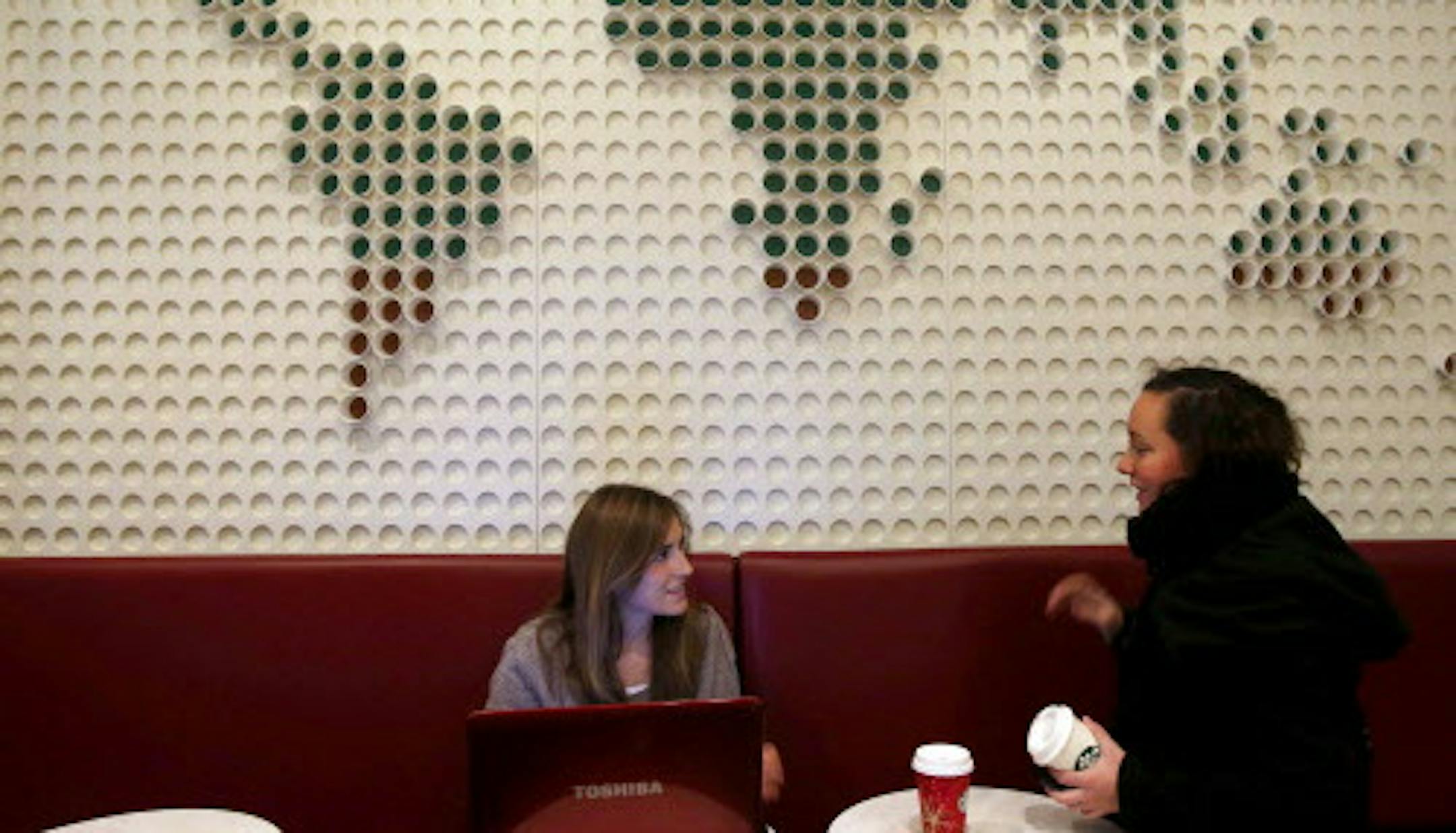
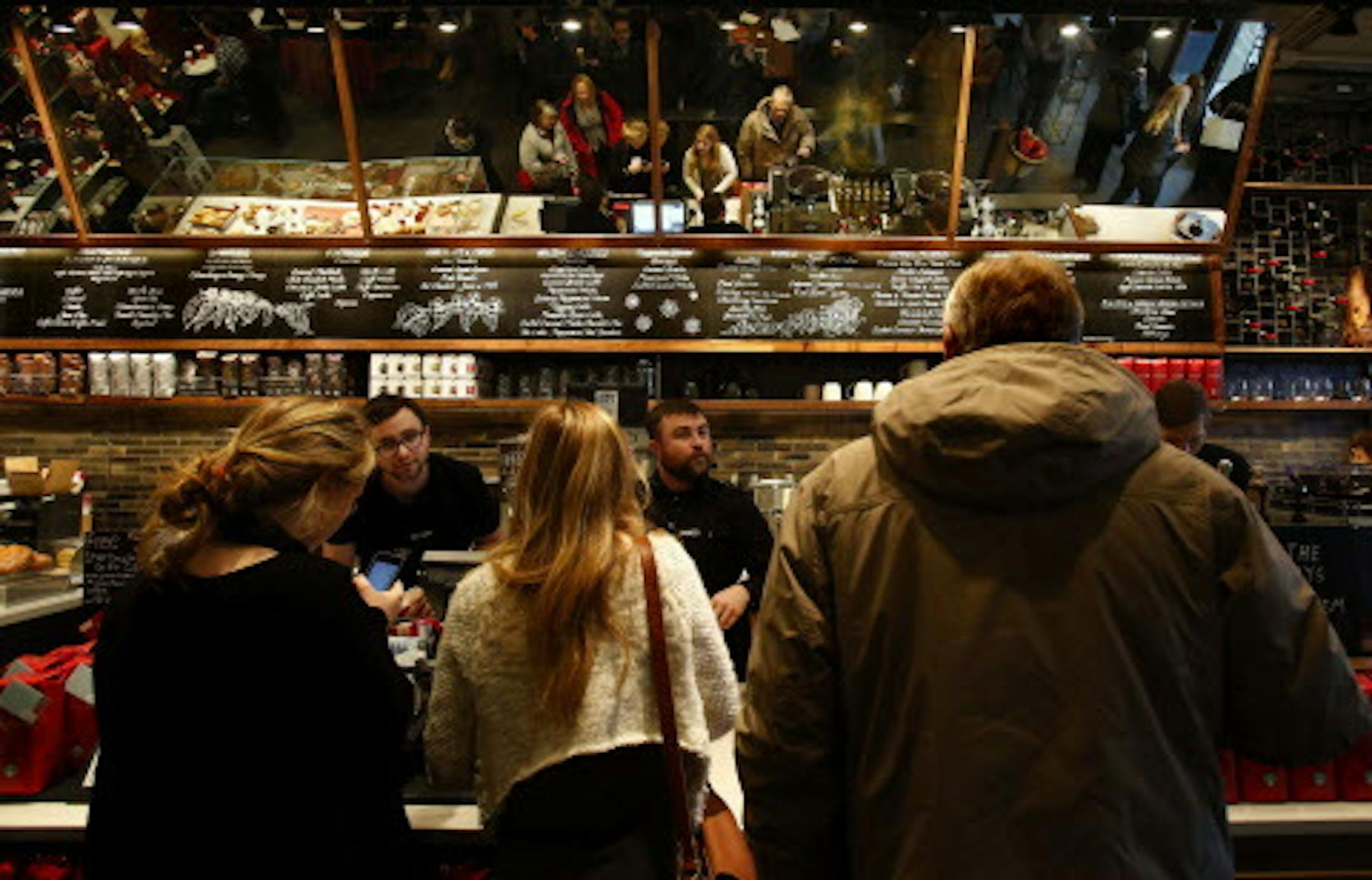
The bar and the back wall are made of reclaimed woods, and one side of the store is covered by a world map made of Starbucks coffee cups. The menu is neatly handwritten in chalk, unblemished by prices.
The mermaid logo, elsewhere so ubiquitous, takes a back seat to the star-shaped symbol signifying the luxury Reserve brand, which features Starbucks' rarest coffees. It's one of the first Starbucks stores to feature the Reserve logo on its storefront.
It's also part of a slow, widespread makeover to give the middle-aged coffee empire a custom-tailored look.
Starbucks always embraced design during two decades of prodigious expansion, but in recent years it has moved away from what executive Clifford Burrows calls its "historical cookie-cutter approach."
A global network of more than 350 in-house designers in 18 cities now works closely with store managers and real estate experts to make every store at least a little bit distinctive, and responsive to its surroundings.
The design drive is one of Starbucks' answers to two major challenges: rejuvenating itself in the United States, a mature market where the chain is practically on every corner, and adapting to wildly diverse new countries, where the biggest opportunities for growth lie.
Some of Starbucks' new rollouts have been splashy — like the store it unveiled at the end of September at Canal Street and St. Charles Avenue in New Orleans, inspired by an early 20th century apothecary, or the train-car store it opened in Switzerland in November, the first rolling Starbucks.