

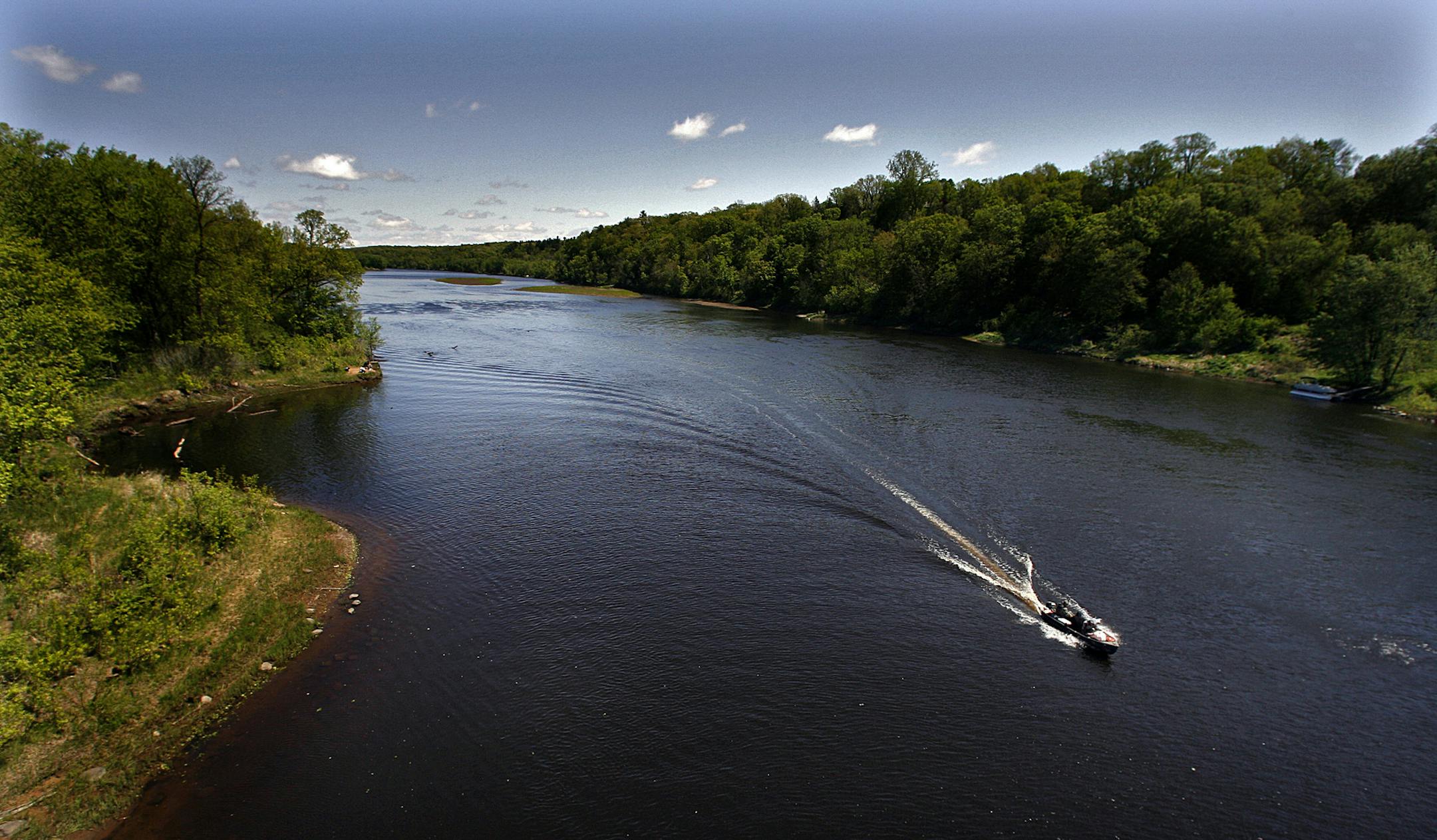
A four-year effort to win designation of the St. Croix River watershed as a National Heritage Area has reached one of its last milestones before heading to Congress for a vote.
A feasibility study backing the creation of the North Woods and Waters of the St. Croix heritage area has been completed, and organizers behind the effort are looking for public comment before submitting the plan.
The National Park Service, which oversees the National Heritage Area program, has signed off on the study after determining that the plan meets all the necessary criteria, said Myron Schuster, executive director of the Northwest Regional Planning Commission. Based in Spooner, Wis., the commission has taken over as the lead agency for the project, and will oversee the Heritage Area once it is approved.
"We needed to get the Park Service to support the National Heritage Area for the St. Croix basin, and to basically convince them that this area has national significance," Schuster said. "And they decided that it did."
Draft legislation has already been prepared for the congressional delegation from the region to put to a vote once the 30-day comment period on the feasibility study is over at the end of the month. "We have not had anyone say no yet, so that's a good thing," Schuster said, adding that he is cautiously optimistic the Heritage Area will be approved.
49 Heritage Areas in nation
There are 49 such Heritage Areas across the nation — places like the Hudson River Valley in upstate New York, the Kenai Mountains of Alaska and the Great Basin of Nevada and Utah — but the one planned for the St. Croix watershed would be the first in either Minnesota or Wisconsin. The watershed stretches from Cable in northwest Wisconsin to where the river meets the Mississippi near Hastings, a 9,800-square-mile area that is one and a half times the size of New England. It includes 18 counties, four tribal nations, and more than 350 local units of government in the two states.
Heritage Areas are designated by Congress as places where natural, cultural, and historic resources combine to form a nationally important landscape. The designation serves as a basis for heritage conservation and economic development.
A study commissioned by the National Park Service earlier this year estimated that the annual economic benefit brought by all 49 Heritage Areas is $12.9 billion, supporting 148,000 jobs and generating $1.2 billion in federal taxes.


