
Small towns, companies team up to address housing

In some areas, there are plenty of jobs, but no places to live.

March 31, 2015 at 3:23AM
A welding robot works at the AGCO North American tractor production site in Jackson, Minn., on Thursday, July 18, 2013. AGCO has implemented an expansion project to add robotic welding equipment and more workers to grow production for increasing demand. ] (ANNA REED/STAR TRIBUNE) anna.reed@startribune.com (cq) ORG XMIT: MIN1307191928160300
A welding robot worked at the AGCO manufacturing plant in Jackson, Minn. The city and company are working together to add housing. (The Minnesota Star Tribune)

At the AGCO manufacturing plant here, where workers roll out a dozen tractors and chemical sprayers each day, the number of workers is equal to a third of the city's population.

It's an enviable workforce for small-town Minnesota. Yet hundreds of AGCO employees actually live outside this town of 3,300 in the southwestern corner of the state. One-fourth of workers live more than 30 miles away, according to the company; some travel an hour one way from towns where they have managed to find a home or an apartment.

The result is untapped potential for the city, which would like the stronger tax base that more residents provide, and latent worries for AGCO, which needs the workers to keep up with demand for its machines.

To generate more housing in Jackson, AGCO has joined with the city and two regional housing agencies on a plan to build 48 townhouse units on 7 acres of land near the industrial park that is dominated by the manufacturer's sprawling campus.

The company, which has 1,100 workers, has invested $220,000 in the $7 million project. The city donated land and a state agency provided much of the financing while a regional nonprofit housing group will own the buildings.

"There just aren't many for-sale signs around the city," explained Sue Pirsig, Jackson's economic development director.

Thirty miles west in Worthington, a similar project is underway: a $6.5 million plan to build 48 housing units. The city has invested $1.6 million in the project, while its housing and redevelopment authority borrowed $4 million for it. Five local entities, meanwhile, including the meatpacker JBS, the city's largest employer, together contributed $110,000.

And that only scratches the surface. By 2020, Worthington will need 500 more housing units simply to sustain its growth, said Bradley Chapulis, the community and economic development director.
A bill in the Legislature this session would provide $50 million for workforce housing through grants and investor tax credits.

One of the bill's strongest backers is the Greater Minnesota Partnership, an organization that represents about 85 of the largest Minnesota cities outside the Twin Cities. Dan Dorman, the executive director of the group and a former legislator, said attracting builders to towns in rural areas when building in the Twin Cities is a safer investment is a challenge, he said.

Self-propelled chemical sprayers were first built in Jackson in the 1960s by a company called Ag-Chem (which was later sold to AGCO). One early model — painted in the mustard yellow that is the color of many AGCO-built machines — sits on display in a new visitor's center on the north end of town. These days, besides building several brands of sprayers for AGCO, which is based in Georgia, the Jackson plant makes tractors.

On a recent Friday afternoon, workers spread out along an assembly line in a cavernous, well-lit building and worked on various parts of tractors. Big-screen TVs that time each workstation and also note the destination of each machine hung on the wall; the models on the floor were headed for dealers in Illinois, Idaho, Arizona and the United Kingdom.

Across the street, engineers work in their own building while employees come and go from a company fitness center. Many AGCO workers have local ties and would love to live in Jackson, company officials said.

"There is such a need for a variety of housing types here," said Pirsig, as she walked through the new housing site, which, so far, has only curbs, gutters and fire hydrants. "This is one part of the puzzle in solving that issue."

Gregg Aamot is a former Associated Press reporter. He is a journalism and English instructor at Ridgewater College and Normandale Community College.

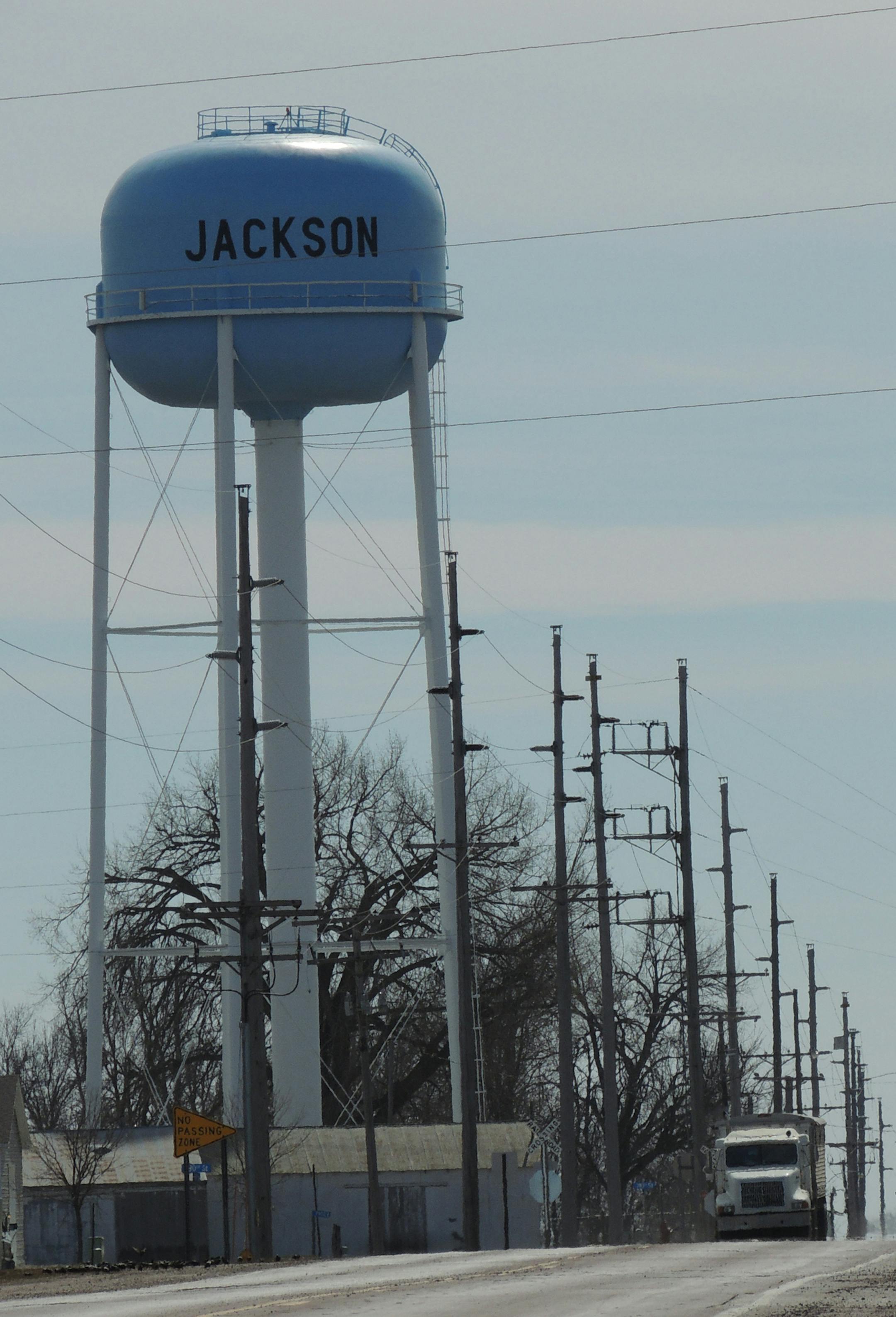
Jackson, a town of about 3,300 residents, is located in southwestern Minnesota near the Iowa border. Photos by Gregg Aamot ORG XMIT: MIN1503262022464571
Jackson, a town of about 3,300, is located in southwestern Minnesota. (The Minnesota Star Tribune)
about the writer

about the writer

Gregg Aamot, MinnPost

More from No Section

See More
FILE -- A rent deposit slot at an apartment complex in Tucker, Ga., on July 21, 2020. As an eviction crisis has seemed increasingly likely this summer, everyone in the housing market has made the same plea to Washington: Send money — lots of it — that would keep renters in their homes and landlords afloat. (Melissa Golden/The New York Times) ORG XMIT: XNYT58
Melissa Golden/The New York Times

It’s too soon to tell how much the immigration crackdown is to blame.