

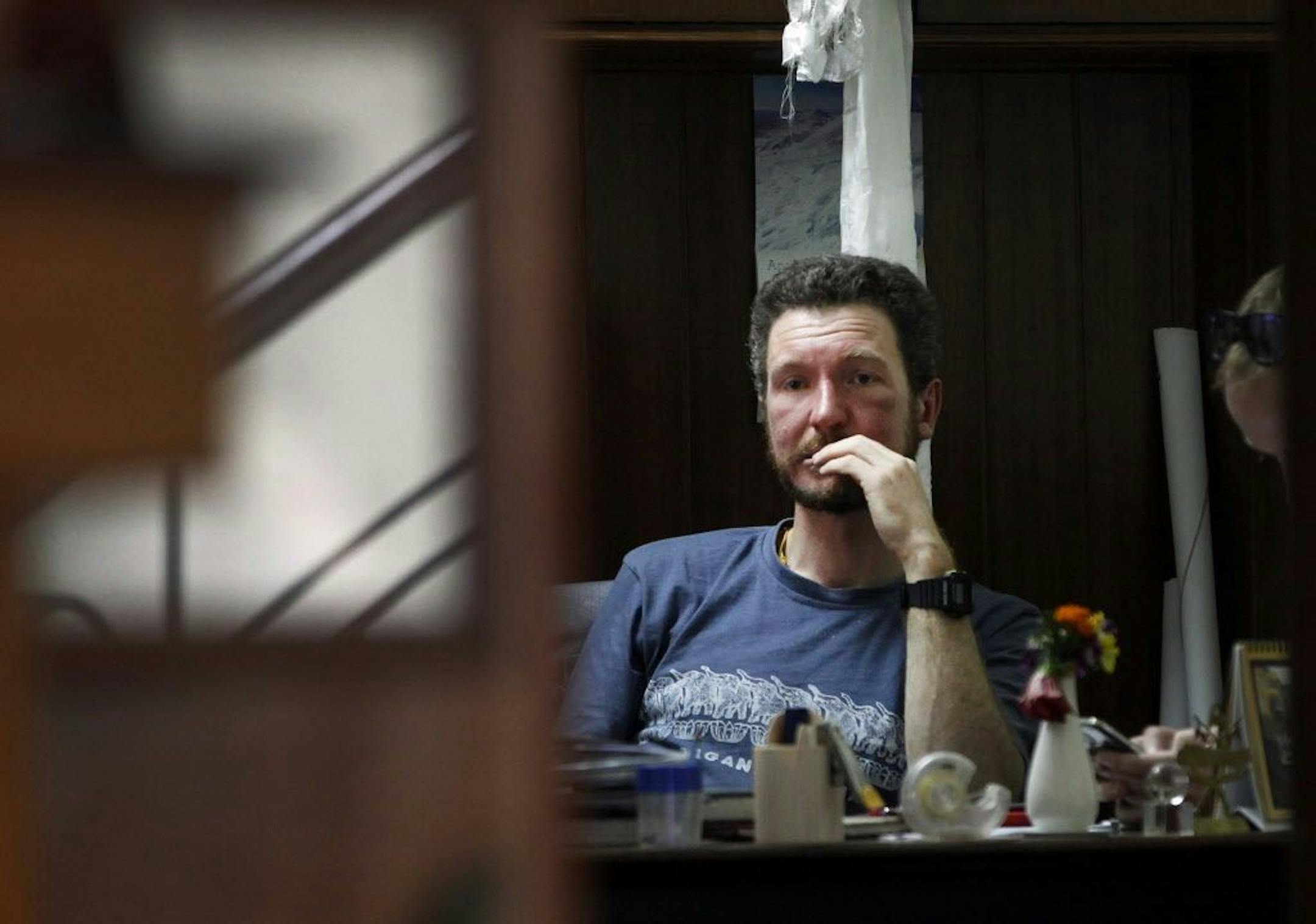
Each year roughly 1,000 climbers set out to scale Mount Everest, and each year some of them meet tragic ends on the mountain's heights. This year, the mountain's grueling conditions have already claimed five lives, including that of Australian Maria Strydom, who had headed there to demonstrate that vegans are no less athletically capable than others. Some 30 others have suffered altitude sickness, sparking several rescue efforts over the weekend.
Every adventurer sets out with the hope that all will go according to plan and that they will return from their endeavors to adulation and praise. Unfortunately, daring ventures don't always go so smoothly, as in Strydom's case, and we spectators at home are left footing the bill.
When things go wrong, should we pull all the stops to rescue extreme athletes and thrill seekers? Should you and I pay for their shenanigans?
Taking an occasional risk is good fun. Few things make one feel more alive than running a marathon for the first time, or trying a double black diamond on the ski slope. With signage, qualification standards and training encouraged, these kinds of risks normally are exciting but safe. Less than one person per 100,000 die while running marathons, and only about 41 people out of 50 million die on the slopes.
Then there are those who choose to row an unpowered boat unaided across the Atlantic ocean or skydive into a Siberian lake ice hole. For these people, ordinary risks are not enough, and in seeking their thrills they go outside normal parameters, undertaking extraordinary tasks in exotic, often remote locations. The freedom afforded by taking on this kind of risk is, however, two-sided: While the uncharted terrain of hyper-risk means no one is there to stop you from trying, it also means no one is there to bail you out if things go wrong.
For better or worse, the United States tries to let people take risks as long as they do not interfere with others. Want to smoke? Do it outside away from buildings. Want to ride a motorcycle? Get a license - adults can even skip the helmet in 28 states. We don't like imposing our understanding of the good life on one another, so if fewer total years (or fewer with functional body parts) on a bike is your ideal, ride on! But calculating the cost of risk-taking to others is not that simple.
The problem with this tolerance is threefold. First, your lung cancer from smoking and brain injury from a bike wreck tax the health-care system: Close to $170 billion is spent on smoking-related medical services each year, and more than $156 billion is lost in productivity due to premature death and exposure to secondhand smoke. Injuries and deaths from motorcycle crashes cost approximately $12 billion in one recent year, and one study of 105 hospitalized motorcyclists showed that 63 percent of their care was paid for with public funds. Second, few people are capable of accurately weighing the benefits against such unfamiliar risks as inability to breathe unassisted or suffering locked-in syndrome because of a brain injury, so it's difficult to say thrill seekers are taking fully "informed" risks. Third, we feel obligated to help our fellow citizens, and are usually willing to rescue the barely sane — whether naive first-timers or skilled experts bored with available risks — when their feats go awry.
As much as we encourage athletes to engage at their own risk, the downside when it happens is shared.


