
Ford dump site in St. Paul draws attention from state, river advocates

Automaker has been asked to study the prospect of removing a riverside mound of waste.

January 18, 2015 at 5:27PM
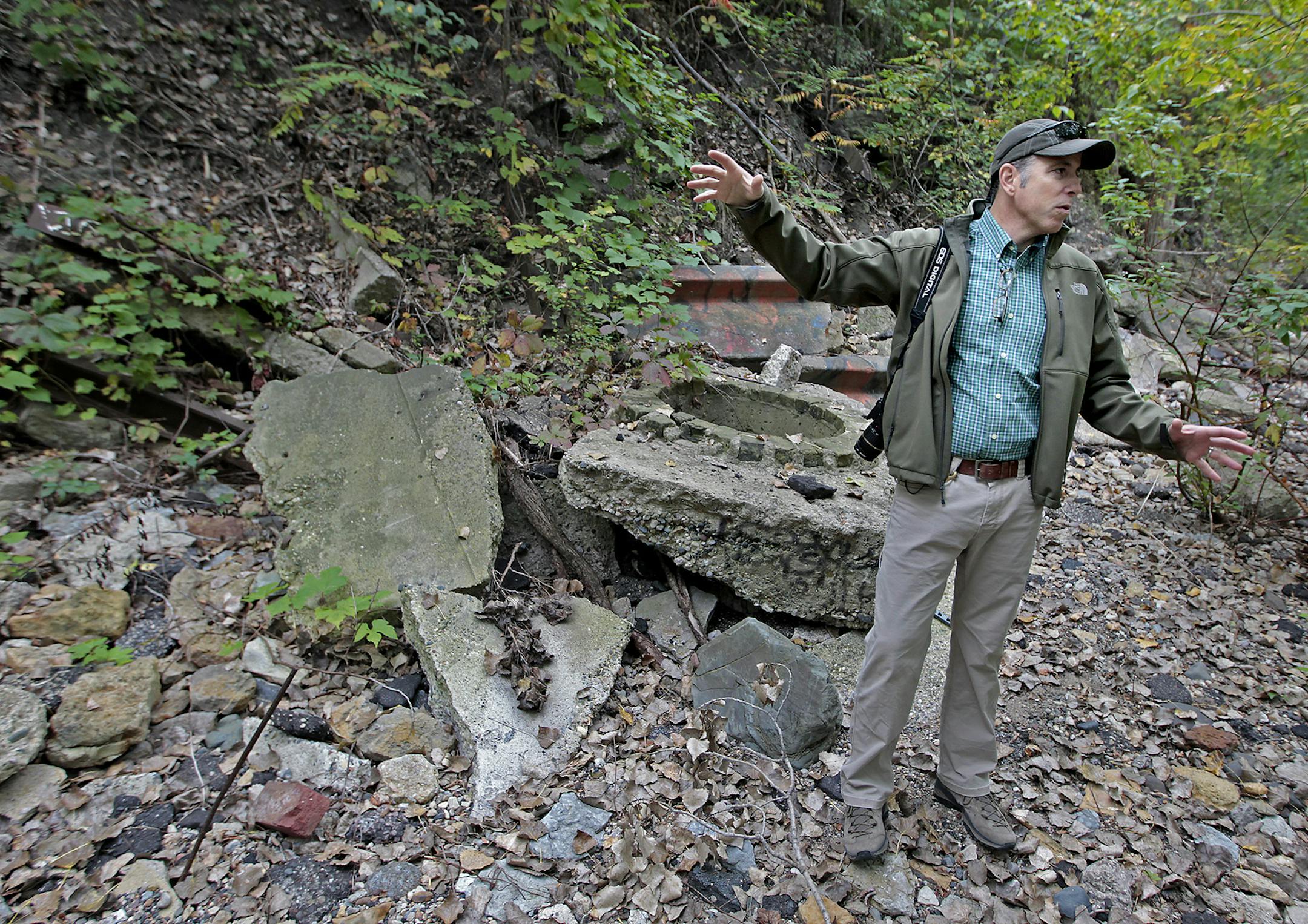
Whitney Clark of Friends of the Mississippi River showed the Ford dump site and areas of erosion along the riverbank, Friday, September 19, 2014 in St. Paul, MN. As Ford continues to work on demolishing its former St. Paul factory site, attention is turning to a little-known dump the company maintained on the river for decades. The MPCA is trying to determine whether it's polluted enough to require Ford to clean it up, while the Friends of the Mississippi River want the debris and solvents remov
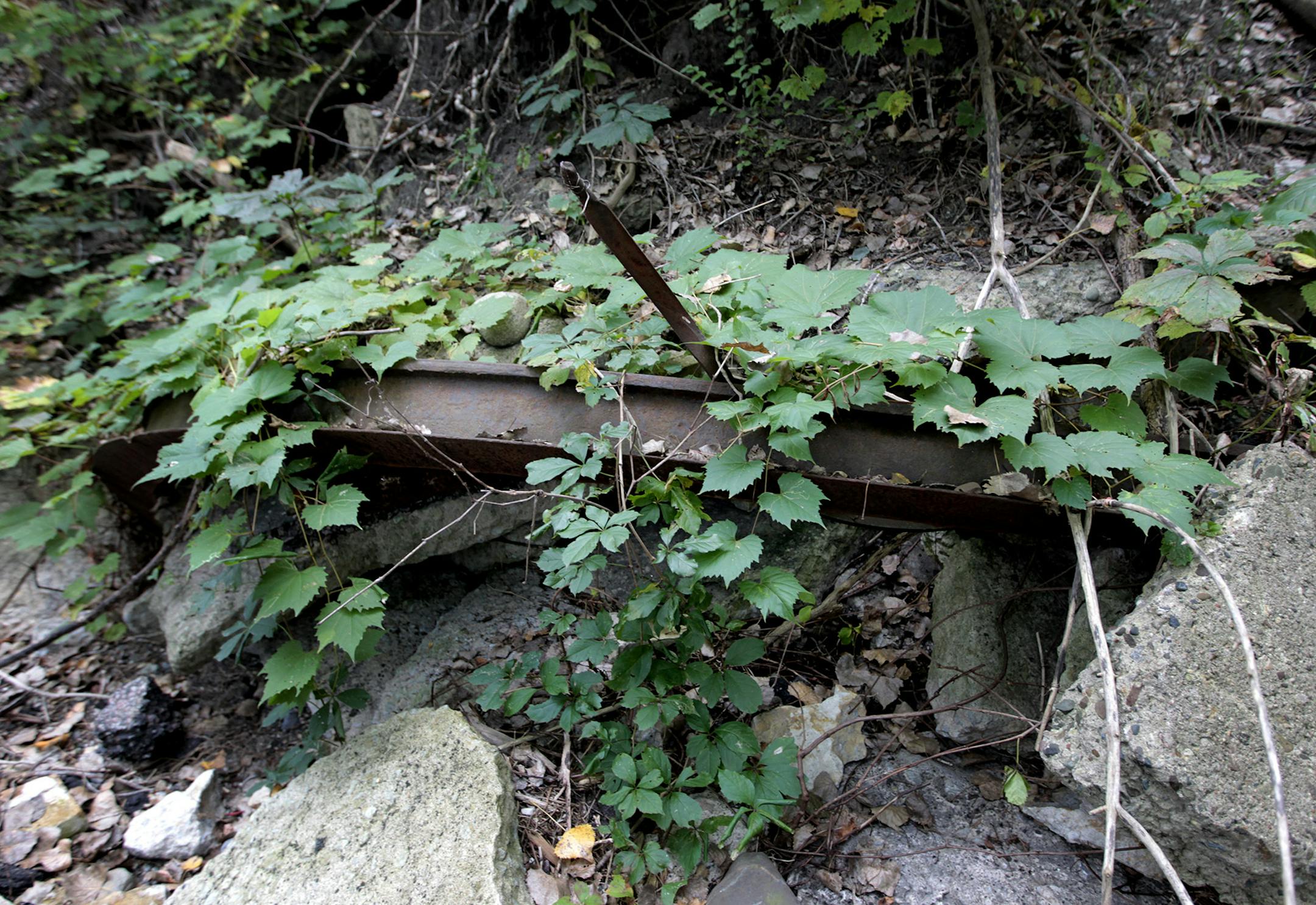
The riverside mound includes concrete and asphalt slabs, rusting I-beams and fence posts. (The Minnesota Star Tribune)

At first glance it appears to be nothing more than a natural mound swathed in sumac and buckthorn, and shadowed by cottonwoods, like much of the land fronting the Mississippi River gorge.

But that mound, actually a dump site, has become the focus of ongoing concerns about pollutants left by the Ford Motor Co. at its former factory site in St. Paul.

The Minnesota Pollution Control Agency this month is asking Ford to take a closer look at what's inside that riverside mound, where the automaker disposed of paints and solvents for 20 years.

If contamination there is found to pose a health or environmental risk, Ford will have to clean it up in order to get passing marks from the MPCA on a chunk of the Highland Park acreage that the company plans to sell for redevelopment.

Ford "really wants closure from the MPCA and they understand there's a process to get there," said Amy Hadiaris, a hydrogeologist who works for the state agency's voluntary cleanup program.

But a leading local advocate for the river, Friends of the Mississippi River, is worried that the MPCA won't hold Ford's feet to the fire.

It wants Ford to sift the entire mound — which rises 65 feet above the river and covers about 4 acres — for industrial waste, and to determine the feasibility and cost of removing the dump and returning the site to its original state.

"I think that Ford will want to do the right thing here, but they're going to need some encouragement to know what the right thing is," said the Friends' executive director Whitney Clark, who inspected the dump area Friday.
Ford wants to help

Clark's big fear is that the site may contain far more chlorinated solvents, which can pollute groundwater, than tests have shown. He'd like to see more wells drilled — some deep into the aquifer.

Four industrial drums containing paint sludge were found at different spots at the site, suggesting that waste might be scattered rather than concentrated below the construction debris, Clark said.

"The MPCA needs to be requiring a higher level of due diligence on this site," he said.

Hadiaris said Clark is jumping the gun. Chlorinated solvents haven't been found in the dump or in the four drums, she said. Ford typically used paint solvents that were petroleum-based, which easily flush through groundwater aquifers.

In conversations with the MPCA, she said, Ford has agreed to find out the degree to which groundwater at the site has been contaminated and how far industrial waste extends throughout the dump. Both shallow and deep wells will be drilled, she said, although she couldn't say whether they would go as deep as the base of the aquifer.

Depending on what Ford's investigation turns up, Hadiaris said, the agency will ask the company to study the prospect of removing the dump as well as a number of other remediation alternatives.

On Friday, officials with Ford Land in Dearborn, Mich., which manages property owned by Ford, said the company is voluntarily working with the MPCA to investigate and clean up the site.

"It is important to note that our tests to date indicate that groundwater and the river are not being impacted," Ford's statement concluded.

Until now, most pollution concerns at the former assembly plant have focused not on the dump site, but on the 122-acre tract along Ford Parkway where cars and trucks were built. Those structures now are gone and crews have begun removing concrete slabs, exposing possible spills and leaks in the soil beneath.

The dump, between Mississippi River Boulevard and the river just north of Hidden Falls Park, was used by Ford from about 1945 to 1966 for disposal of paints, solvents, and construction rubble.

In years since, debris also was left there by the U.S. Army Corps of Engineers from its reconstruction of the nearby lock and dam, and by a St. Paul contractor working on a paving project. The mound is ringed with concrete and asphalt slabs, rusting I-beams and fence posts, and capped with a concrete parking lot once used for trailers.

Groundwater monitoring wells were first installed in the 1980s, along with test pits and waste sampling. The testing found no significant impact on groundwater. By 1993 the site had been taken off federal and state priority cleanup lists.

Two additional wells installed in 2011 found excessive traces of two metals, but soil and surface water levels were found to be acceptable.

Near the dump site Friday, Clark pointed to the remnants of plastic bags left on tree branches by the spring floodwaters. The waters rose at least a third of the way up the mound, he said, eroding the dump and possibly releasing into the river what it holds.

"You're basically rinsing the pollutants out of the dump," he said.

Hadiaris said that the MPCA will make its judgments based on what it finds there.

"It's difficult for us to assume something that isn't consistent with the information that we do have," she said. "That said, the investigation is going to continue … and we're always on the lookout for the unexpected."

Kevin Duchschere • 651-925-5035

Whitney Clark of Friends of the Mississippi River showed the Ford dump site and areas of erosion along the riverbank, Friday, September 19, 2014 in St. Paul, MN. As Ford continues to work on demolishing its former St. Paul factory site, attention is turning to a little-known dump the company maintained on the river for decades. The MPCA is trying to determine whether it's polluted enough to require Ford to clean it up, while the Friends of the Mississippi River want the debris and solvents remov
Whitney Clark of Friends of the Mississippi River said he fears chemicals under the former dump site could pollute groundwater. (The Minnesota Star Tribune)
about the writer

about the writer

Kevin Duchschere

Team Leader

Kevin Duchschere, a metro team editor, has worked in the newsroom since 1986 as a general assignment reporter and has covered St. Paul City Hall, the Minnesota Legislature and Hennepin, Ramsey, Washington and Dakota counties. He was St. Paul bureau chief in 2005-07 and Suburbs team leader in 2015-20.

See Moreicon

More from No Section

See More
FILE -- A rent deposit slot at an apartment complex in Tucker, Ga., on July 21, 2020. As an eviction crisis has seemed increasingly likely this summer, everyone in the housing market has made the same plea to Washington: Send money — lots of it — that would keep renters in their homes and landlords afloat. (Melissa Golden/The New York Times) ORG XMIT: XNYT58
Melissa Golden/The New York Times

It’s too soon to tell how much the immigration crackdown is to blame.