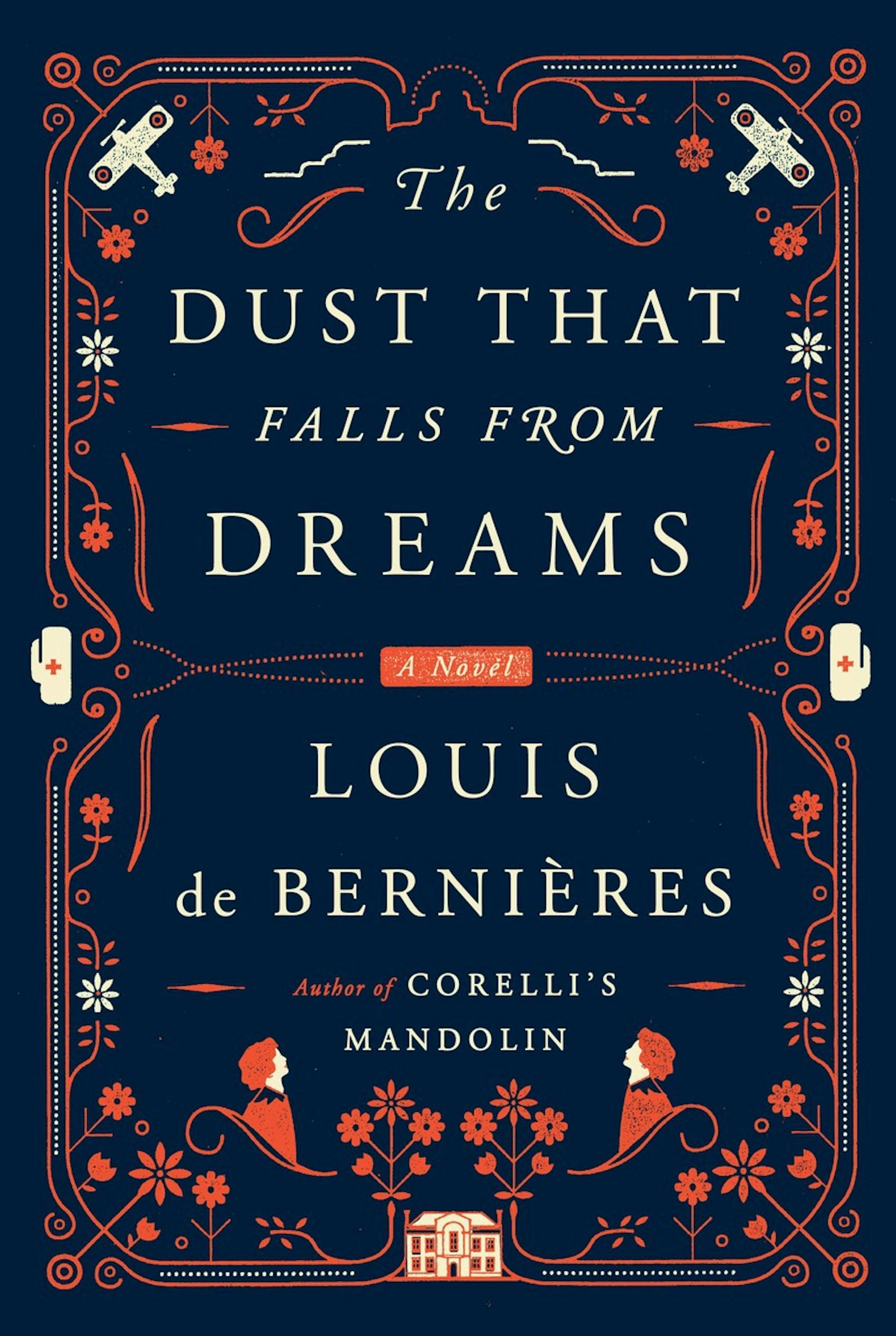
Although he's written 10 books, Louis de Bernières is best-known for his fourth, the endearing 1994 novel "Corelli's Mandolin."
Of course, it's not entirely fair to compare his new book, "The Dust That Falls From Dreams," to his old one. But when the old one is a revered novel that I've read, reread and watched (I wouldn't recommend the movie), it's hard not to make a few comparisons. Especially when there are striking similarities between the two.
Like "Mandolin," "The Dust That Falls from Dreams" is set in wartime — not the Greek islands during World War II, but in England before, during and after World War I.
And, like "Mandolin," "Dust" opens with a quick, quirky and brilliant history lesson — this time from Queen Victoria's last gasps (literally), through the brief, refreshing reign of King Edward and into the feverishly patriotic lead-up to the war.
We view that history largely through the lens of the McCosh family: the kooky "master" of which is a by-your-bootstraps Scottish success story, who's also a soft touch and afraid of his royalty-obsessed wife. And then there are the daughters, four who couldn't be more unalike.
One daughter is the perfect "blue-eyed Rosie," who, by age 12, is deeply in love with (and secretly engaged to) the equally perfect next-door neighbor boy, Ashbridge.
It's not a spoiler to tell you that these star-crossed lovers never wed, that Ash dies, that Rosie is bereft. The book — told alternately through an omniscient narrator, a series of first-person accounts, letters and diary excerpts — is full of foreshadowing, none of which, surprisingly, reduces its impact. (I still cried when Ash died.)
The story pivots from the battlefield to the McCosh mansion, pitting the graphic brutality of war against the everyday life of the family, which suddenly seems petty. Eventually, however, Mr. McCosh, his daughters and even his oblivious wife are dragged into the maw of the war, experiencing their own horrors.