

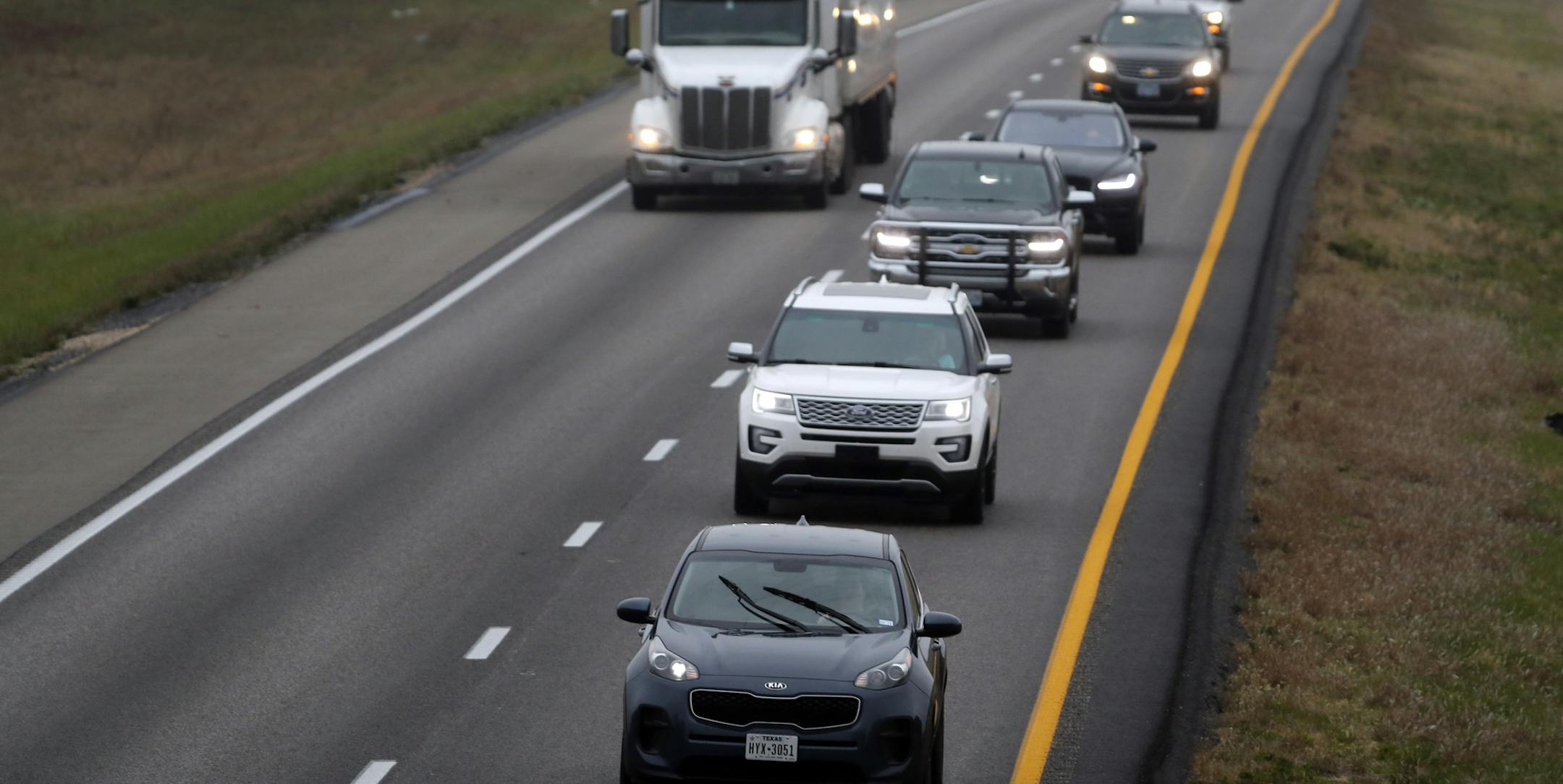
I've read with some amusement the to-and-fro over slowpokes in the left lanes of our freeways (Readers Write, March 16, and other coverage). As usual, everyone with a strong opinion is also a mind-reader. The legislator proposing to strengthen the fine for left-lane bandits just knows that they enjoy slowing the rest of us down, for any number of reasons, ranging from taking speed-limit enforcement into their own hands to cluelessness. In fact, the pavement is usually smoother in the left lane, due to less truck traffic — trucks can stress pavement more than autos, and those professional drivers "keep right except to pass."
On the other hand, the slowpokes just know that the legislator, me and a LOT of other travelers are going too fast because we're penny-ante outlaws, risk-takers and pavement abusers. What's lost in all of this "he thinks/she thinks" is the plain fact that traffic moves more smoothly and more safely for everyone when drivers "keep right except to pass," regardless of their speed and the posted speed limit. The letter writer who cited signs in other states carrying that same simple wording is correct. Change the signs. The current "Slower traffic keep right" encourages those who are going the limit to think they're not slower traffic, even if someone is bearing down on them at 74 or 79 or 84 miles per hour. It's just safer, for everyone, to keep right whenever possible.
Maybe the State Patrol could be proactive, too; pull some folks over and give them warnings if they're tailgating or impeding traffic in the left lane. But draconian fines and jail time should be reserved for those who truly endanger others' life and limb, like drunken drivers, reckless drivers, street racers, etc.
R. Russell Last, Golden Valley
ST. PAUL DROP-IN CENTER
The unmentioned defense of the Listening House purpose
The March 20 counterpoints about the Listening House failed to address the impact of homeless people on the streets of St. Paul. We need to provide daily-living support services, such as a dry and warm place to stay, restrooms and food. It is only right that we invest in providing nighttime shelter, but it is negligent not to attend to the consequences of releasing people for the day. Daytime services and facilities are needed so that downtown corners cease to become a daily congregating place for people standing in front of businesses' entrances, defecating and urinating in the doorways, selling drugs and asking passersby for money. This is not an acceptable situation, especially if our goal, as Mayor Melvin Carter has said, is to have a "thriving, vibrant, and healthy downtown scene."
Timon Iverson, St. Paul
MINNEAPOLIS DEVELOPMENT
Fourplex plan, approach to cars, East Town's striking success
REIT what you sow: Homeownership in Minneapolis will only be for the uber-wealthy as more and more homes are torn down for rental complexes ("Draft plan, including fourplex proposal, released by Minneapolis," StarTribune.com, March 23, and other coverage). It is simple supply and demand. No longer will average workers be able to create wealth to pass on to their kids.
How many ordinary people can to afford to buy a fourplex? None. A cheap fourplex is a cool $1 million to $3 million mortgage. That means REITs (real estate investment trusts) will own 80 percent of the land and structures in Minneapolis. REITs can then charge whatever they want to make the 15 percent or more return on investment for their shareholders. As little owner-occupied duplexes and houses are torn down, there will be less and less competition. A REIT is the ultimate faceless landlord.
True affordable housing is a fixed-rate mortgage over 30 years. Your house payment never goes up for 30 years. Taxes can go up, but the City Council can be held accountable for that. Rent never ends, and rent always goes up. Not so a mortgage.
The city policy should be to make homes affordable (apartments, houses, duplexes, triplexes, fourplexes) to anyone who wants one with guaranteed fixed-rate mortgages, down payment assistance and forgivable closing costs.


