

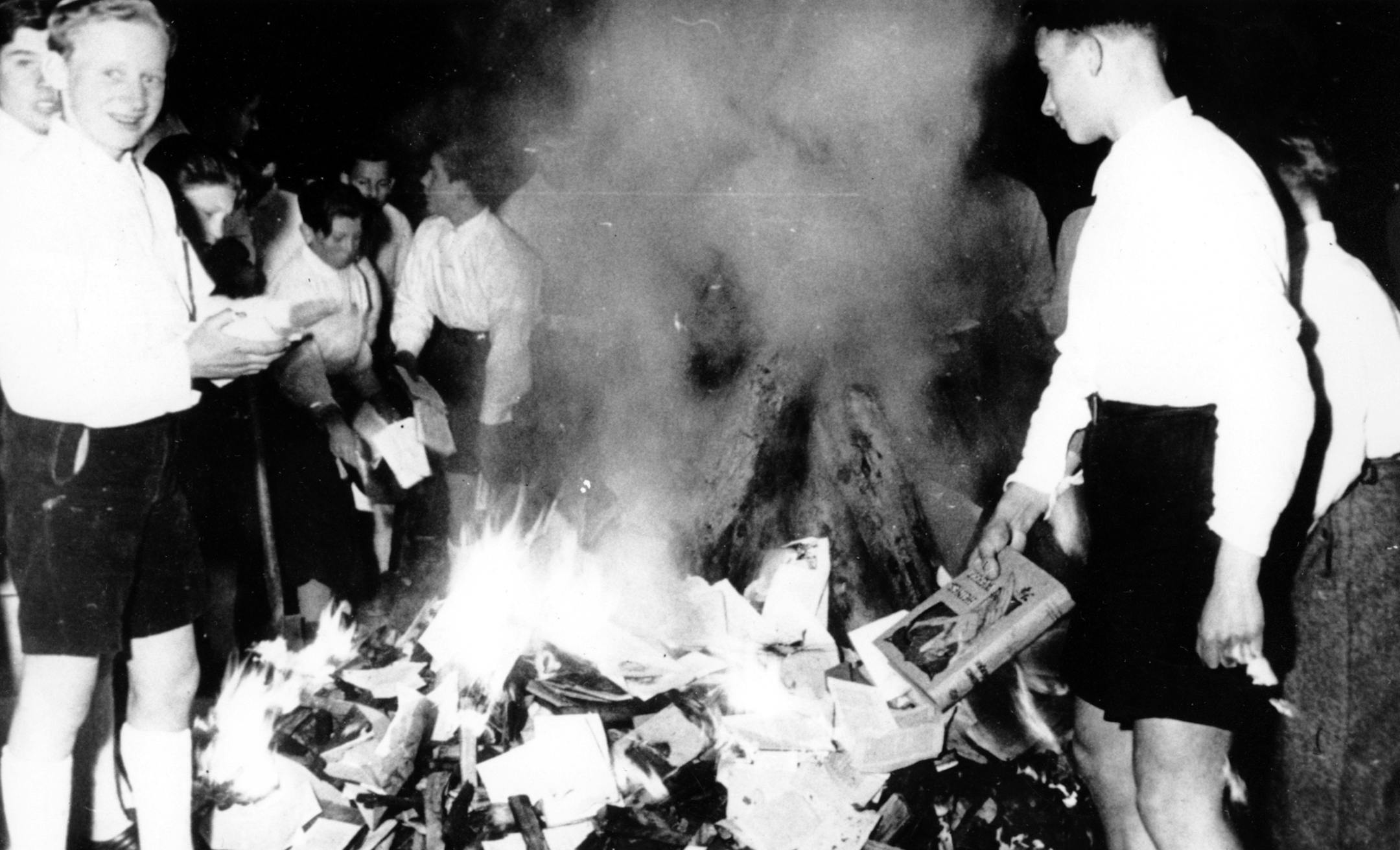
On a sunny Saturday in Berlin, Germany, I came upon a beautiful modern museum with the eye-catching name "Topography of Terror." It was recommended by our guide as very worthwhile, extremely popular and free. I was in.
As I walked along, I discovered that the museum offered a detailed chronology of how the Third Reich came to power. How could a people be duped into informing on their neighbors, burning books and looking the other way as synagogues were defaced? The whole man's-inhumanity-to-man conundrum?
In looking at the exhibits, I saw a 1933 quote by Sebastian Haffner, a German journalist who fled Nazi Germany with his Jewish wife in 1939: "What can democracy do if the majority of people no longer want it?" It seemed a bit of an oxymoron to me, so I stepped backward and started really looking at the displays.
Was it the humiliation of losing World War I, poverty, the worldwide depression, anger at their leaders? I surmised all of those things but maybe more — the anger of people who had lost their self-worth, ego, pride. They didn't want democracy. They wanted someone to fix it and, hurrah, they found someone who said he could, over and over again.
I was just a tourist from the Midwest in Berlin on a sunny afternoon in May and not in the business of making sweeping generalizations or accusations, but that quote did give me pause.
Barbra Boyken, St. Croix Falls, Wis.
• • •
Judith Healey ("What the U can do about Donald Trump," May 17) somehow relates Trump's popularity with lack of funding for college humanities study. She also said extra humanities funding would save democracy in Minnesota. I would suggest to Ms. Healey that what might save democracy in Minnesota is hiring more than 5 percent conservative professors at the Department of English she advises at the University of Minnesota.
David Spilseth, Wayzata
• • •


