

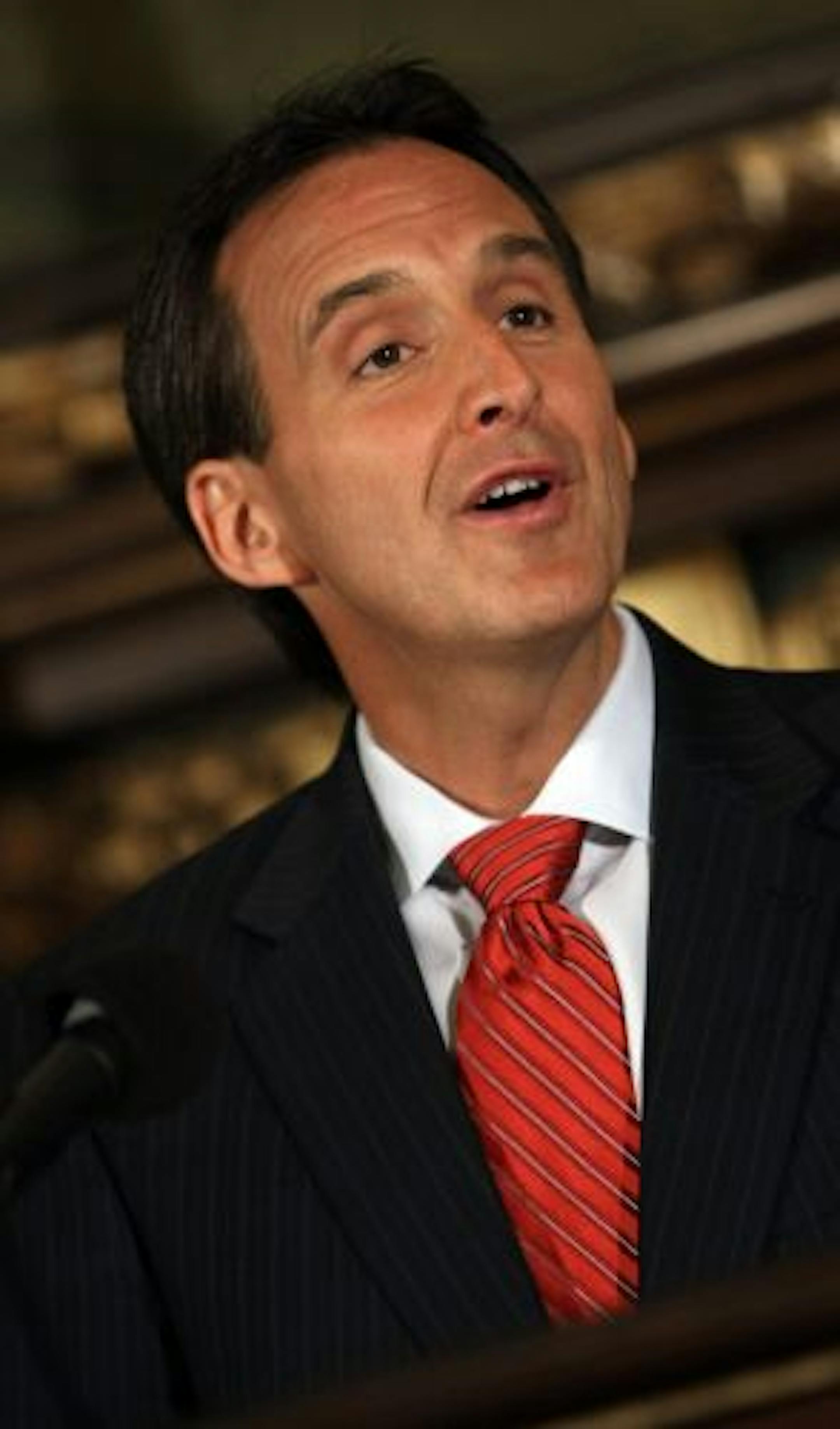
NO SUMMIT FOR PAWLENTY
A real leader would want to solve problems
I was disappointed to read that Gov. Tim Pawlenty has refused to meet with Minnesota legislators, former governors and other state leaders who are trying to solve the state's ongoing financial crisis. Isn't this when all of our statesmen and experienced lawmakers should share ideas and cooperate in an effort to help the people of Minnesota? Shouldn't our leaders be above petty remarks and join together in order to work for Minnesotans?
How can we ever consider a man for president who is unwilling to listen to and work with leaders of all parties, backgrounds and experience?
GRACE K. WIGGEN, COLUMBIA HEIGHTS
EARLY CANCER SCREENING
It may actually hurt more than help women
The Aug. 10 editorial, "Young women and breast cancer," correctly points out that the American Cancer Society and others have serious concerns about the legislation authored by Sen. Amy Klobuchar on this issue.
About 5 percent of the 192,000 new cases of breast cancer annually occur in women under 40, and there is no evidence to suggest that a broader education campaign directed at them, as recommended by Klobuchar's bill, would result in fewer cases or fewer deaths from the disease.
The ACS's evidence-based guidelines recommend that screening women for breast cancer begin at age 40, because at that point the lifesaving benefits of screening outweigh the risks. Those risks include false positives, which lead to unnecessary testing and unnecessary anxiety. Another real risk is the mammogram missing the breast cancer tumor, and this occurs more often in younger women than in older women because the dense breasts of younger women make breast cancers more difficult to detect in mammograms.
Unfortunately, we do not have sufficient scientific evidence to suggest that women under the age of 40 should do anything other than be aware of any changes in their breasts, understand how their breasts look and feel, and speak with their doctors if they have a concern.
While the legislation is well-intentioned, it could lead to unnecessary treatment and a waste of health care dollars as there is no scientific evidence it will save lives.


