

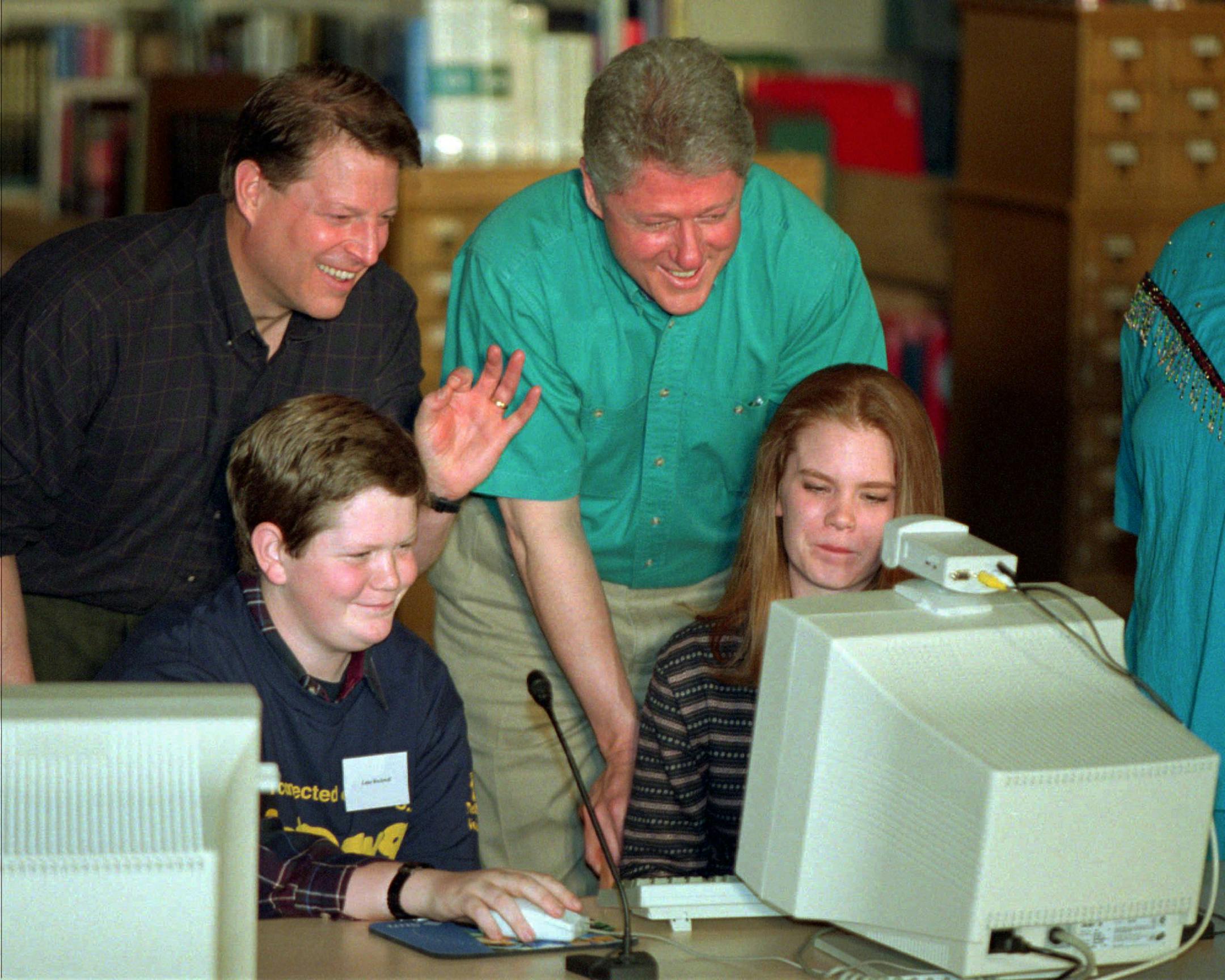
The 'digital divide' seems wider than ever.
No, not the differences in Internet access caused by income inequality. Great strides have been made bridging that gap ever since the issue was dramatized by a photo-op of President Bill Clinton and Vice President Al Gore wiring a California high school to make sure its lower-income students had equal Web access.
No, today's yawning digital divide is between left and right, liberals and conservatives, Democrats and Republicans. That ideological gap -- a gulf, really -- separates the Netroots Nation and RightOnline confabs taking place in Minneapolis this weekend, almost within earshot of each other.
This divide's impact is profound -- for digital media, sure, but just as much for politics, and thus for citizens, at a time when the state and the nation face enormous problems that polarization aggravates.
Even media scholars and experts wonder whether digital media mirrors, or causes, these divisions.
"To what extent was this deterministic?" asks Seth Lewis, assistant professor at the University of Minnesota's School of Journalism and Mass Communications, whose academic work involves the impact of digital media.
"Did the technology change society, or was it that people constructed the technology to suit longstanding cultural patterns already in existence?"
Answering his own question, Lewis calls digital media "an enabler," saying it "has created the kind of context in which partisanship and this kind of [political] organizing can really thrive in a way that was never possible before."


