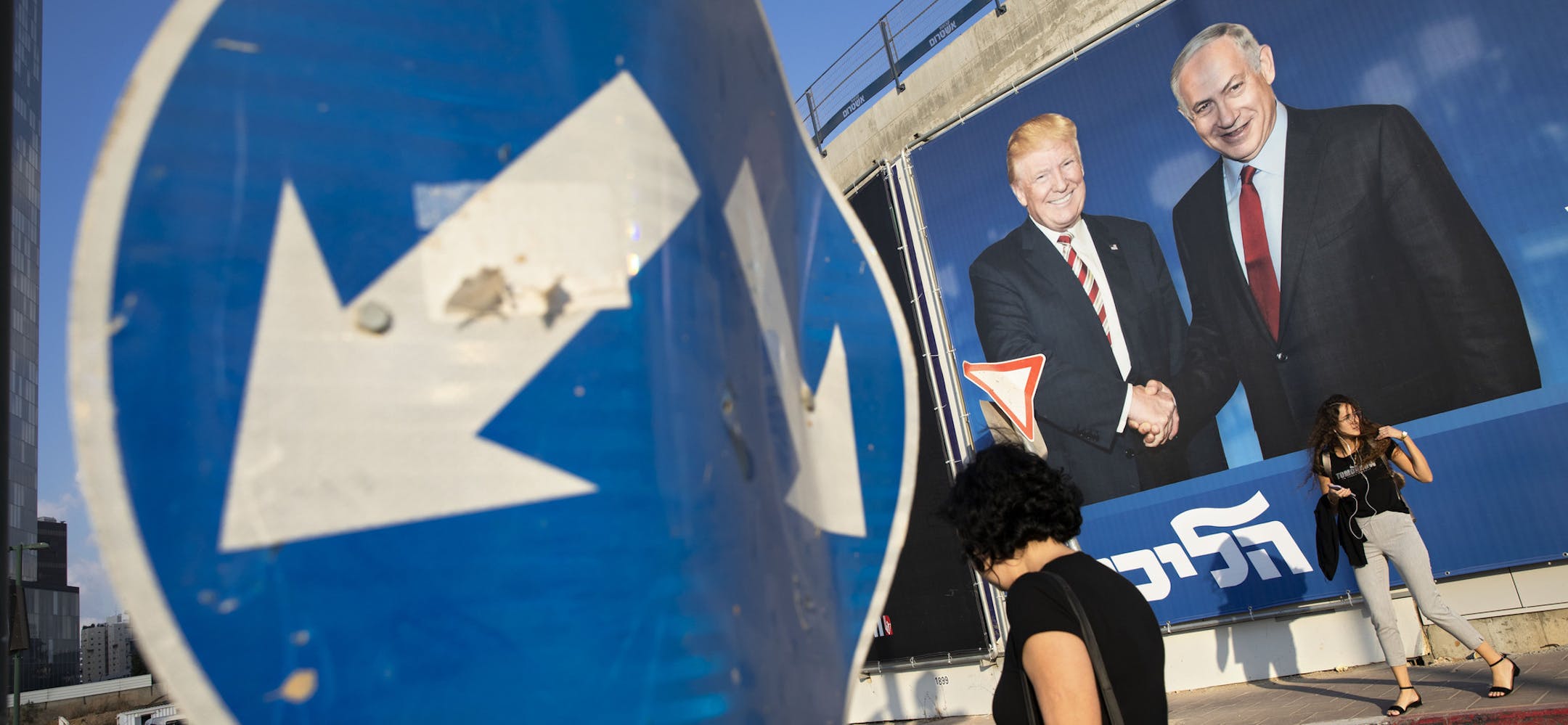
The Israeli-election campaign banner, showing Prime Minister Benjamin Netanyahu and President Donald Trump in a grip-and-grin photo, was so big it had to hang from buildings.
Now it's Israel and, in some sense, U.S.-Israel relations that are left hanging.
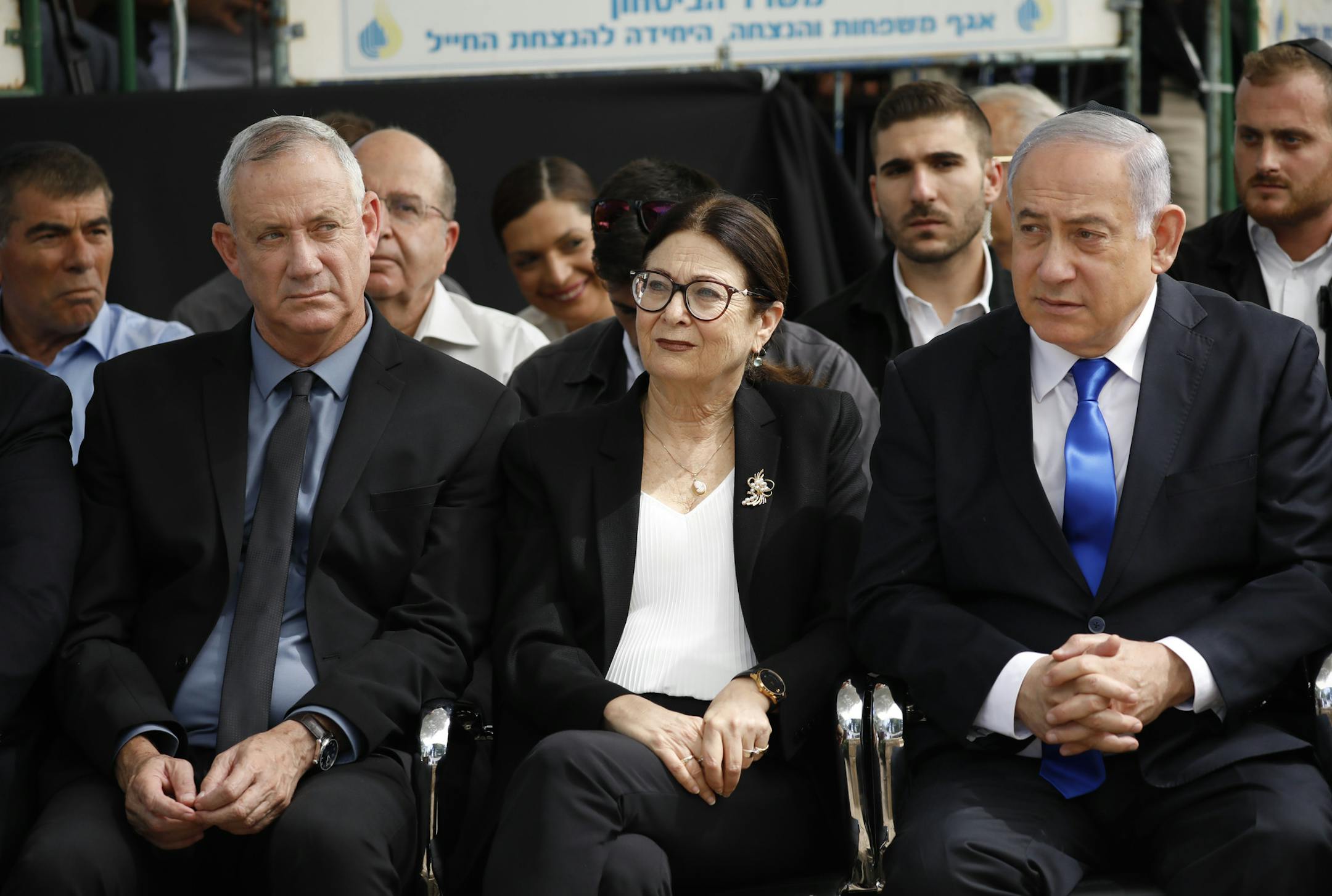
That's because the second Israeli election in five months was once again inconclusive, with neither Netanyahu's Likud-led coalition or an upstart party, Blue and White, led by former military chief of staff Benny Gantz, winning enough seats to form a majority government.
So starting Sunday Israel's president, Reuven Rivlin, officially commences coalition talks.
The jockeying didn't wait, however. Netanyahu tried to seize the initiative and squeeze Gantz into an early deal.
Gantz, a political newcomer but savvy veteran, didn't flinch. "We will not give in to any dictate," he said. "I will conduct the negotiations responsibly and judiciously. There will be no shortcuts."
There are also no shortcuts to uniting Israel's divisions. But the disunity isn't primarily left-right (the left has mostly been left behind in recent elections), but along secular-religious splits. Gantz is a centrist, and Netanyahu has represented a conservative coalition that includes ultraorthodox parties prioritizing issues like military service exemptions.
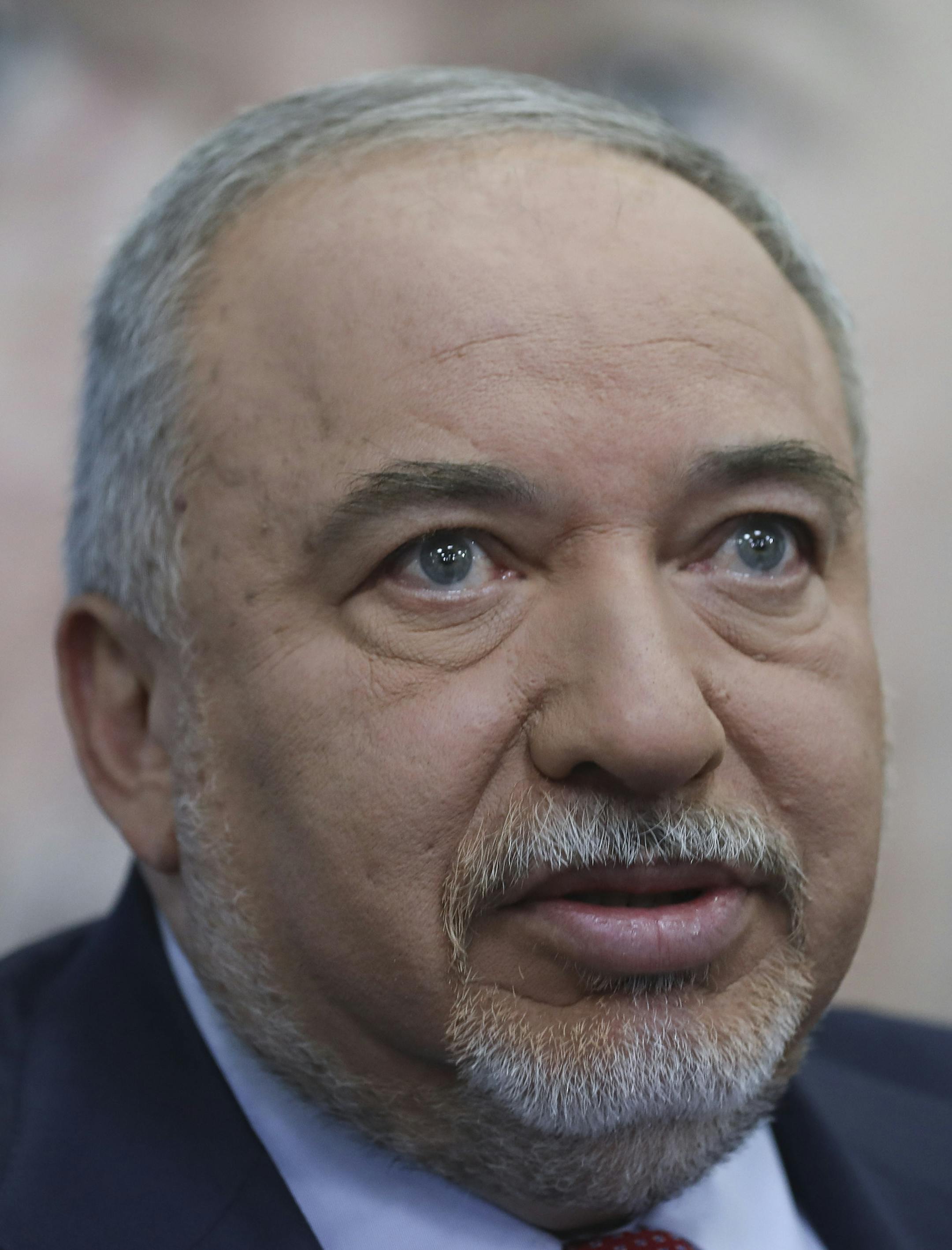
This stance doesn't stand for the secular nationalist party Yisrael Beitenu, led by Avigdor Lieberman, an ally-turned-adversary who turned against Netanyahu.