

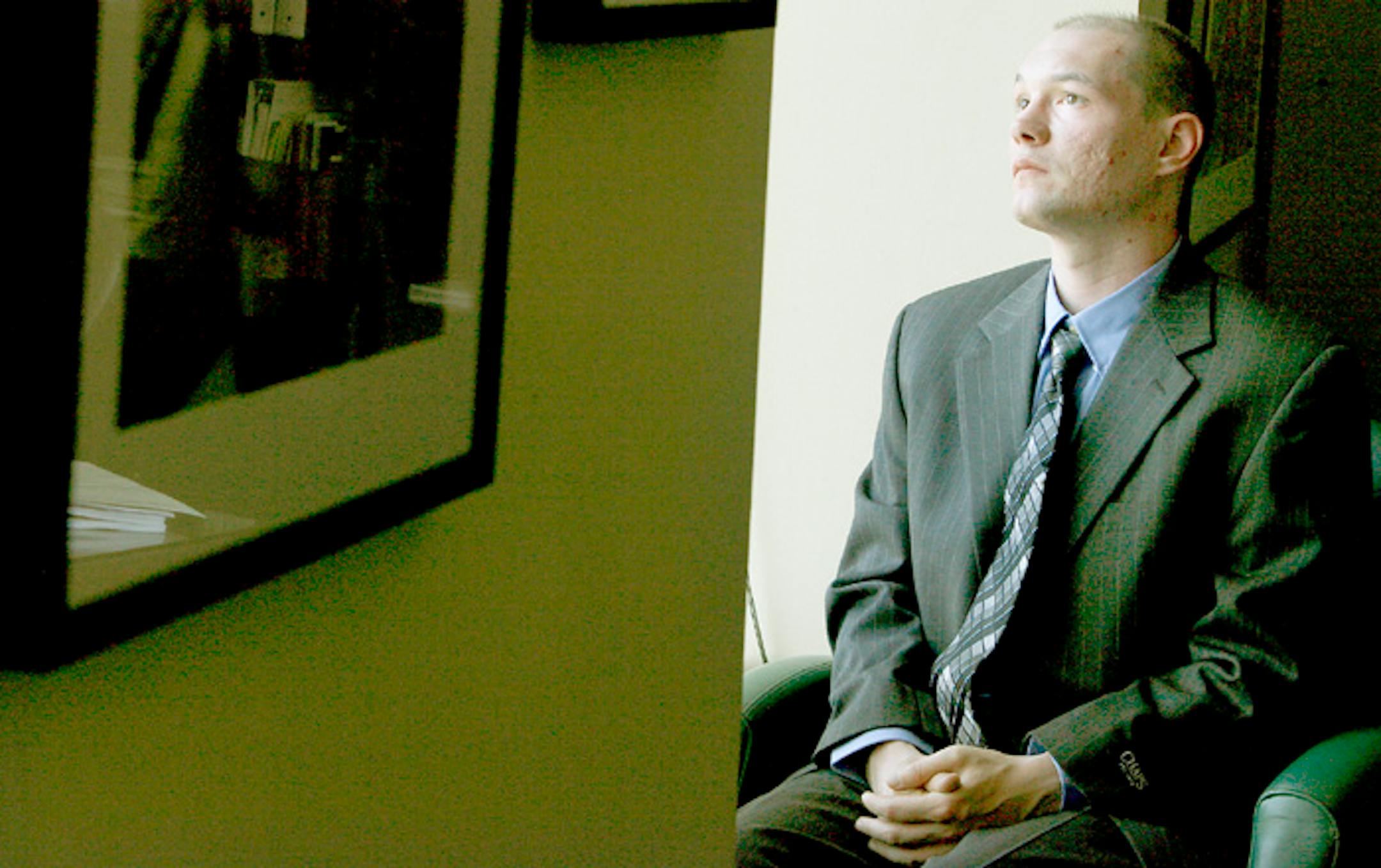
For more than three months, Scott Michael Waite wore an electronic ankle bracelet that made him a prisoner in his own home. With his reputation sullied and his life put on hold, he sat accused of raping a 26-year-old woman he had met in an Oakdale bar on a cold January night. ¶ But in a recent unique turn of events, after an exhaustive investigation by his attorney, Ryan Garry, prosecutors dropped the charges in April. Waite, 29, now must rebuild his life. ¶ "I'm pretty shook up by the whole thing," Waite said. "I was treated like a complete criminal. To hear people say these malicious things about me is really hurtful." ¶ The case was dropped "in the interest of justice" and was an unusual one "where we get information after the fact and feel we really can't prove our case at all," said Susan Harris, first assistant attorney in Washington County. "In this particular case, they found a lot of people willing to come forward and speak against [the accuser]."
Garry, a Minneapolis criminal defense attorney, said that it's "very difficult and very rare" for a prosecutor to drop a felony case after filing criminal charges. In addition, recent Minnesota crime statistics show only about 6 percent of all alleged rapes are classified as "unfounded."
Garry went to Washington County District Court with statements from 13 witnesses who contended that the woman had a promiscuous history and, when caught, would fabricate a rape story. One of them was a former husband, who said that no fewer than 15 times -- including the day after their wedding -- she'd told him she'd been raped.
"You can't rape the willing is what I said," the former husband, who lives in Texas, told private investigator Raymond DiPrima.
A chance encounter
Two troubled lives converged in mid-January when Waite, then a student at a Pentecostal university in Minneapolis, drove home from Beer Belly's Bar in Oakdale with the woman, known in court documents as S.N.B.
Waite admits they had sex but said it was consensual. She alleged a violent rape. An Oakdale police officer observed she was "visibly upset, crying and shaking," according to the criminal complaint.
Neither Waite nor his accuser had an easy life, according to court documents and interviews. Both struggled to make genuine friends and find a social niche.


