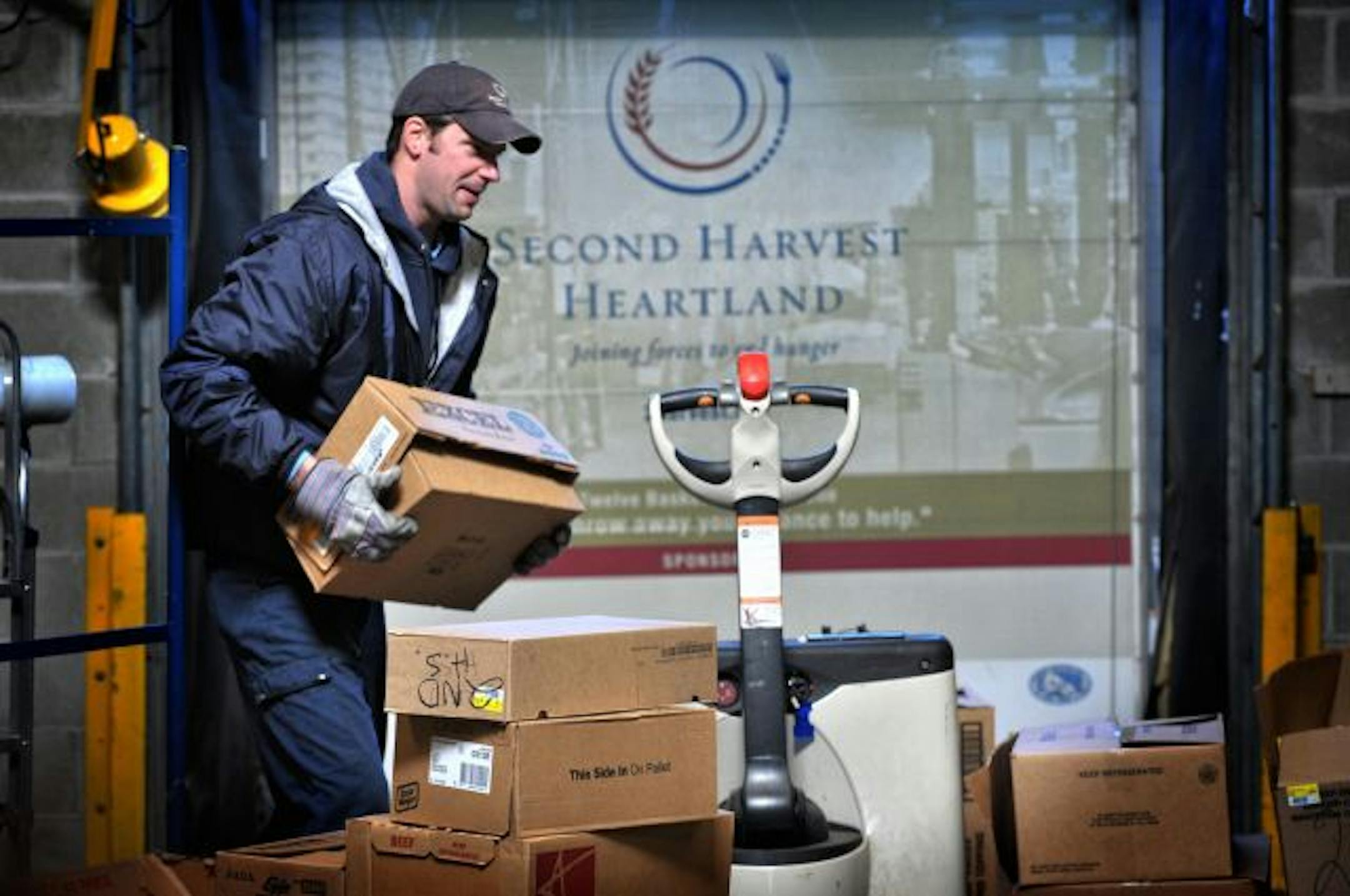
Three times a week, Jason Van Den Boom backs his refrigerated truck to the loading dock at the Wal-Mart Supercenter in Shakopee, and wheels on pallet after pallet of food that once was given away as animal feed, or tossed in the garbage bin. Now, the nearly expired food helps feed an exploding number of hungry people in the Twin Cities.
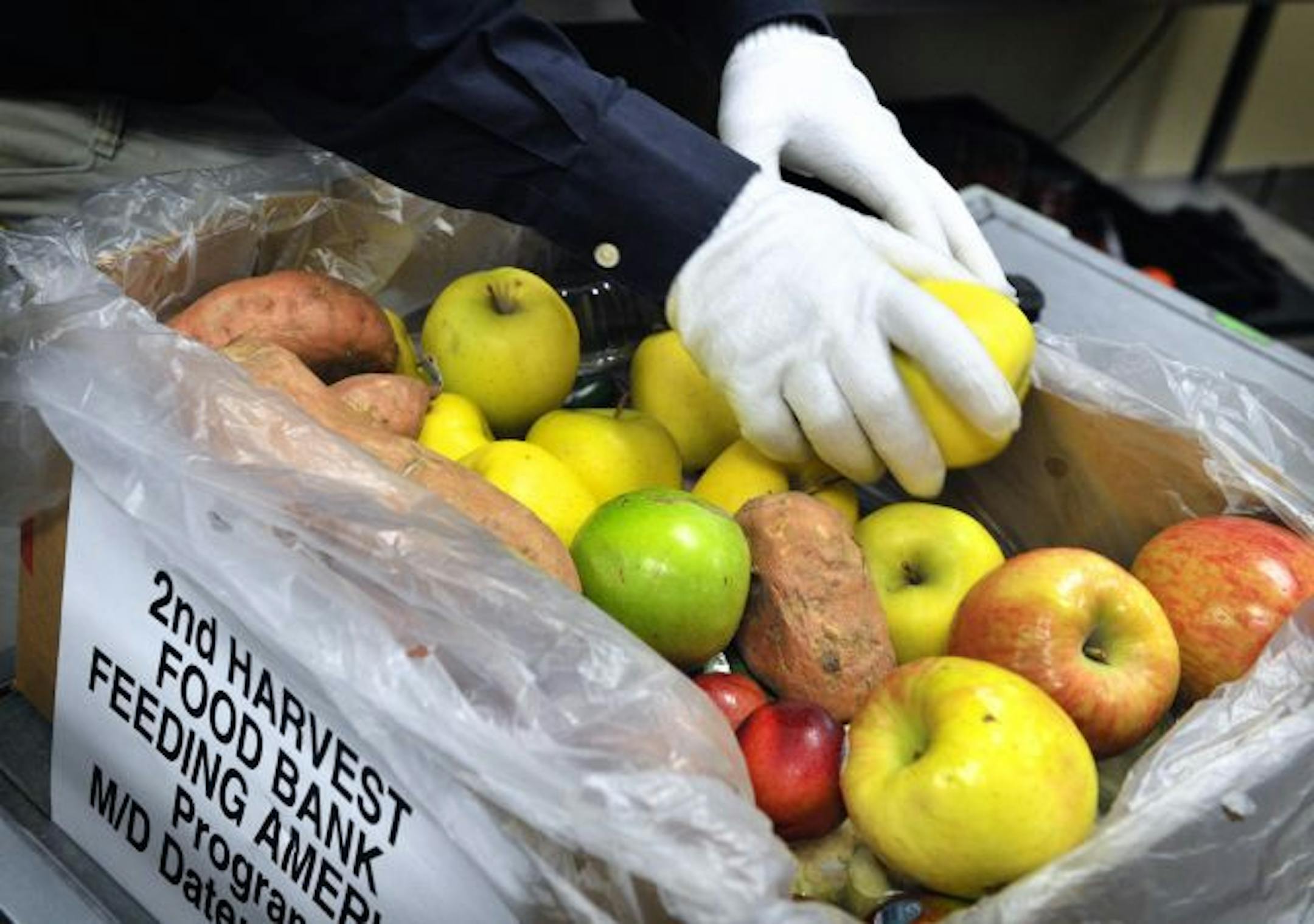
"Let's get 'er done," said Van Den Boom, of Second Harvest Heartland, clapping his hands together as he greeted Wal-Mart's Tricia Goodman earlier this week. Goodman spends her shift making sure the store's items look top-notch, and those that aren't -- yellowing broccoli, splotchy apples, perishables such as meat, milk and bread that are approaching their expiration dates -- Goodman sets aside for Van Den Boom to pick up.
"The food's still edible and healthy," said Goodman, who has worked at Wal-Mart for 20 years. "I feel good in my heart knowing it's going to the right people."
Goodman and Wal-Mart are among the latest recruits in the war against hunger in Minnesota, joining Target and other big box retailers in helping food shelves serve record numbers of families in search of groceries.
As the Great Recession continues, about 1 in 10 people in the Twin Cities are going hungry, according to Greater Twin Cities United Way. And at places such as the ICA food shelf in Minnetonka, which serves the affluent west metro suburbs, a third of the customers have never been to a food shelf before.
"You wouldn't believe the need," said Cathy Maes, executive director of ICA, which is a part of the Second Harvest network. "Food goes out as fast as it comes in. We can hardly keep up."
Without their new allies, the food shelves would be sinking even further beneath the waves of hungry families. In October, Target contributed about 24 percent of the perishable food Second Harvest collected, and Wal-Mart added about 17 percent. Grocers such as Supervalu and Cub supply most of the balance. In the past year, Second Harvest, which serves more than 980 emergency food organizations in 59 Minnesota and Wisconsin counties, has gathered up 4.9 million pounds of food, a 45 percent increase over the previous year.
With Target, which recently added fresh food to the non-perishable items it began donating in 2001, and Wal-Mart in the mix, Second Harvest might be able to bring in 9 million pounds of perishables next year -- an 80 percent boost -- said Rob Zeaske, Second Harvest's executive director.