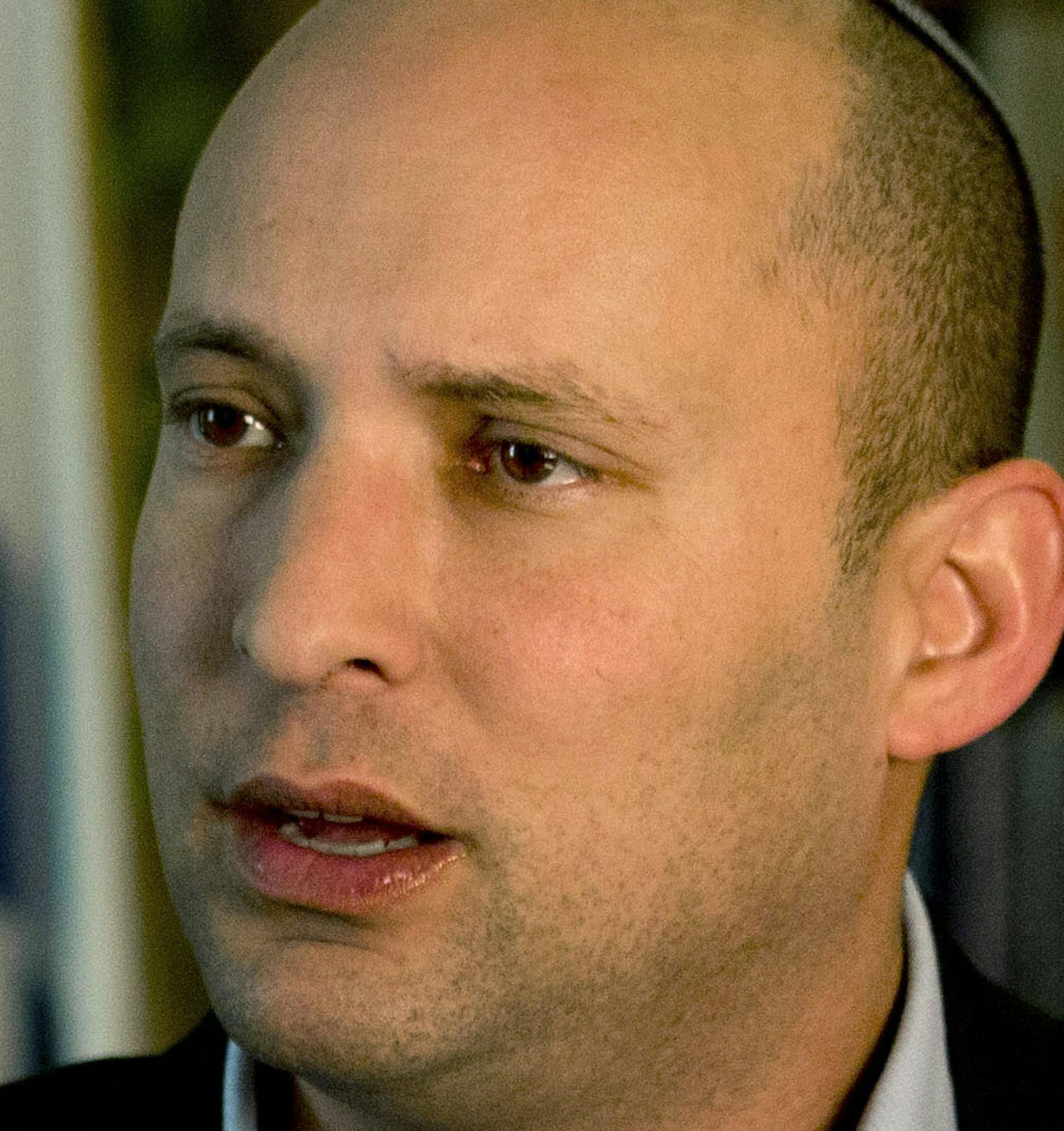
Naftali Bennett
Economy minister and leader of the far-right Jewish Home Party, Bennett was a surprise success in the 2013 election. He supported annexation of more West Bank territory and called a Palestinian state "suicide" for Israel. Bennett, 42, who once ran a U.S. software company, has broadened his party's appeal to more secular Israelis through a series of campaign ads in which he mocks liberals, whom he accuses of apologizing for Israel's existence. He's viewed as a prospect for a top cabinet post if Netanyahu forms the next governing coalition.
Moshe Kahlon
Kahlon, a former communications minister, promoted competition in the cellular market, a move that cut the costs of mobile telephone services. Once a Likud politician, he split from the party after social protests in 2011 and sat out the 2013 election. He formed a new centrist party, Kulanu (All of Us), in January, and could be a kingmaker in coalition-building after the election if he secures the 10 seats polls predict. An attorney born to Libyan immigrants, Kahlon, 54, has hinted at a partnership with Netanyahu — and with Herzog.
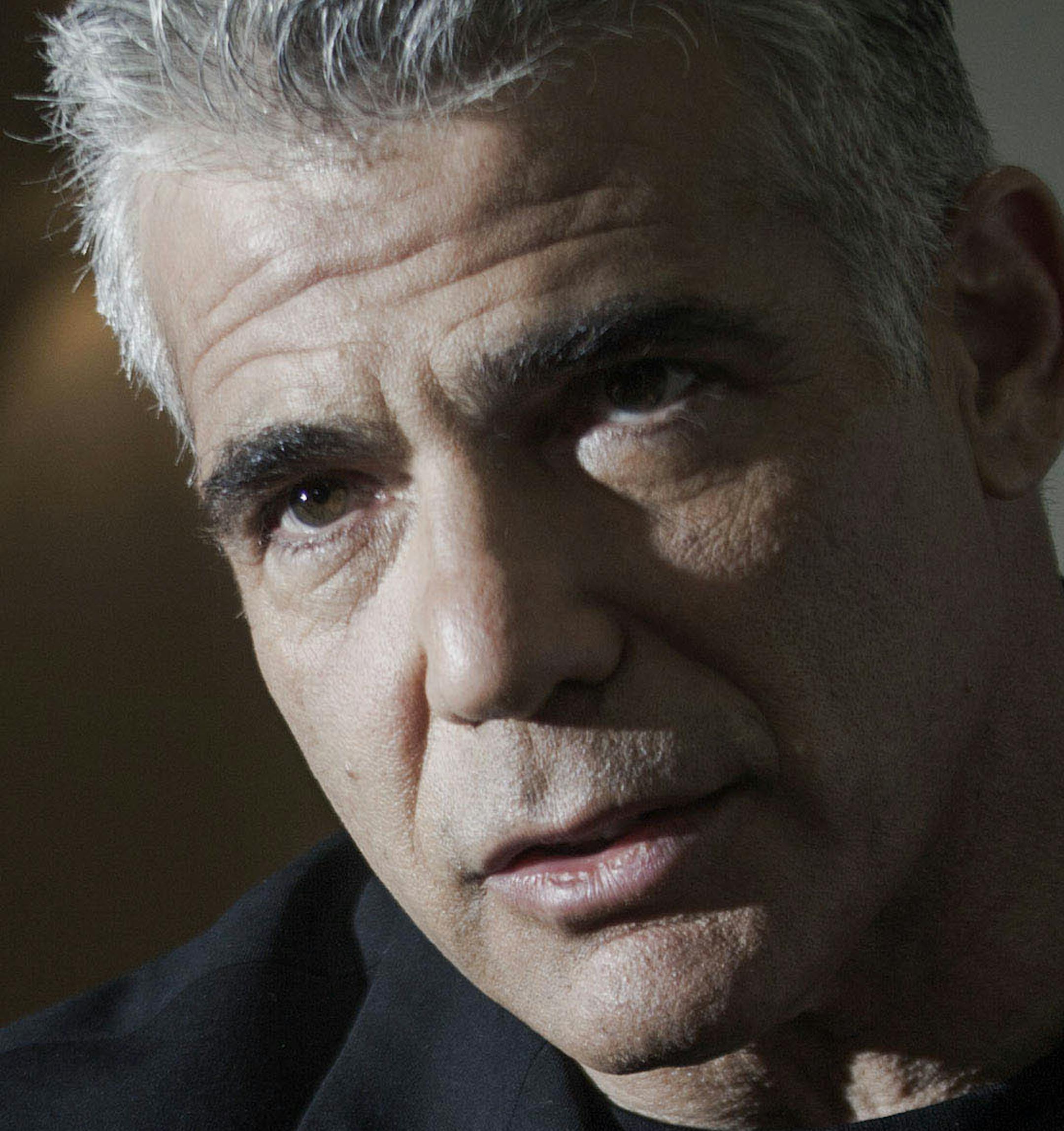
Yair Lapid
Once a TV news anchor, Lapid, 51, was the rising star of Israeli politics in the 2013 election. His centrist Yesh Atid Party finished second behind Netanyahu's Likud. As a result, Netanyahu named him finance minister, a nod to his party's success and its pledge to relieve a housing shortage, achieve lower prices for first-time buyers and tackle Israel's high cost of living — goals that have been elusive. He was fired amid the government squabbling in December and saw his party's popularity plunge in polls at the start of the campaign.
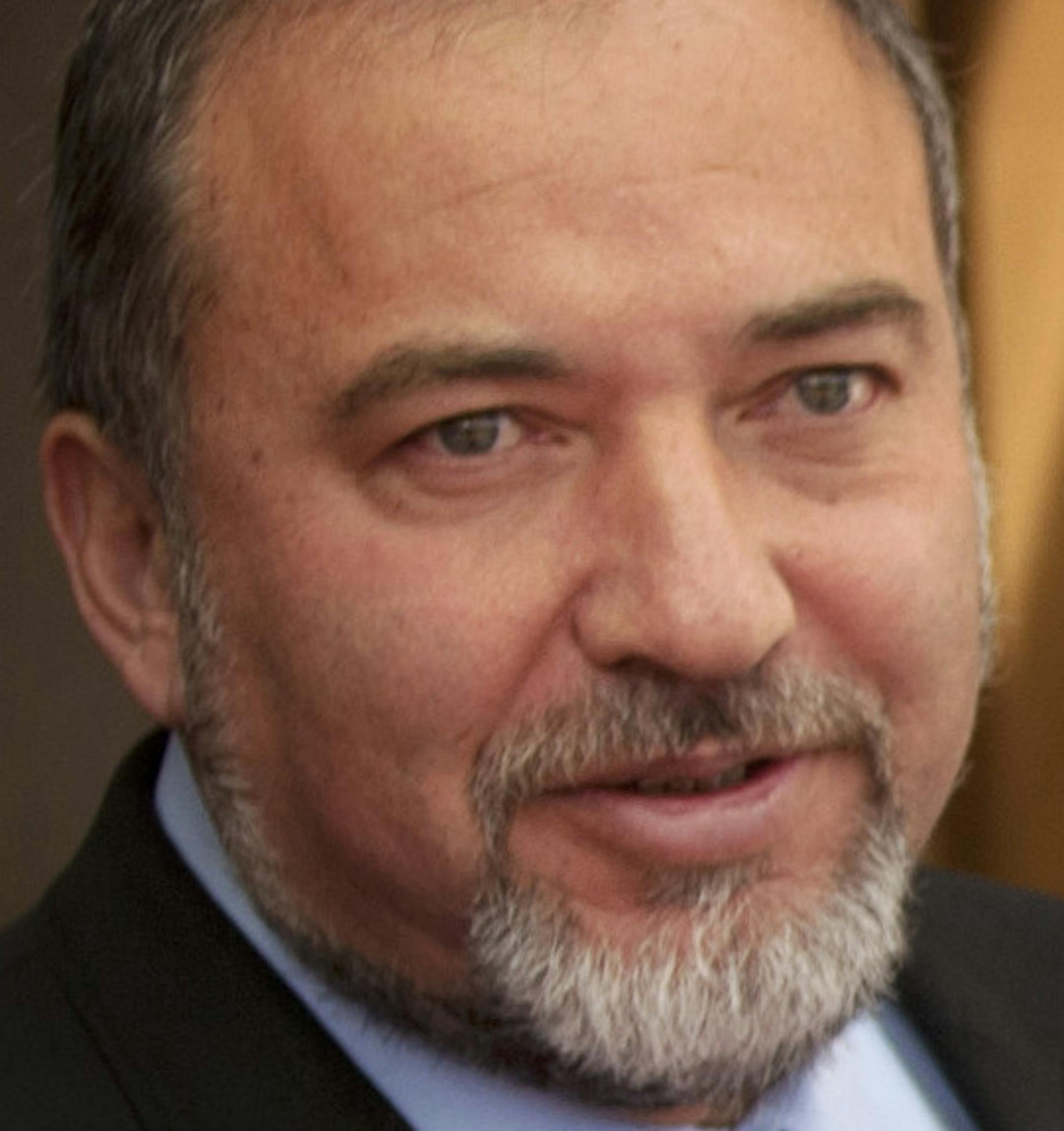
Avigdor Lieberman
Israel's foreign minister, the Moldovan-born Lieberman, 56, heads the ultranationalist Yisrael Beiteinu Party, which ran jointly with Likud in the 2013 election. Lieberman's party is running on its own this time. Polls predict it will win only five or six seats as his base of support, immigrants from the former Soviet Union, integrate into Israeli society and turn to other parties. His policies include imposing a loyalty oath on Israel's Arab minority and trading Israeli-Arab towns to any future Palestinian state for West Bank land.
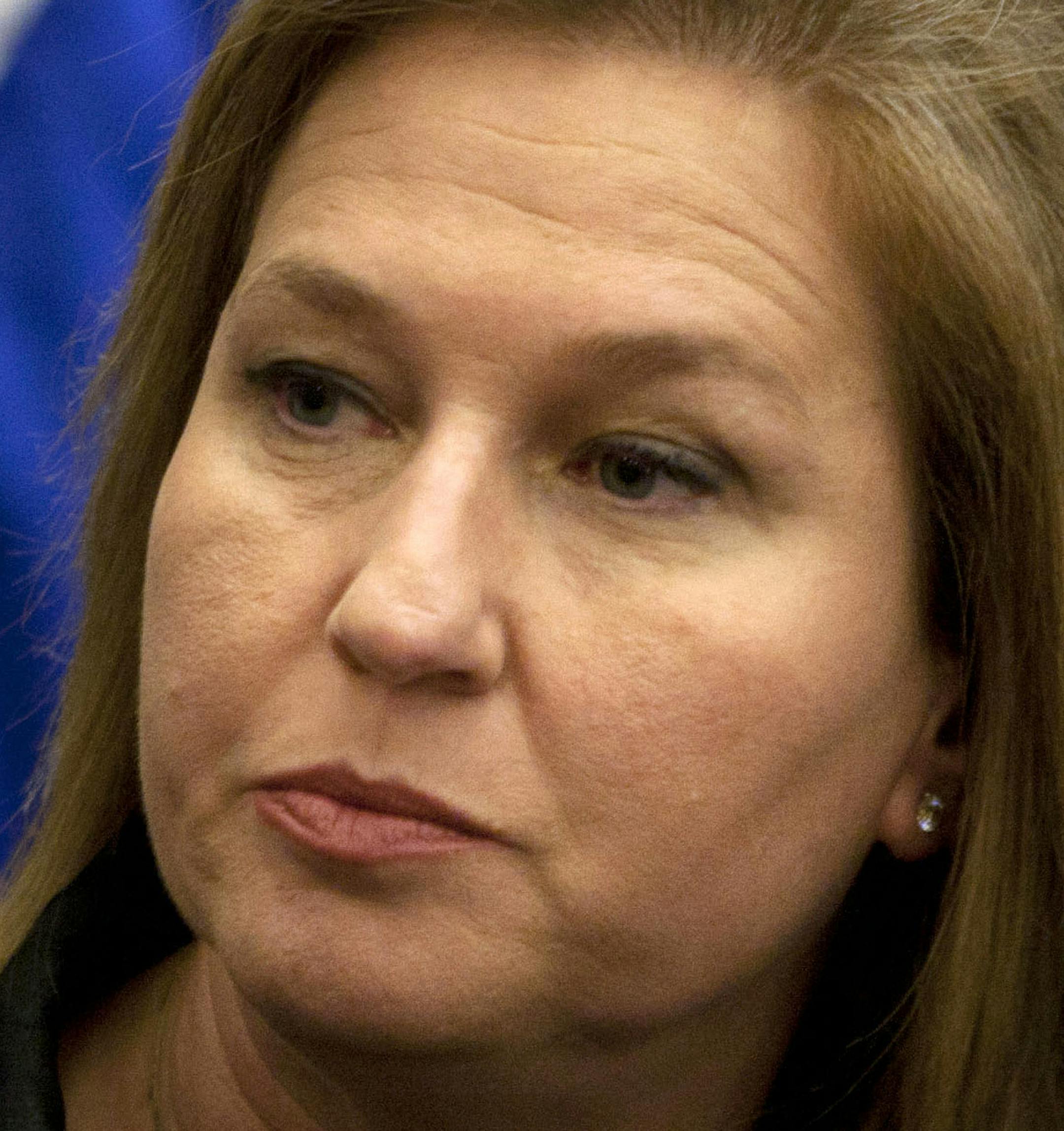
Tzipi Livni
Fired by Netanyahu in December after infighting over government policies, Livni, a centrist who was justice minister and chief peace negotiator with the Palestinians, seemed headed for obscurity until she struck a partnership deal with Herzog. An advocate of a two-state solution with the Palestinians, Livni, 56, promised to find ways to resume peace talks and repair ties with the U.S. administration. Livni came into politics in the 1990s, after a stint in the Mossad, Israel's intelligence service, and time as a corporate lawyer.
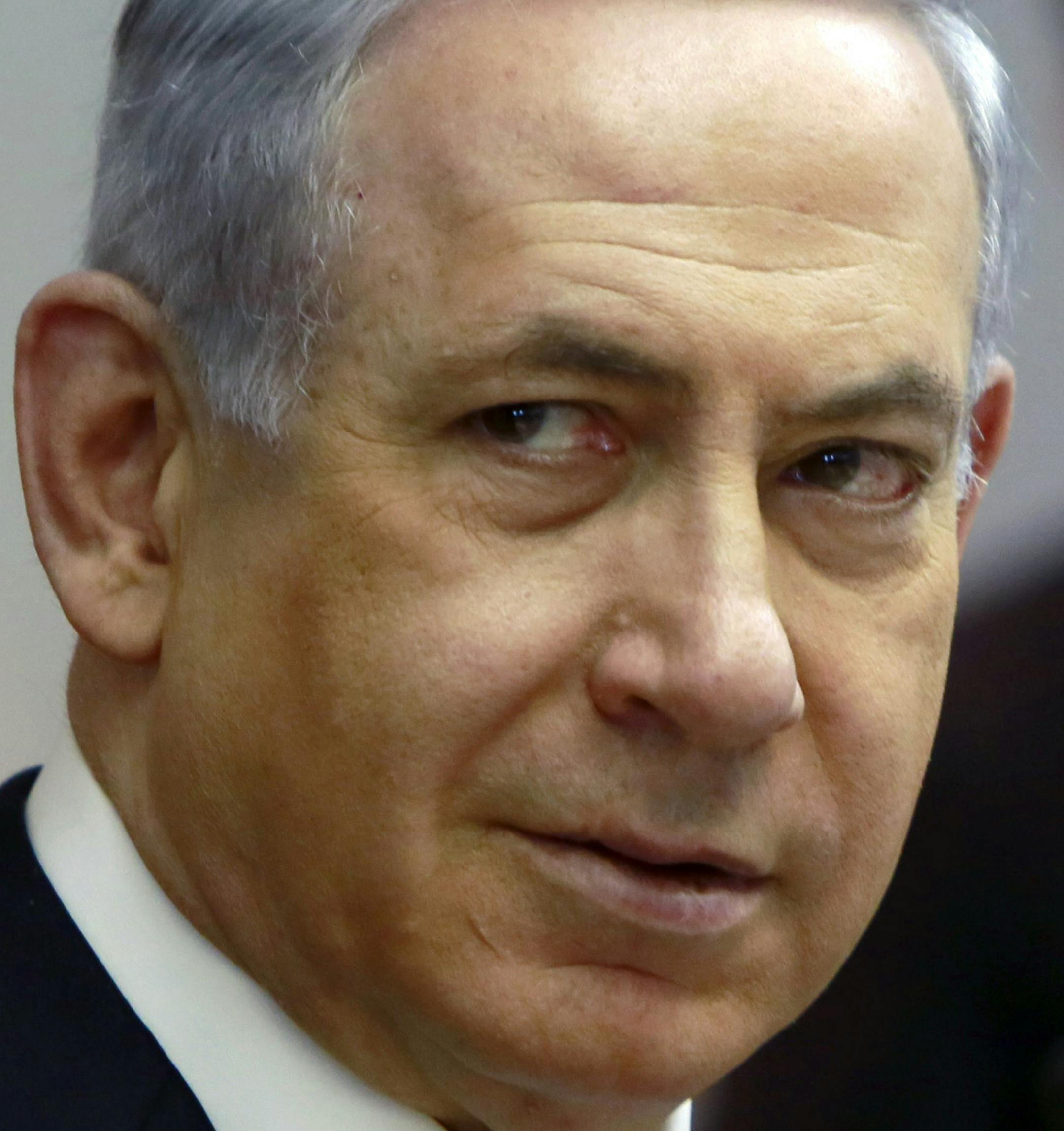
Benjamin Netanyahu
Netanyahu, 65, is seeking a fourth term as prime minister as head of the right-wing Likud Party. He has made security a key issue of his campaign, straining his relationship with President Obama by speaking in Congress against a nuclear deal with Iran. His policy of settlement-building on occupied land that Palestinians want for a state, and the breakdown of peace talks with the Palestinians last year, have put him at odds with many of Israel's traditional allies. He's seen as the person most likely to build a coalition on the right.
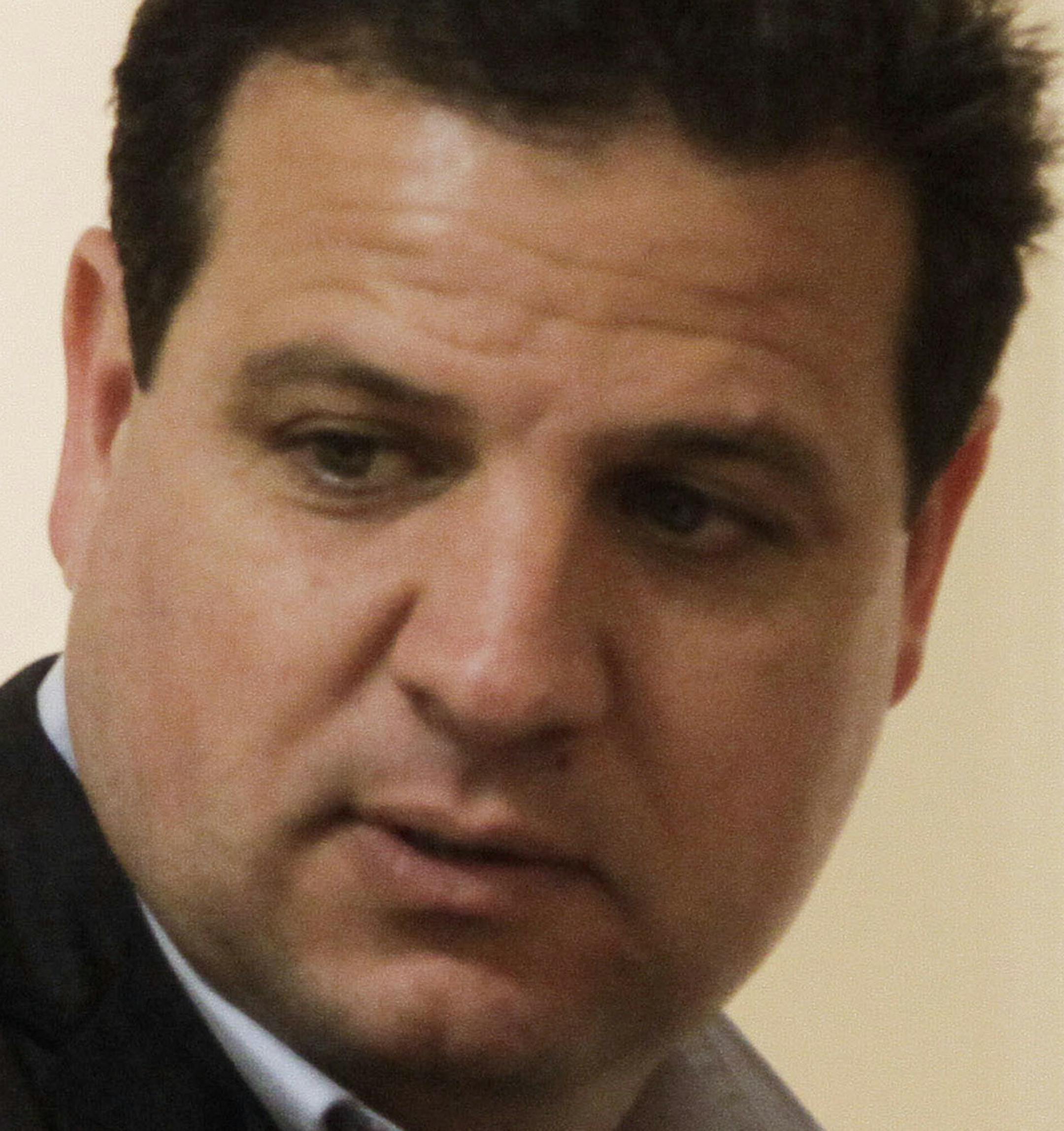
Ayman Odeh
Though the Arab candidate is not well-known to most Jewish Israelis, the party he heads — the Joint Arab List — is gaining in the polls. It is the first time Israel's four Arab parties have united under one banner and they could win around 13 seats. A lawyer from the northern city of Haifa, Odeh, 40, supports an Arab-Jewish alliance to fight discrimination, racism and social inequality in Israel, where Arabs comprise about 20 percent of the population of 8 million and have long complained about discrimination.
News services