

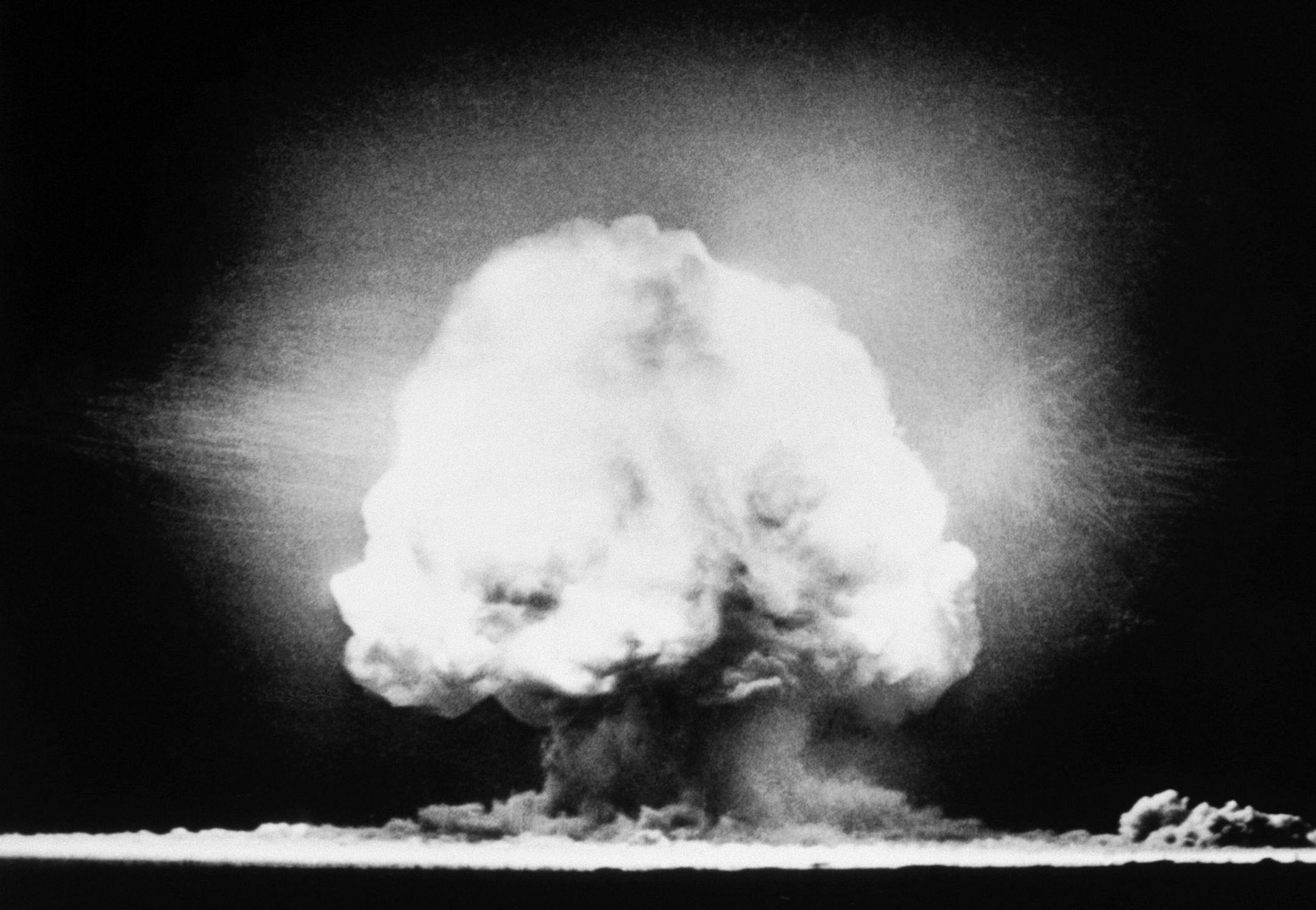
On July 16, 1945, Manhattan Project scientists, government officials and soldiers witnessed the successful Trinity test at Alamogordo, N.M. The "Gadget" yielded about 20 kilotons of force, slightly more than the "Little Boy" bomb dropped on Hiroshima a few weeks later. The Anglo-American Manhattan Project had launched the Atomic Age.
Since then, the world's nuclear arsenal has grown to about 15,000 weapons, many with power exceeding the atomic bombs of World War II. North Korea's controversial nuclear tests and the debate over the 2015 Iran deal reveal that the nuclear genie unleashed by the Gadget will not go back into the lamp.
An unlikely scientific success, the Manhattan Project required extensive federal funding, government partnership with business and a collaborative scientific environment. That was the winning equation: Countries that follow it succeed in joining the nuclear club; those that don't fail. And it clarifies why stopping states from obtaining nuclear weapons is so challenging: Success depends on domestic, not foreign, conditions.
In its development of the atomic bomb, the U.S. spent about $30 billion (in 2016 dollars) and employed an estimated 485,000 people. Large companies such as DuPont, Chrysler, and Union Carbide and Carbon partnered with the War Department in this top-secret effort. The bulk of the money spent on the Manhattan Project went to enrich uranium and produce plutonium — an enormous undertaking that required scientific experimentation as well as the speedy construction of large uranium enrichment plants and the world's first nuclear reactors.
Most Manhattan Project workers built and operated the uranium enrichment facilities and reactors. Information was compartmentalized and provided on a need-to-know basis, ensuring that only a fraction of workers understood the larger goal of the project.
But crucially, this atmosphere of secrecy did not extend to scientists. J. Robert Oppenheimer, director of the Los Alamos Laboratory, held weekly colloquia at which scientists and engineers from different groups could discuss problems they had encountered. Collaboration and intellectual exchange resulted in brainstorming sessions to tackle seemingly impossible obstacles.
The success of the project stunned atomic scientists in other nations. When Werner Heisenberg, head of the German atomic bomb project, heard of the bombing of Hiroshima, he declared, "I don't believe a word of the whole thing." It was incomprehensible to him that the U.S. had undertaken such a massive enterprise. Nazi Germany's own efforts had floundered, because its scientists and military gave the atomic bomb project low priority and did not share important information. Nazi leader Adolf Hitler was more focused on developing the V-2 rocket, a long-range ballistic missile that could hit Britain, than on building a nuclear weapon.
Japan and the Soviet Union also conducted research into uranium enrichment. But neither saw their atomic projects as a priority, and they neglected to invest wartime resources in their programs.


