
Mpls. pledges to boost local bees

Bee-friendly plants could become more common around Minneapolis under a set of commitments approved by the City Council Friday.

August 21, 2015 at 8:34PM
(The Minnesota Star Tribune)

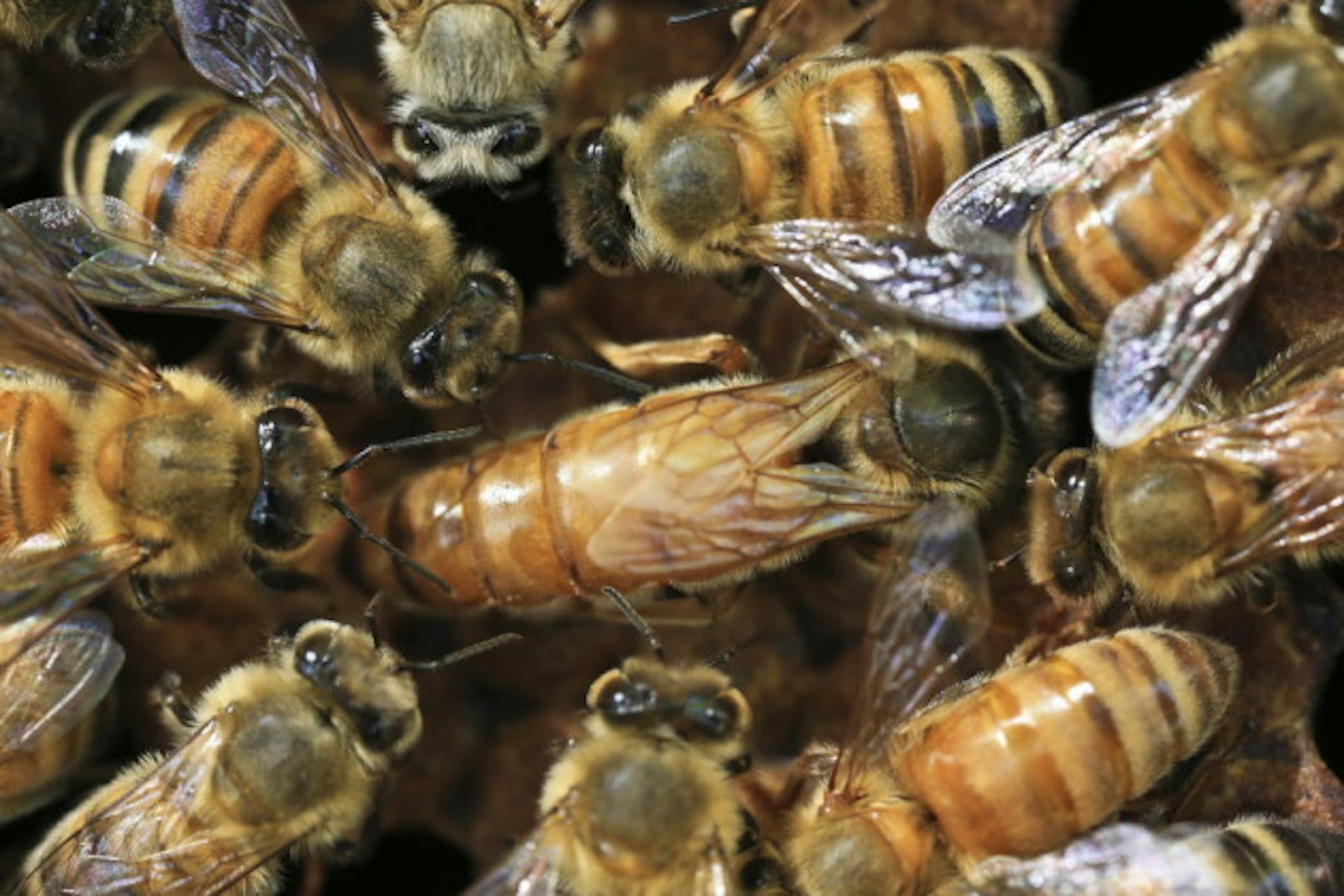
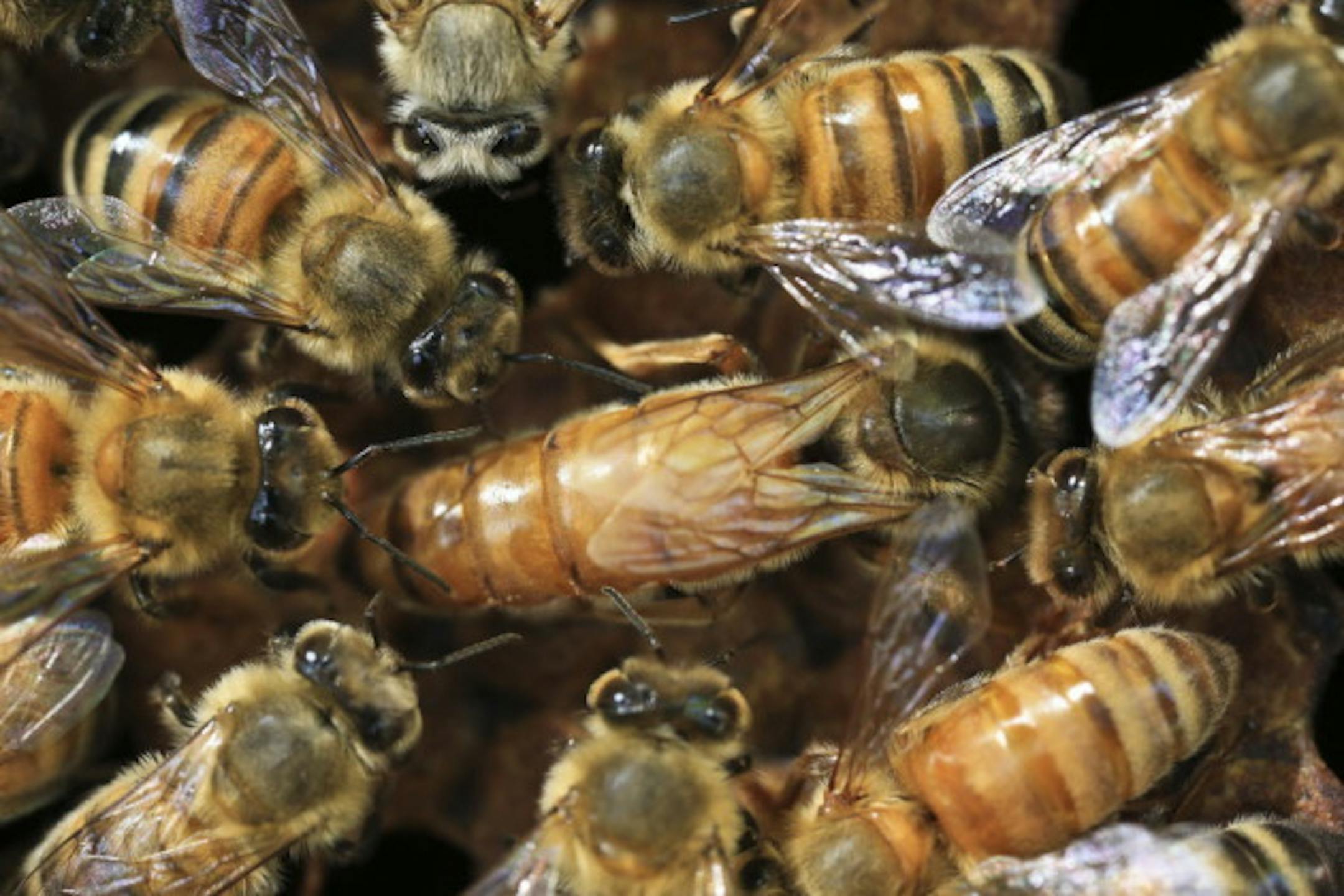
Above: Worker bees surround a queen bee. (RENEE JONES SCHNEIDER)

Bee-friendly plants could become more common around Minneapolis under a set of commitments approved by the City Council Friday.

The resolution making Minneapolis a "pollinator-friendly community" pledges to have city departments incorporate bee-friendly plants into city-controlled land.

The measure would also reduce the city's usage of pesticides, but Council Member Cam Gordon said they discovered it is already minimal.

"We actually found out that we were already quite bee friendly in our city," Gordon said of the city enterprise, noting that City Hall houses beehives.

Among the tasks ahead is determining which plants would fit the description of "pollinator-friendly," to guide city departments in their changes.

The commitments aim in part to raise awareness about the declining bee population, which the Star Tribune documented this January.

"Pollinators are really suffering and we really depend on them," Gordon said.

Last year, the city relaxed the rules that formerly required residents to seek neighbor approval before installing a beehive.

about the writer

about the writer

Eric Roper

Curious Minnesota Editor

Eric Roper oversees Curious Minnesota, the Minnesota Star Tribune's community reporting project fueled by great reader questions. He also hosts the Curious Minnesota podcast.

See Moreicon

More from No Section

See More
FILE -- A rent deposit slot at an apartment complex in Tucker, Ga., on July 21, 2020. As an eviction crisis has seemed increasingly likely this summer, everyone in the housing market has made the same plea to Washington: Send money — lots of it — that would keep renters in their homes and landlords afloat. (Melissa Golden/The New York Times) ORG XMIT: XNYT58
Melissa Golden/The New York Times

It’s too soon to tell how much the immigration crackdown is to blame.