

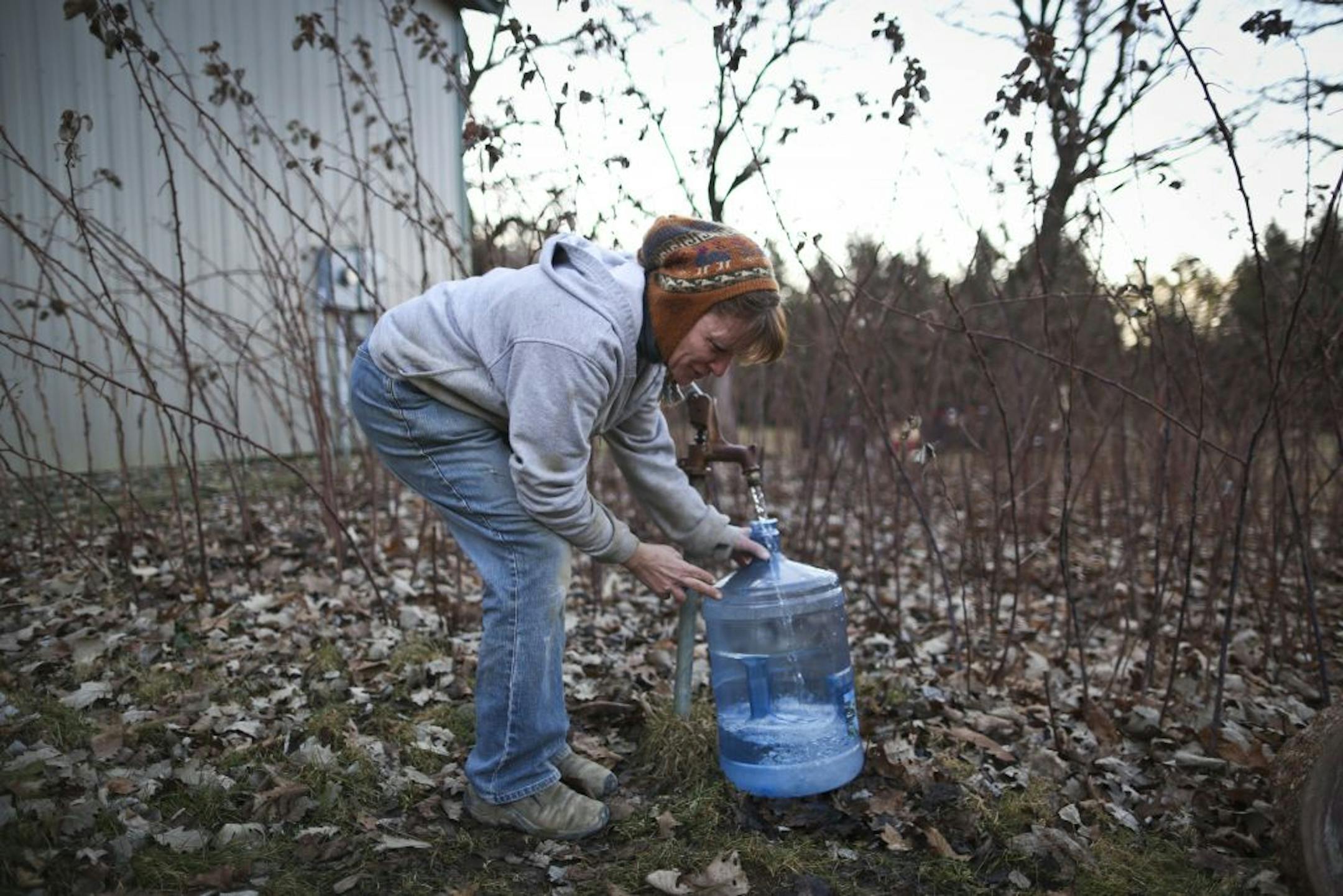
HASTINGS - Debbie Carlson can laugh at the irony: She's the wife of a well digger who can't find good water for his own family.
Like one out of three wells in Dakota County, hers is so contaminated with nitrates she won't let anyone drink from it -- especially her 8-year-old granddaughter. Most likely it comes from nitrogen used as fertilizer on the cornfields surrounding her home. "Nitrogen was a great thing for the family farm," Carlson said. "But I am paying the price."
Thanks to a combination of geology and some of the country's richest farmland, thousands of Minnesotans face elevated levels of nitrates in their drinking water. It's a health risk -- mostly for infants and pregnant women -- and a significant economic burden. Hastings is one of nearly a dozen Minnesota communities that has spent millions to clean the toxin from drinking water. Well owners like the Carlsons have three choices: Drink it, which some do. Pay thousands for a new well. Or install expensive treatment systems.
The prairie that once protected groundwater is long gone from Dakota County and from most of Minnesota and the Midwest. That loss lays bare what one leading agricultural economist calls the "wicked problem" of global nitrogen pollution.
By converting grasslands and pastures to fertilizer-intensive crops, modern agriculture has produced an extraordinary bounty of corn, sugar beets and potatoes for a growing global population. But it also has eliminated the valuable "ecological services" that native landscapes provide -- such as filtering groundwater -- at great cost.
Now, through an emerging statewide strategy, the Minnesota Department of Agriculture is devising a range of fixes, including more water monitoring and guidance on how communities can restore some of the lost prairie landscape.
In the process, officials and farmers will tackle two thorny questions: How will government use its power to regulate nitrogen use in contaminated areas? And even if every landowner follows the best guidance science can provide, when will they know if it works?
Striking the right balance is crucial because the current approach, said Jill Trescott, Dakota County's groundwater-protection supervisor, imposes a cost shift from agriculture to taxpayers and homeowners that is "just not fair."


