

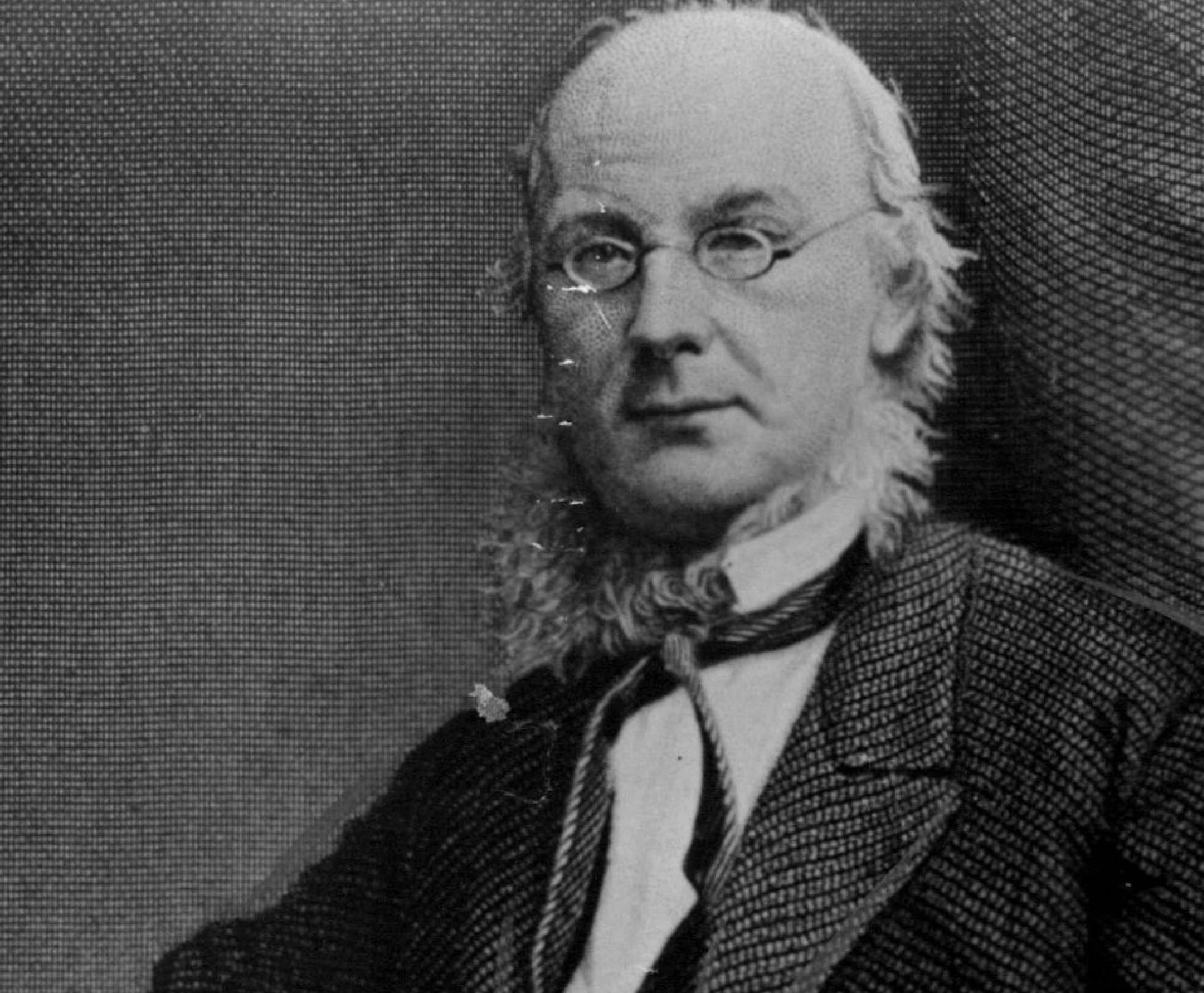
What happened: Horace Greeley made a speech at the fair.
When: Sept. 15, 1871.
A little later: You might be surprised to think the fair was still underway so late in September. But this wasn't the Minnesota State Fair, it was the Great Northwestern Exposition, a competitor to the State Fair that opened on the 15th.
Headline grabbers: The big news was the livestock judging (local mogul W.S. King, who ran the exposition, cleaned up the awards for prize cows and bulls); the "Great Race" of prize horses, a "Handsome Testimonial to Mr. Hickok"; and, of course, "Mr. Greeley's Talk to the Farmers."
"Go West": Greeley is remembered today, if at all, for offering general directions to the ambitious: "Go West, Young Man," although it's still being disputed whether or not he said the famous phrase first. Quotes aside, he was a dominant figure in American history for decades — author, newspaper editor, politician and all-around public intellectual.
How about them apples: At the exposition, Greeley was "received with the most enthusiastic demonstration of respect," and once the applause died down, he began by noting that he'd seen a sign quoting his 1865 statement that apples would not thrive as a crop in Minnesota. He had to eat his words (and perhaps his Minnesota-grown apples). "You have learned to select the hardier kinds of apples better suited for this soil," he said. "I rejoice in your success. I will not say that this State will not produce oranges at some future time."
In addition to talking about crops, he also praised Minnesota's weather ("Two or three months of good, steady, hard, cold weather is very agreeable to me" ); said our water was better than Texas', which was "worse than Ohio and Mississippi mud water"; and that our wheat looked good, but Pennsylvania had us beat.
On the downside: The year 1871 would turn out to be cruel for Greeley; he would lose his wife, resign his editorship of the New York Tribune (which he'd founded) and embark on an ill-fated campaign for president against incumbent Ulysses S. Grant. In 1872, he received 66 electoral votes to Grant's 286. But even if Greeley had gotten more, it wouldn't have mattered. He was dead by the time the Electoral College convened.


