Residents of Chicago can track their city's plows and pothole repairs in real time. In Seattle, 911 calls are quickly detailed online. New Yorkers can sift through city contracts with a simple mouse click.
Minneapolis has kept a tight grip on the information it collects even as cities across the country open up streams of public data to developers, journalists and the public. But this past November's election has spurred calls at City Hall to liberate that data, from food inspections to landlord violations, so it can be analyzed and manipulated for the public good.
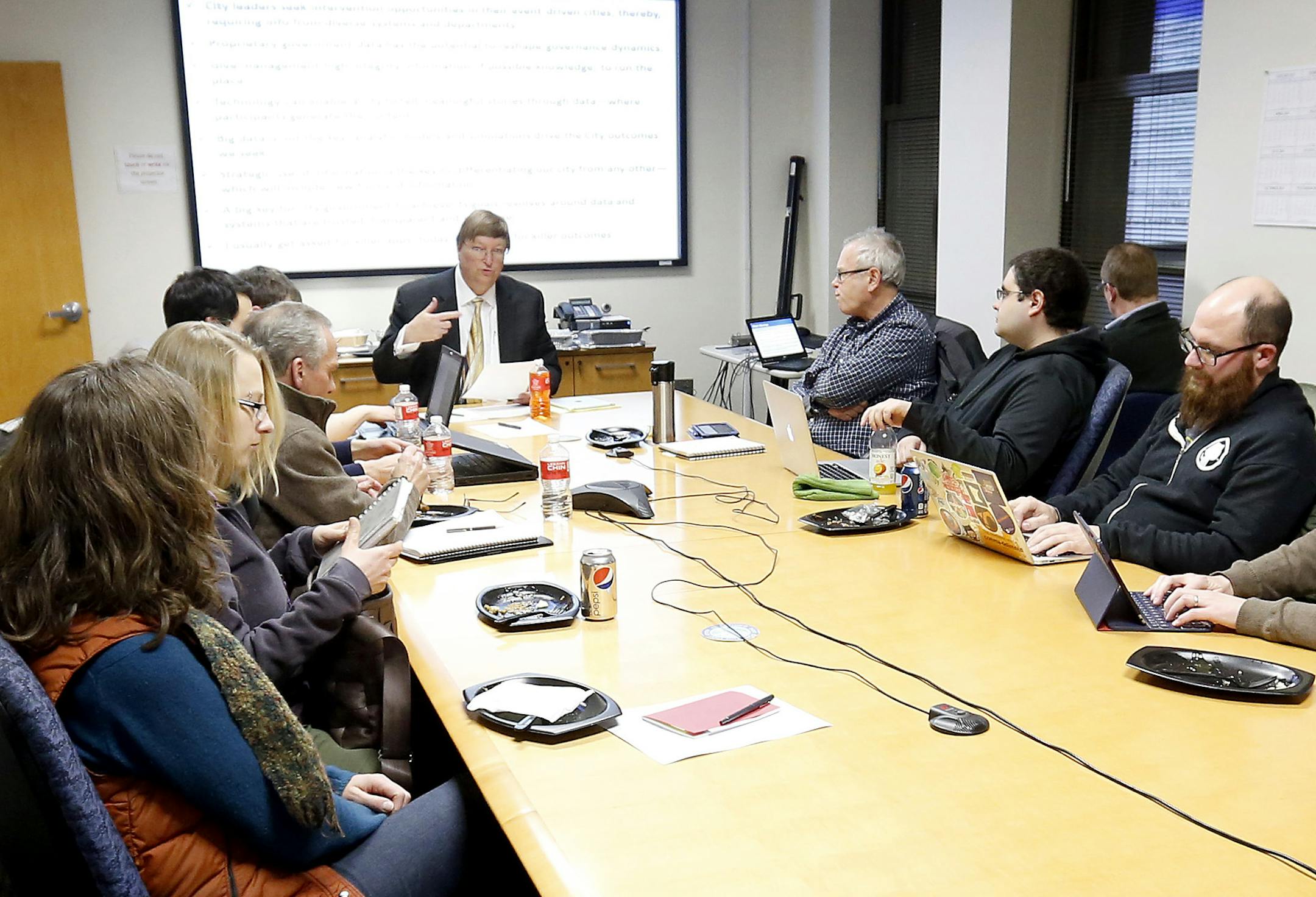
"I figured when I came to Minneapolis that I was going to find a liberal, open place — very progressive, etcetera," Otto Doll, the city's chief information officer, told a gathering of data enthusiasts last week. "And we are, in certain ways, but not with our data."
The secretary of state's office is also entering the fray, opening up public data sets in new formats for developers to experiment with at an event later this month. And at a developer-driven event last year, five strangers took six hours to create a mobile tool, now called OMGTransit.com, that makes it easier to track real-time bus and train arrivals.
Supporters of open data say it improves government accountability, empowers citizens and ultimately can save public dollars. But they often encounter resistance from government officials, who are reluctant to release it to the masses.
"The real end is making new tools or new analyses for the local community or the city or the government," said Bill Bushey, an organizer for Open Twin Cities. Minnesota's open records law already defines what data is public, but open data advocates say it should be in an easily analyzed format — for instance, spreadsheets rather than PDFs.
Doll is following a City Council direction to create an open data policy for the city that also likely will address ways to protect individual privacy. Those who attended Doll's gathering said they were interested in data sets relating to crime, business licenses, housing inspections, city spending and 311 calls, non-emergency contacts with City Hall.
Among them was Tony Webster, a developer who used an open records request to create a searchable database of city restaurant health code violations spanning two years. He speculates that Minneapolis is one of a few major cities without one. Webster also used Chicago's towing data to create an app that tells drivers if their cars have been towed. But he has encountered major obstacles trying to obtain simple housing information — or any real-time data sets — from Minneapolis.