CASTRO, Chile – The farm woman selling the orange and pink hand-knit dolls at the farm market in Castro, on Chiloe Island, is telling me where she gets the wool. I'm trying to answer, and we've hit a dead end. We're both speaking Spanish. After all, Chiloe belongs to Chile. But we might as well be shouting in the wind.
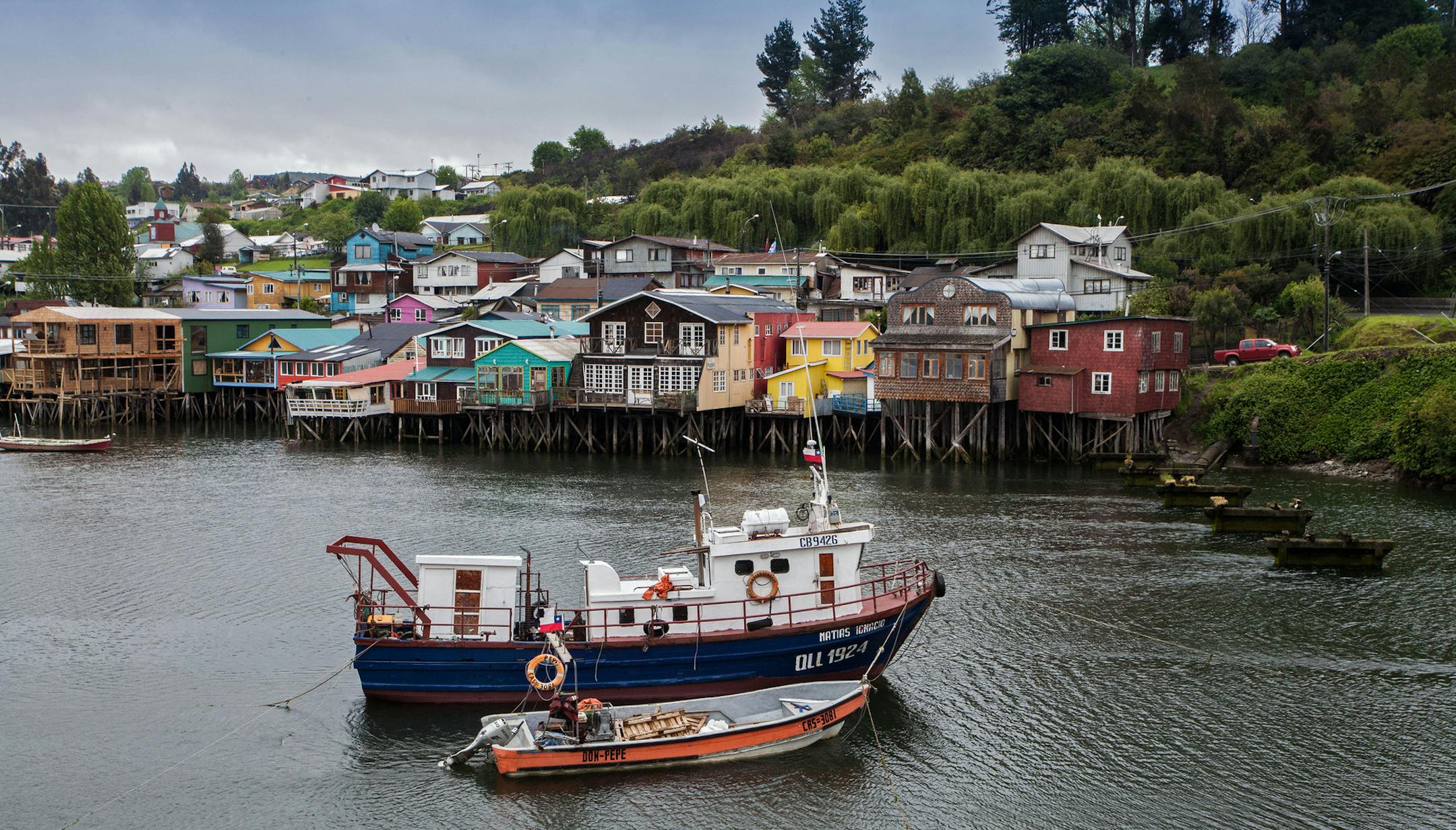
"She's says the wool comes from her sheep and she spins it herself," says Rodrigo Guridi, appearing at my elbow. A guide and longtime resident of Chiloe Island — the largest island of the Chiloe Archipelago — Guridi had already unraveled a couple of mysteries for me and my husband, Steve, explaining that Chiloe's unique culture — people, language, farming and fishing — is the result of more than 300 years of isolation.
"You'll have to stay longer if you want to pick up the accent," he tells me, with a hint of I-told-you-so. We need at least two weeks to see what makes Chiloe (CHEE-low-way) a true one-off, unlike any place we've been before.
Next time, visit in autumn — March and April in the Southern Hemisphere — after summer vacation ends, he says. Local tourists go home and the leaves turn red and yellow. Now he tells me; I'm thinking, wondering what comes next.
Surprises every day
Things are seldom what they seem here in Middle Earth, Chile's little-known stepchild, a cluster of green hills rising out of the southern Pacific Ocean. Skim milk doesn't masquerade as cream, exactly, and hobbits are thin on the ground. But as the growing number of foreign travelers touring this 40-island archipelago west of the Gulf of Ancud have discovered, every day brings a new surprise.
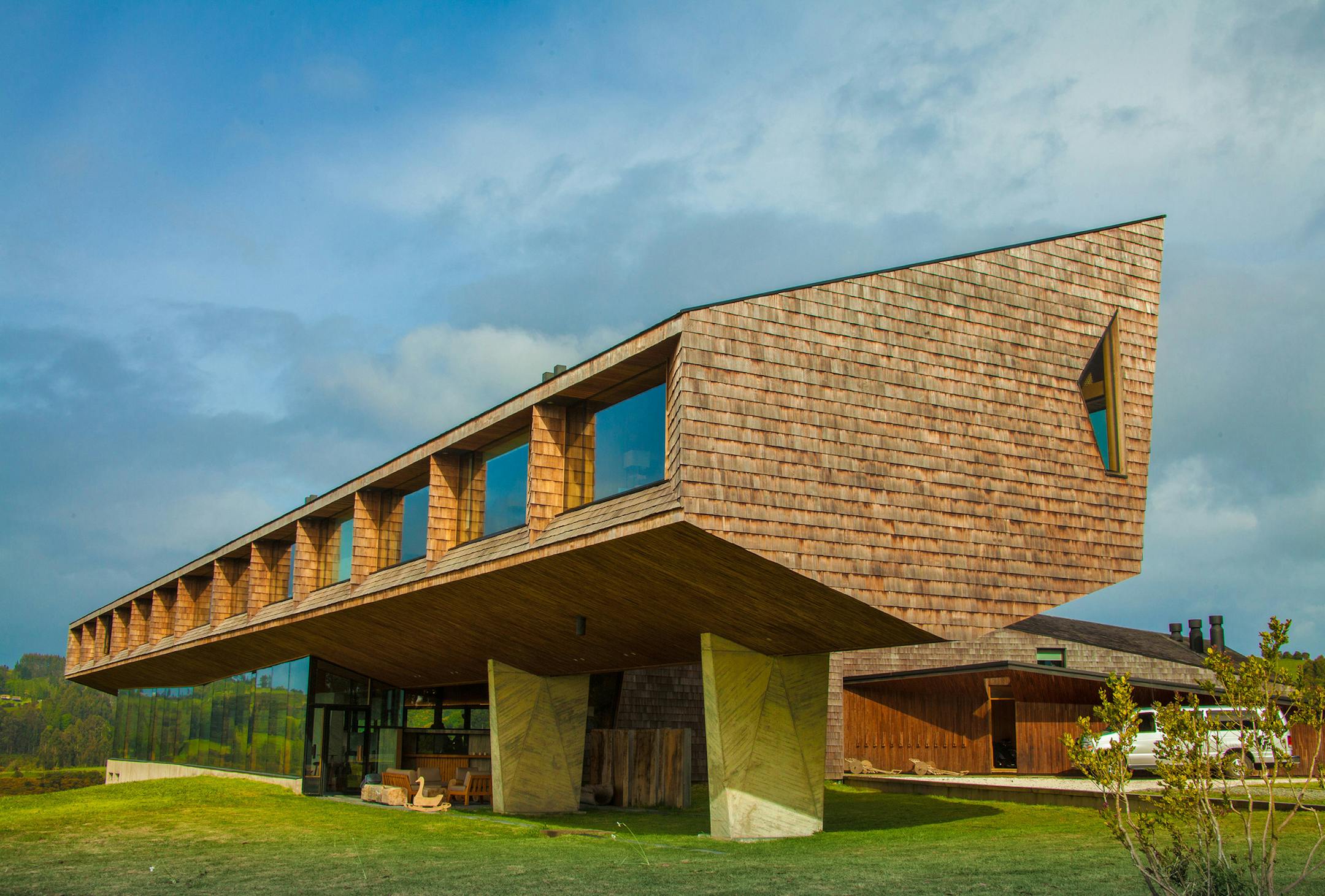
After a two-day stopover in Santiago, Chile's capital, where new friend Salina said Chiloe Island reminded her of "the shire," I wasn't sure what we'd find. Images of dry heat and a scrubby, rocky landscape, something like Argentina's pampas, wouldn't go away. But I saw what she meant once we reached our hotel, the Parque Quilquico, perched on a bluff overlooking a long, blue bay.
"Oh, take a look! It's breathtaking," gushed the woman who'd shared our cab from the airport. Beyond the windows lay a wonderland of rolling hills, grassy meadows, leafy trees and half-hidden vales sloping down to the sea. A dozen brown and white cows grazed in the foreground, enjoying the last warm days of summer. Only the hobbits were missing.
"It's so familiar," she said, sinking down onto the sofa, her expectations ajar. "I know this is Chile, but I feel as if I'm somewhere else, in Vermont or England."