

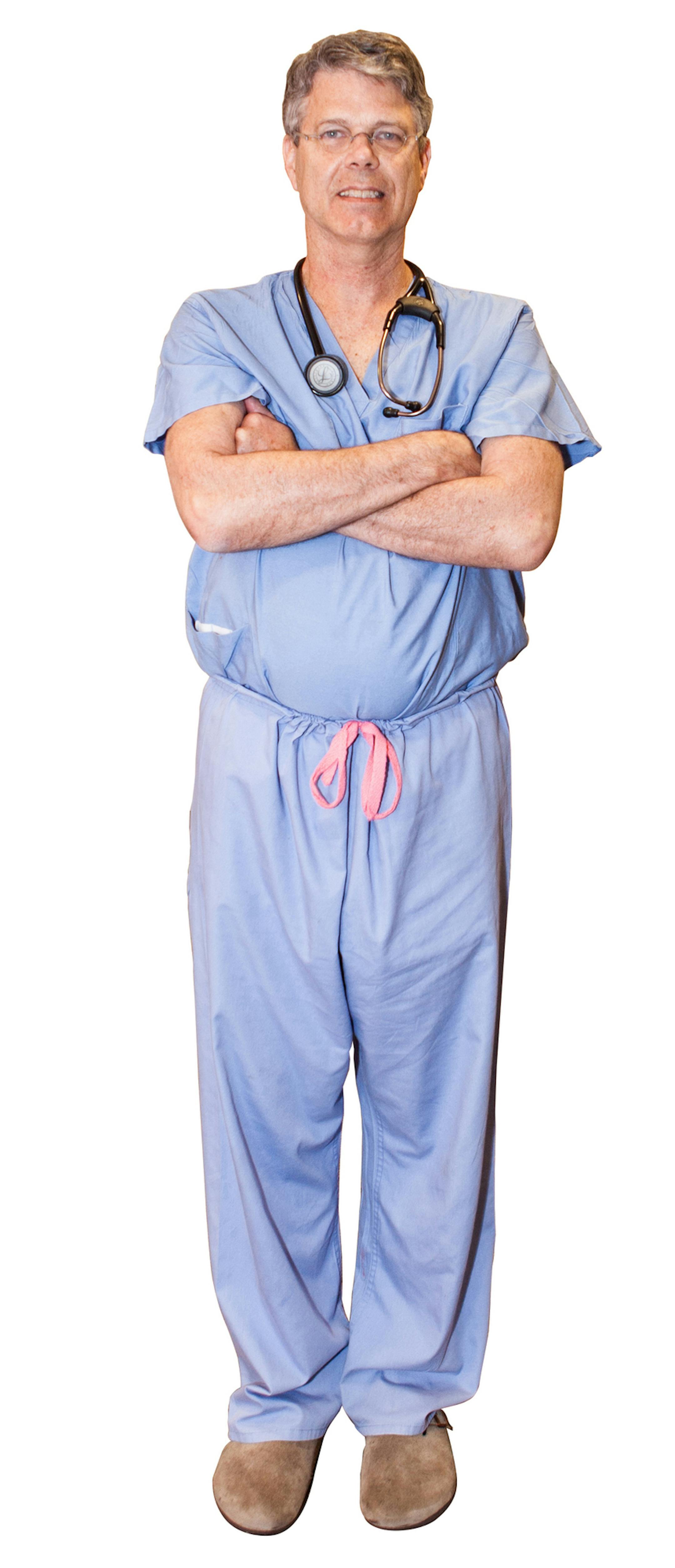
Dr. Wesley Pedersen is one of Minnesota's new medical pioneers. Last month, he implanted a locally designed mitral heart valve through a small tube in the beating heart of a patient, becoming the first doctor to do so in the United States. The valve was made by Roseville-based Tendyne and implanted at the Minneapolis Heart Institute Foundation, where Pedersen is principal investigator on a feasibility study of the new device. Even though many medical devices are invented domestically, such "first-in-human" experimental work has become rare in the United States. Although the Food and Drug Administration may be softening its stance and allowing more cutting-edge human research to take place in the U.S., observers like Pedersen say the agency's onerous approval process still injects too much time and uncertainty into the process, scaring away the investments that drive innovation.
Q: How did the transcatheter mitral valve implant go?
A: It went very smoothly. We have two more on the docket already. It's very gratifying, and it's huge for our foundation. It builds on itself. The more you do that, the more companies want to go to you and do it with another device. We all know that.
Q: How did you get the chance to do the first U.S. human implant?
A: First and foremost, it is highly advantageous to be in Minneapolis and be an interventional cardiologist or vascular surgeon because of all the major vendors and, more importantly, the start-up ventures that are here. Access to physicians and availability is obviously much easier when you are right across town.
The engineers [at Tendyne] knew me from the Myocor business [a Maple Grove company that developed a mitral-valve leakage therapy 10 years ago]. They certainly knew that Abbott and the foundation were excellent, but I had a little bit of an added opportunity because of my relationship with them.
Q: Have you seen changes in how medical technology makes it to market?
A: It's been very difficult to raise money. The timelines are very long. They are 10 to 15 years, no longer five years. And the amount of money you need is no longer $20 million or $30 million. It is $100 million. One of the issues, and probably the biggest issue, has been the FDA.



