

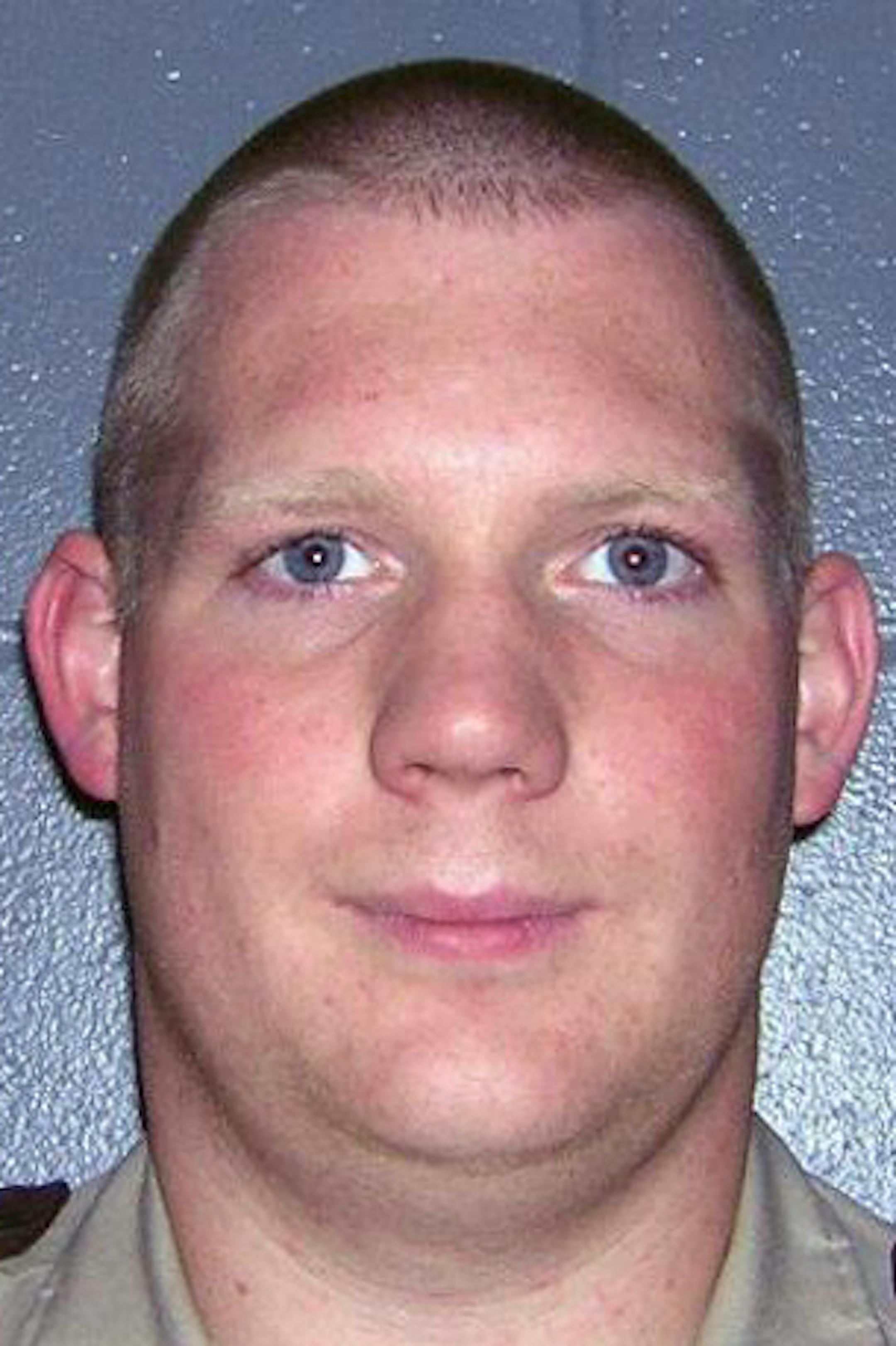
Nearly four years have passed since Mahnomen County deputy Christopher Dewey was gravely wounded near the county courthouse after he responded to a report of a drunken driver and shots fired on a February night. Another 18 months of seizures, infections and surgeries on the bullet wounds to his head and abdomen would pass before the 27-year-old died, leaving behind a young wife.
The lapse between Dewey's 2009 injuries and his death in hospice care in August 2010 will be a key argument as to why the man who shot Dewey should not be serving a life sentence for first-degree murder when his appeal comes before the Minnesota Supreme Court today.
Thomas Lee Fairbanks, 36, was convicted by a jury in 2011 of murder and four counts of first-degree assault following Dewey's death. His attorney, Theodora Gaitas, is expected to argue that he can't be prosecuted for murder when Dewey died more than a year and a day after the shooting.
She'll also argue that moving the trial from Mahnomen County to Polk County, as well as showing Dewey's autopsy photographs, denied Fairbanks his right to a fair trial.
Gaitas, along with Mahnomen County Attorney Darlene Rivera, did not return telephone calls.
First-degree murder convictions are automatically appealed to the Minnesota Supreme Court.
A second man involved in the incident, Daniel Vernier, 31, of St. Cloud, pleaded guilty to failure to render aid and was sentenced to two years in prison.
According to Cornell University's Legal Information Institute, the year and a day rule is a common-law rule that a person cannot be convicted of homicide for a death that occurs more than a year and a day after the act that allegedly caused it. Most legislatures have modified or abolished the rule, if it existed in the first place. Minnesota has no such rule. In 2001, the Tennessee Supreme Court ruled that it was not unconstitutional to abolish the law in response to a challenge from a man convicted of murder for stabbing a victim who died 15 months later.


