
Low turnout in Minnesota primary

According to preliminary estimates from the Secretary of State's office, about nine percent of eligible voters went to the polls on Tuesday.

August 15, 2012 at 5:23PM
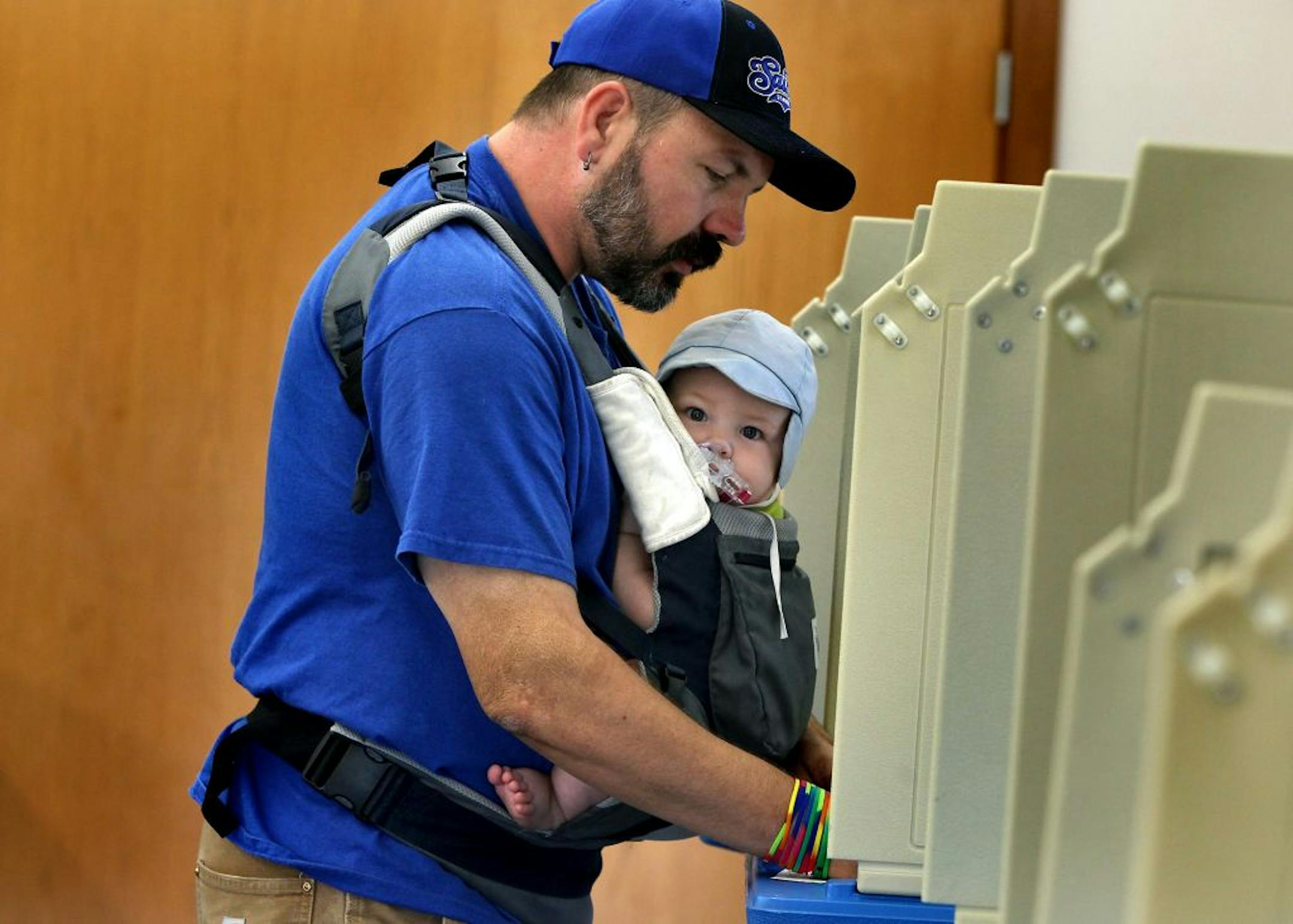
Eight-month-old Maxfield Rymer got his first voting experience with his dad Craig Rymer at the Brackett Park Pavillion in Minneapolis.
Eight-month-old Maxfield Rymer got his first voting experience with his dad Craig Rymer at the Brackett Park Pavillion in Minneapolis Tuesday. (Star Tribune/The Minnesota Star Tribune)

Fewer than one in every ten Minnesota voters went to the polls in Tuesday's primary, according to preliminary estimates from the Secretary of State's office.

About 9 percent of eligible voters showed up. That compares to the approximately 16 percent that turned out in the primary two years ago, the first year Minnesota held its primary in August rather than September.

Unlike the 2010 primary, which posted turnout numbers that were about average, this year's primary had no high-profile statewide contest. In 2010, Democrats sorted out which candidate for governor to advance to November.

The 2012 turnout varied widely across the state.

About 70,000 voters in the northern Eighth Congressional District showed up on Tuesday, most on the Democratic side of the ledger. They were charged with picking which DFLer should face Republican U.S. Rep. Chip Cravaack. They picked former U.S. Rep. Rick Nolan.

Meanwhile, down in the southern First Congressional District just under 40,000 voters cast ballots, about 23,000 of them voting in the GOP primary. Republicans picked former state lawmaker Allen Quist to face U.S. Rep. Tim Walz Tuesday.

Update:

The turnout results are also below 2008 figures, when there was a U.S. Senate race on the ballot. In that year about 11 percent of eligible voters turned out.

But they are above 2004, when there was no statewide race on the ballot. That year, fewer than eight percent of voters went to the polls.

See historic primary turnout figures below:

about the writer

about the writer

rachelsb

More from No Section

See More
FILE -- A rent deposit slot at an apartment complex in Tucker, Ga., on July 21, 2020. As an eviction crisis has seemed increasingly likely this summer, everyone in the housing market has made the same plea to Washington: Send money — lots of it — that would keep renters in their homes and landlords afloat. (Melissa Golden/The New York Times) ORG XMIT: XNYT58
Melissa Golden/The New York Times

It’s too soon to tell how much the immigration crackdown is to blame.