

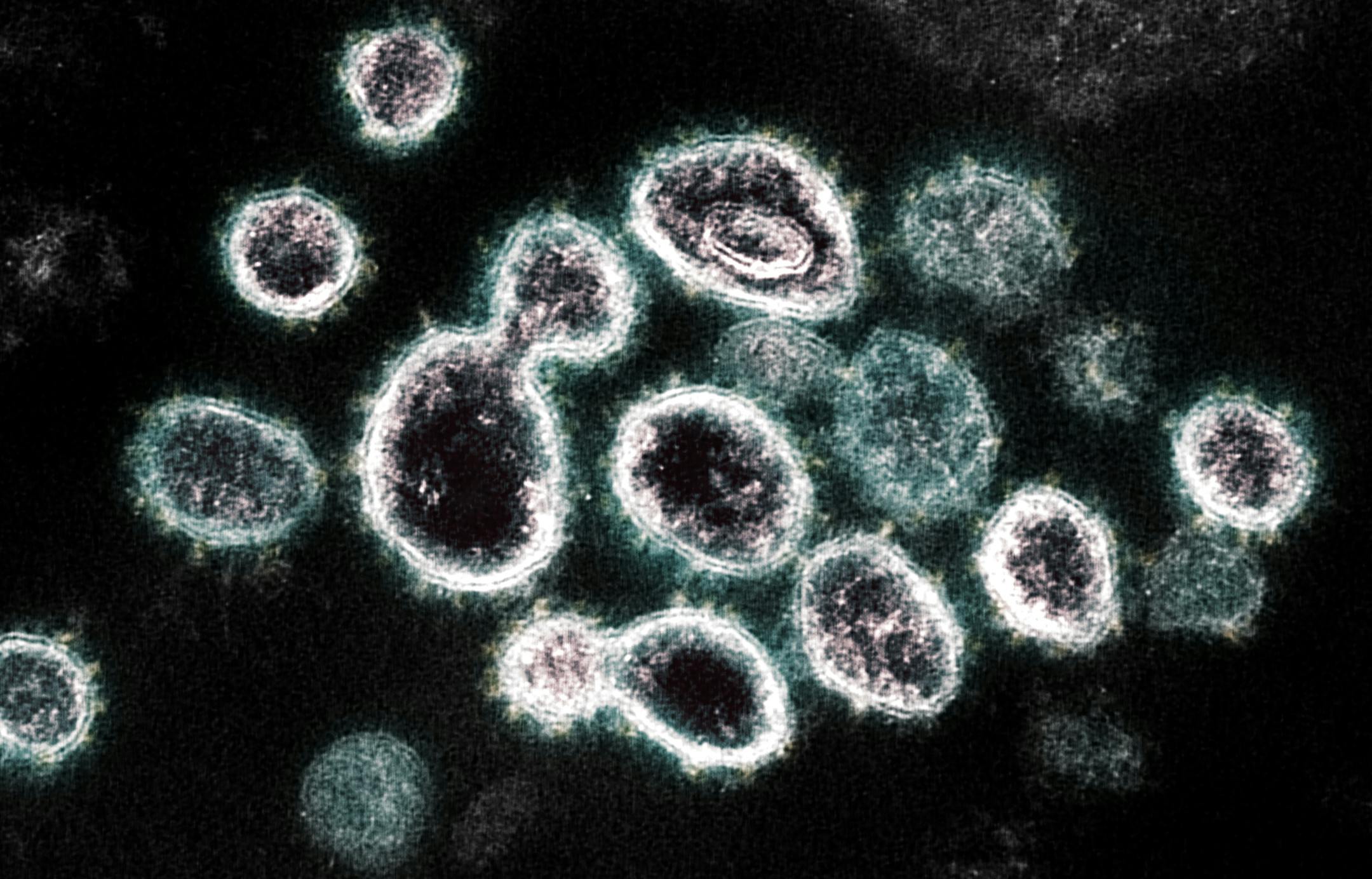
In the New York Times' Sunday Magazine about a week ago, there were two powerful stories about so-called long-haul COVID — a form of the disease that seems to leave certain patients permanently sick, creating a legacy of chronic illness that may be with us long after vaccines have consigned the pandemic's acute phase to the past.
One was a first-person account by my colleague Laura Holson, detailing her nine months with the disease: the initial terrifying springtime surge of symptoms, and then the persistent ones — low fever, brain fogs, mild chest aches — that were punctuated, in her case, by a brief return of the more frightening ones, the crushing chest pain and racing pulse and gasps for air. Her story ends with sustained improvement, movement "in the right direction" as doctors like to say, but still a shadow of fatigue eight months after she got sick.
The other story, by Moises Velasquez-Manoff, follows patients like Holson but also others who haven't enjoyed even her level of improvement, and the doctors and scientists who are trying to figure out what's happening to them — with "them" meaning anywhere from 10% to 50% of COVID-19 patients, depending on the study and the definition of long-term symptoms.
I wrote about long-haul COVID last summer, when it was still an emergent phenomenon, and at that point I tried to offer some practical lessons for people dealing with it, from my years of experience with an enduring illness, the medically contested chronic form of Lyme disease.
In Velasquez-Manoff's exploration, many of his sources also draw analogies to forms of chronic illness that predate COVID. For instance, one possible parallel to what long-haul COVID patients are experiencing is myalgic encephalomyelitis, commonly known as chronic fatigue syndrome — a debilitating and mysterious affliction that's increasingly understood as an autoimmune-related condition, in which the body's own defenses seem to be constantly flaring, independent of actual infection, in ways that consign people to fatigue, brain fog and incapacity.
Similar autoimmune theories are also often applied to the larger constellation of chronic conditions that bear some similarities to what we've seen from long-haul COVID: chronic Lyme, multiple sclerosis, rheumatic fever, Guillain-Barré syndrome, various psychiatric conditions that seem to be caused by persistent inflammation in the brain.
And as with COVID, for many of these conditions, there appears to be some precipitating infection. Multiple sclerosis is often associated with the commonplace Epstein-Barr virus, rheumatic fever with the same bacteria that cause strep throat, and Lyme, famously, with bites from ticks that carry a spirochete called Borrelia burgdorferi. Chronic fatigue syndrome isn't known to have a single agent as its trigger, but as Velasquez-Manoff notes, chronic-fatigue-like symptoms have long been linked to viral infections, from the recent SARS and H1N1 pandemics to the 1918 Spanish flu.
This means that a key unanswered question, for COVID long-haulers now as for other chronic sufferers, is what happens to the infectious agent over the long term of the disease. Past a certain point, is the agent itself gone, and everything that patients like Holson feel just the immune system running amok? Or are people who have some of these conditions really suffering from a persistent infection, from a pathogenic invasion that the immune system keeps exciting itself by trying and failing to suppress?


