

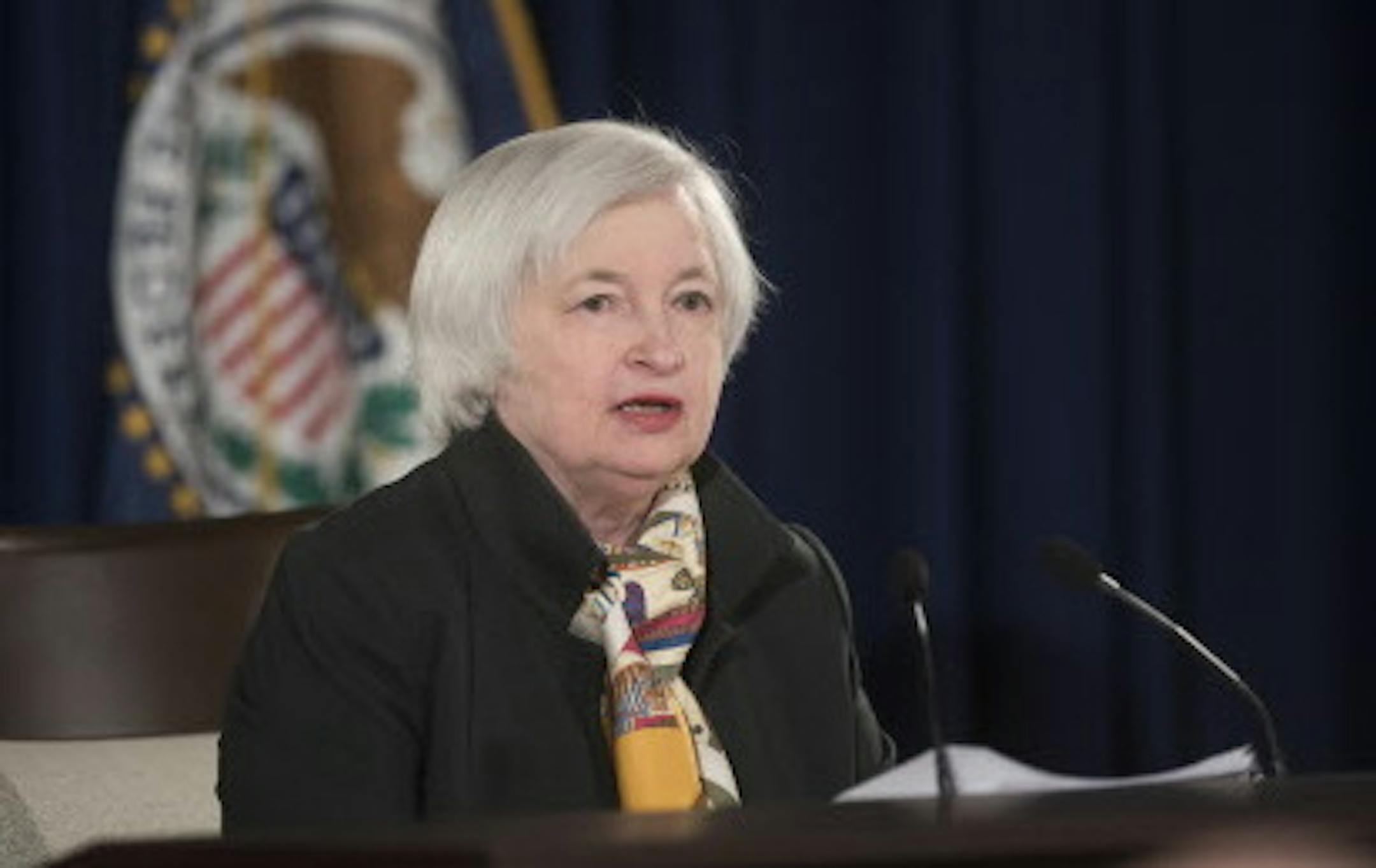
Central bankers from Canada to Colombia are betting the Federal Reserve will prove a good neighbor to their economies and financial markets when it raises interest rates for the first time since 2006.
Greater transparency about the Fed's plans from Chairwoman Janet Yellen and the assumption any U.S. rate increase would reflect a welcome strengthening of their key trading partner were cited as reasons for confidence by policymakers at the Bloomberg Americas Monetary Summit in New York.
Investors will hope such upbeat takes prove justified two years since the Fed roiled international markets when it signaled an intention to slow bond buying. Tighter U.S. policy has historically created turbulence in Latin America, helping fuel the region's debt crises of the 1980s as well as in Mexico and Brazil in the subsequent decade.
Such economies could do without a fresh bout of financial stress after commodity prices tumbled and the International Monetary Fund cut its forecasts for economic growth this year and next in both Latin America and Canada. The prediction of 0.9 percent for Latin America would be the lowest since 2009.
Brazil's real has been the worst performer after the Russian ruble among 31 major currencies the past year, tumbling about 26 percent against the dollar. Colombia's peso has lost 22 percent and the Mexican peso 15 percent.
By contrast, the U.S. economy may be gaining strength after a first-quarter flutter, leaving 71 percent of economists in the latest Bloomberg survey expecting the Fed to start raising rates from near zero in September. Yellen has sought to soften the blow beforehand by saying borrowing costs will probably be raised only gradually.
"The market has already taken into account the possibility of a Federal Reserve rate increase," Peru central bank President Julio Velarde said.
Bank of Canada Gov. Stephen Poloz said the U.S. economy poses an "upside risk" to his outlook and may turn out stronger than economists are expecting. That would be positive for his economy, which sends about three-quarters of its exports south of the border.


