

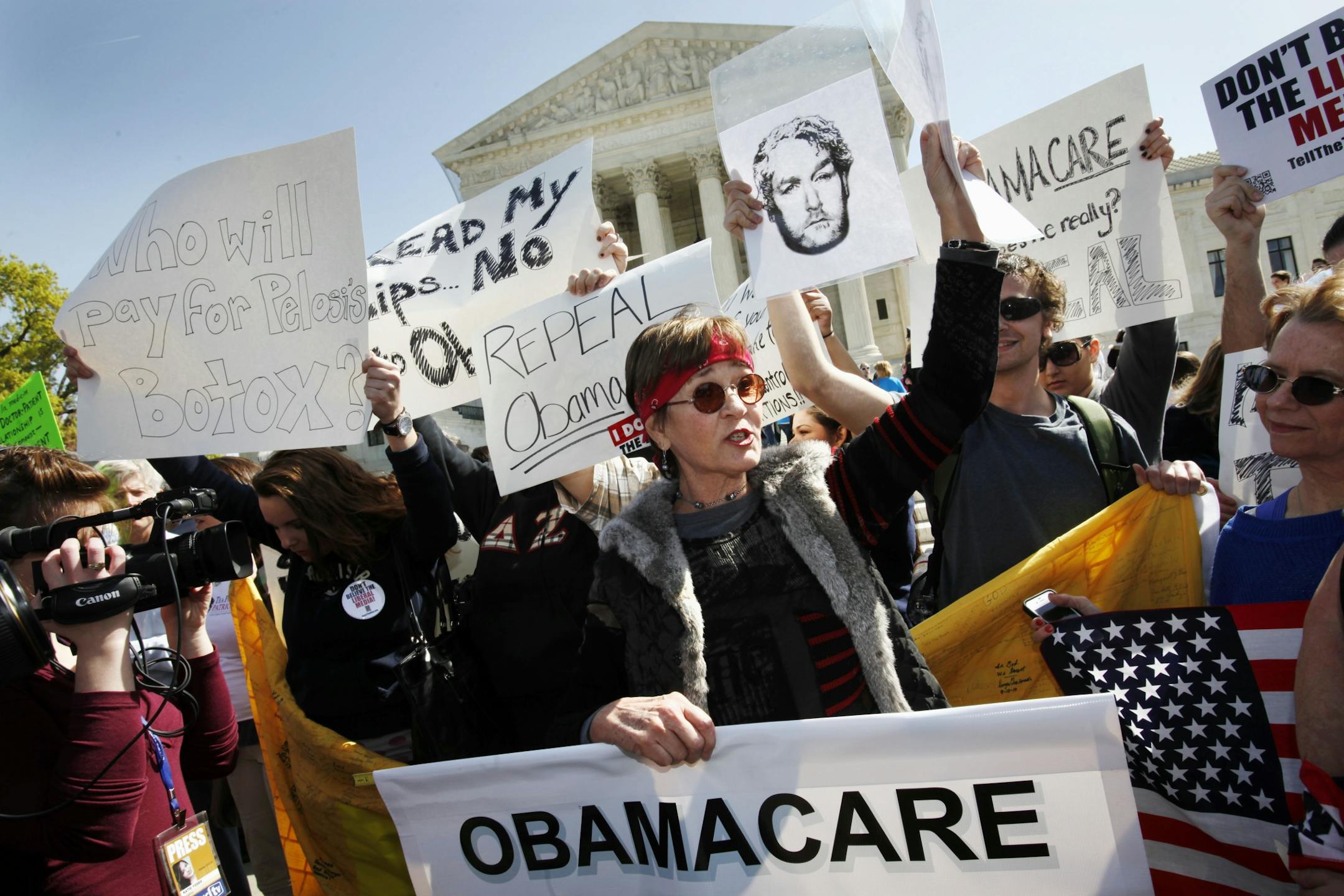
When the sun hits the brilliant white marble of the Supreme Court on a clear spring day, the building is so bright you can't look at it. Thus illuminated, the court becomes the sun: the epicenter of the Washington world.
It is rare for the Supreme Court actually to be at the center of events in government. But this week, for a few days, it will be.
The signature accomplishment of President Obama's administration is on the line. To strike down the Affordable Care Act, the court would have to announce that mandatory insurance coverage is, quite literally, beyond the power of the government.
In economic terms, that would mean saying that universal health care in the United States can't be achieved except through a single-payer system administered entirely by the government, which in political terms seems essentially impossible. If the mandatory coverage provision goes, so does the whole program.
Obama's legal team has embraced this all-or-nothing approach, and for good reason. They have told the court that mandatory coverage is not "severable" from the rest of the law. If the court holds that the government cannot require you to be covered or pay a fine, guaranteed issue of coverage to all comers, the core of the law, will cease to operate.
It's about the common sense of economics. We each have better information about our own health than the insurance company does. If the price of insurance reflects the average health of the population, the healthiest people are most likely to turn down coverage.
As a result of this adverse selection, economists have shown, the system can unravel. This would leave a large section of the population without insurance, even though they would benefit from coverage by a greater amount than it would cost to provide it for them.
Health insurance, it turns out, presents a classic case of market failure. Without government intervention to require universal health insurance coverage -- a good that many people want and are willing to pay for -- it will not be available to all.


