
Inspection blitz targets Bakken crude shipped by rail

Federal authorities are looking at whether tank cars' contents are correctly classified so emergency responders know what's inside.

Bloomberg News
August 30, 2013 at 2:30AM
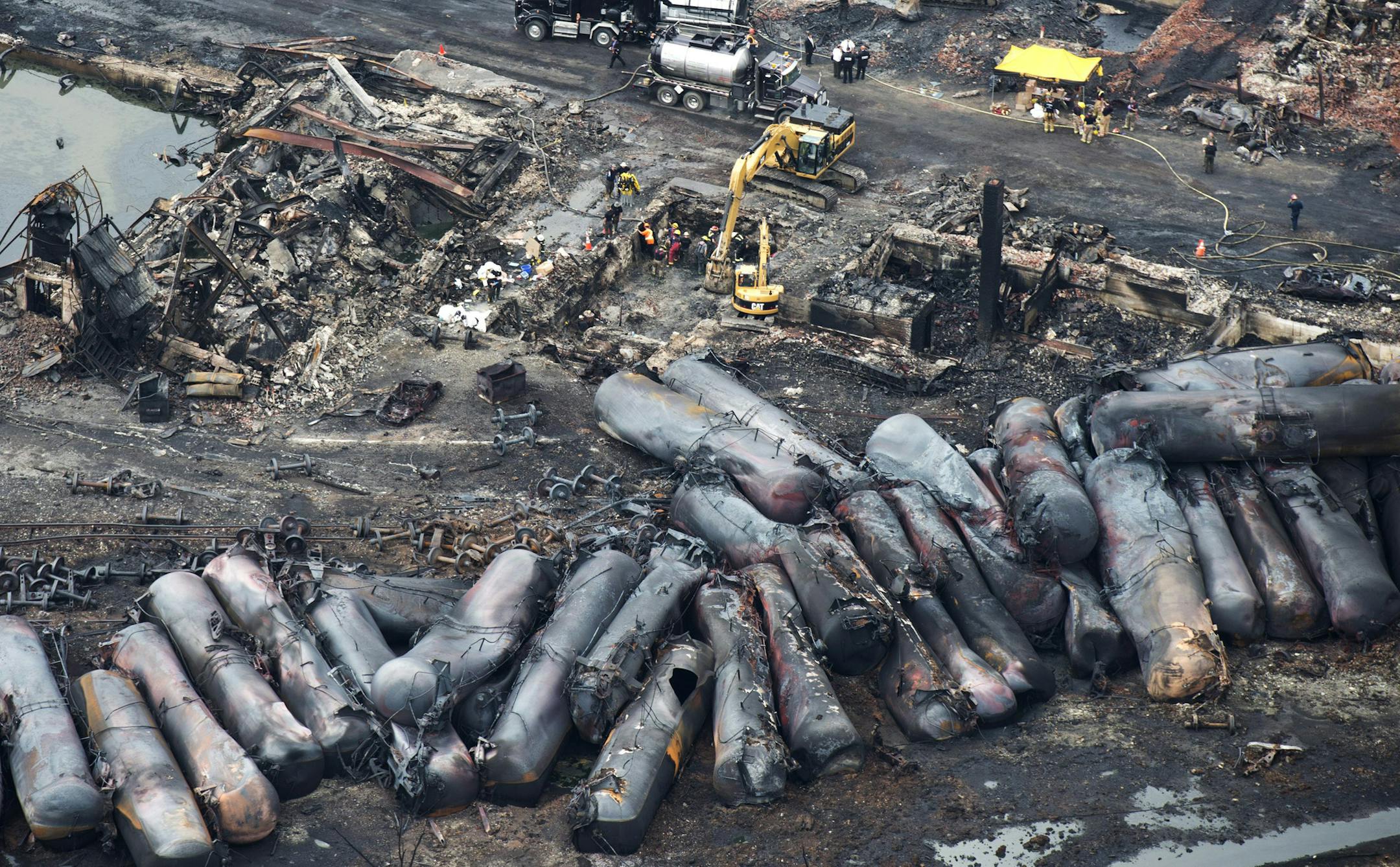
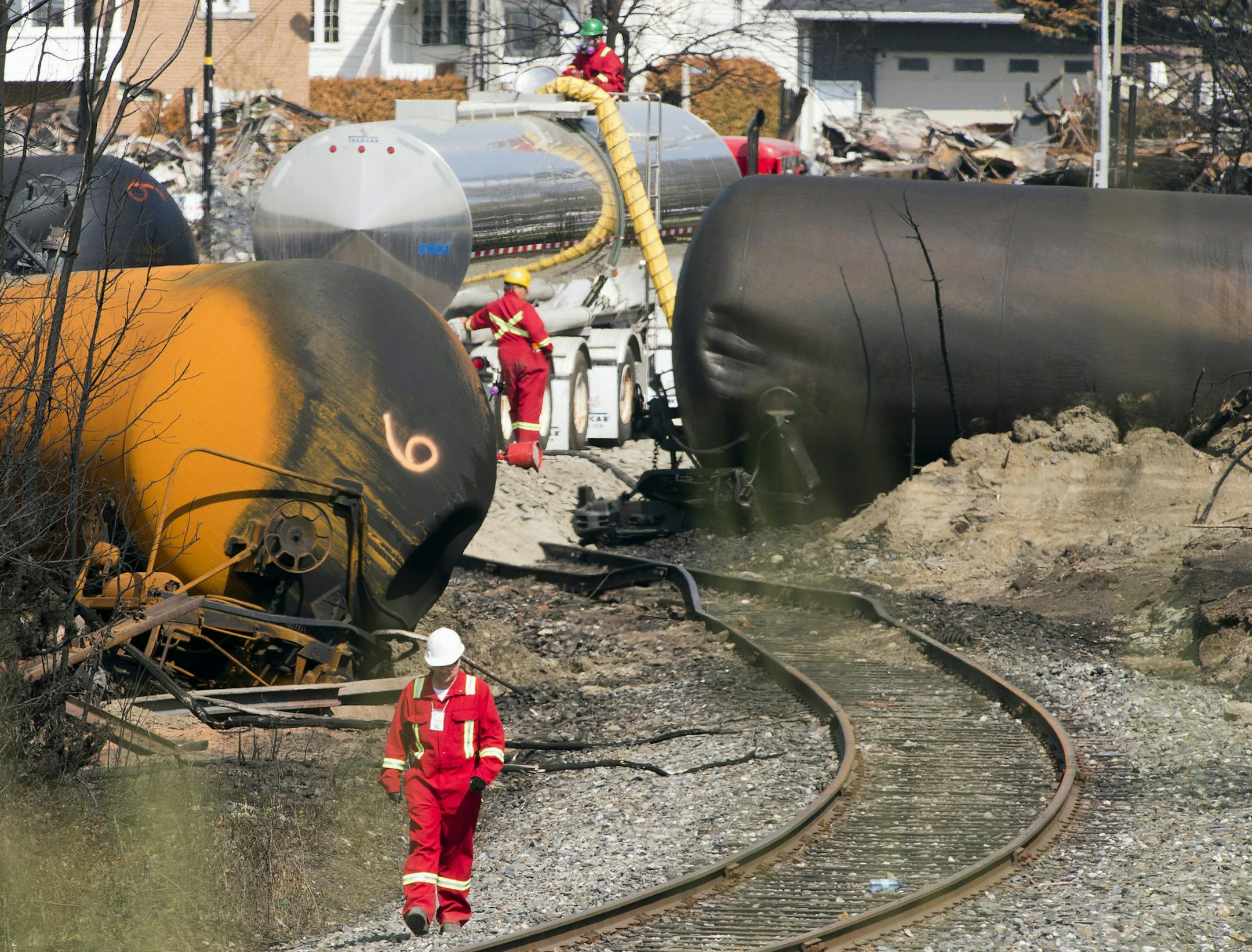
FILE - In this Tuesday, July 9, 2013 file photo, workers comb through debris after a train derailed three days earlier causing explosions of railway cars carrying crude oil in Lac-Megantic, Quebec.
Workers combed through debris on July 9, three days after a train derailed in downtown Lac-Megantic, Quebec, on a Saturday night, causing explosions of railroad tank cars carrying crude oil from North Dakota’s Bakken region to a refinery on Canada’s east coast. The explosions and fires killed 46 people. (Associated Press/The Minnesota Star Tribune)

U.S. rail safety regulators began a "Bakken blitz" of inspections of crude oil tank cars this week as they seek to prevent a railroad disaster in the United States similar to July's fatal inferno in Quebec.

Inspectors from the Federal Railroad Administration and Pipeline and Hazardous Materials Safety Administration are examining rail cars moving crude from North Dakota's Bakken region, Cynthia Quarterman, PHMSA administrator, told reporters Thursday during a break in a Washington meeting to discuss U.S. rail safety risks.

Crude produced by hydraulic fracturing in the Bakken was being hauled across Canada by a train that rolled away while parked overnight and crashed into the city of Lac-Megantic, triggering an explosion that killed 47 people July 6. U.S. regulators are carrying out the inspections to make sure shippers are properly identifying the cargo in the rail tank cars from the region.

Hazardous materials regulations require tank cars to carry placards telling railroads and emergency responders what's inside.

"We believe there's risk," Federal Railroad Administrator Joseph Szabo said. "Most grades of crude would not be that volatile."

The crude oil train that crashed in Quebec originated at a New Town, N.D., loading terminal that is a joint venture of Dakota Plains Holdings Inc. of Wayzata. A Dakota Plains official did not return a call and e-mail to comment.

Known internally as "Operation Classification," regulators began planning the surprise inspections in March, before the Quebec accident, after employees in the field noticed "inconsistencies with crude oil classification," PHMSA said in an e-mailed statement.

Volume doubled

The volume of crude oil moved by U.S. railroads more than doubled in the second quarter from the same period a year earlier, the Association of American Railroads said Thursday. U.S. railroads originated 108,605 carloads of crude in the quarter ended June 30. That's a U.S. record for rail shipments in a quarter as oil production increases and pipeline capacity can't keep up.
The association, based in Washington, estimates railroads carry 11 percent of U.S. crude oil production. The group's members include Burlington Northern Santa Fe, owned by Warren Buffett's Berkshire Hathaway Inc., and Union Pacific Corp., the largest U.S. railroad by track miles.

The inspection blitz will continue as long as regulators deem it necessary, Quarterman said. Examinations are occurring where crude is loaded and at its destinations, she said.

"Our big concern is that what is in the tank car is what they say is in the tank car," she said.

FILE - This July 6, 2013 file-pool photo shows work continuing at the crash site of the train derailment and fire in Lac-Megantic, Quebec. Federal inspection teams are headed to the booming Bakken oil region in Great Plains states to see if rail shipments of crude oil meet safety regulations. The inspections are dubbed the "Bakken blitz." U.S. officials announced them at a rail safety meeting Thursday. Inspections were prompted by last month's rail disaster in the lakeside Quebec town of Lac-Meg
Rail cars were scattered in Lac-Megantic, Quebec. U.S. inspectors are in North Dakota, hoping to prevent more disasters. RYAN REMIORZ • Canadian Press (The Minnesota Star Tribune)
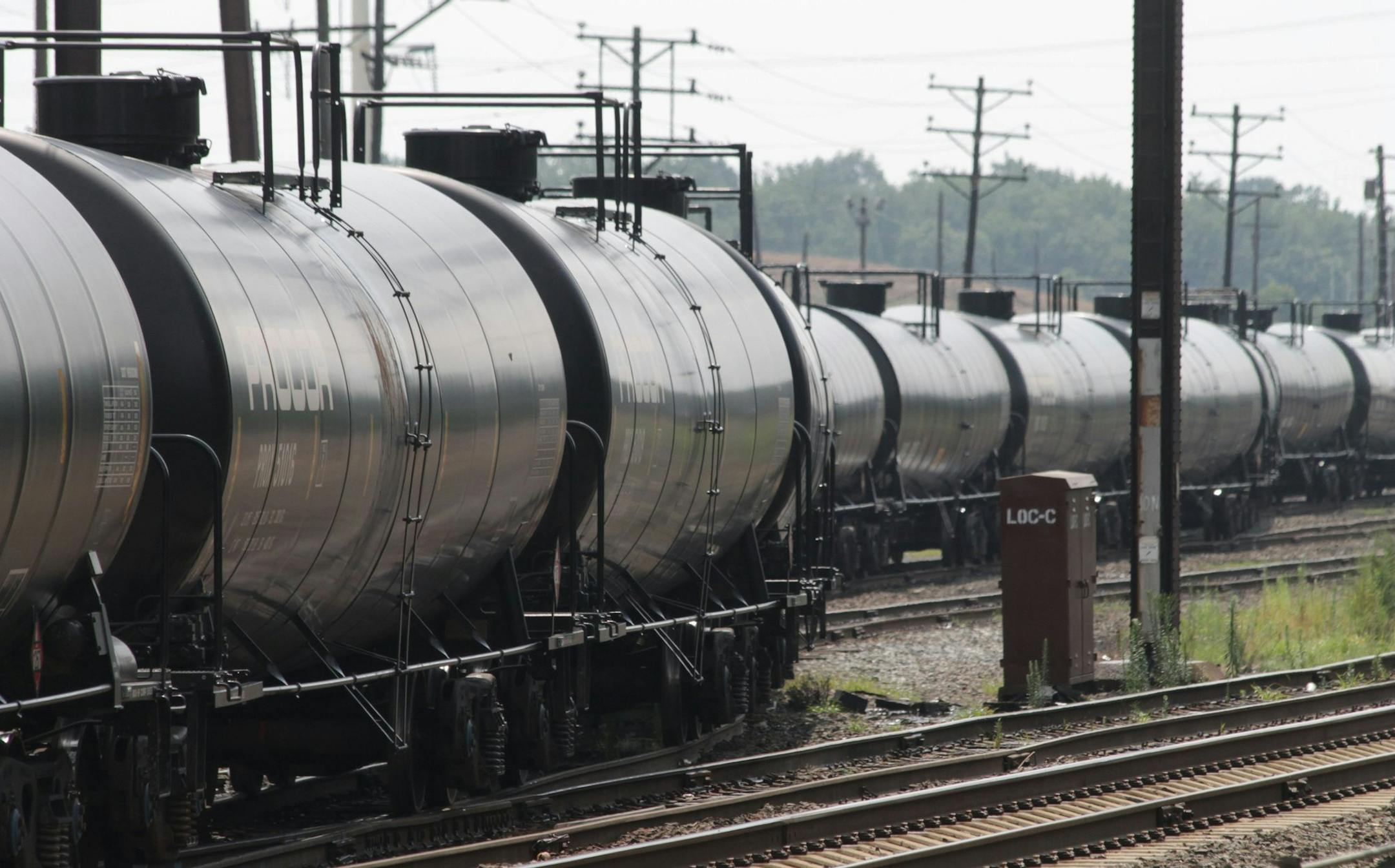
Empty railroad tank cars snake their way into a storage yard in Newark, Delaware, July 28, 2013 The cars will return to North Dakota's Bakken region to be loaded with crude oil for another trip to the refinery at Delaware City, Delaware. With a shortage of new pipeline capacity, oil producers have been using rail as an alternative, and in some cases it's the preferred mode. (Curtis Tate/MCT) ORG XMIT: 1141528 ORG XMIT: MIN1307311129274647
Empty tank cars sat in a storage yard last month, awaiting a return trip to North Dakota’s Bakken region to be loaded with crude oil for the refinery at Delaware City, Del. (The Minnesota Star Tribune)
about the writer

about the writer

Angela Greiling Keane

More from Business

See More
card image
card image
