

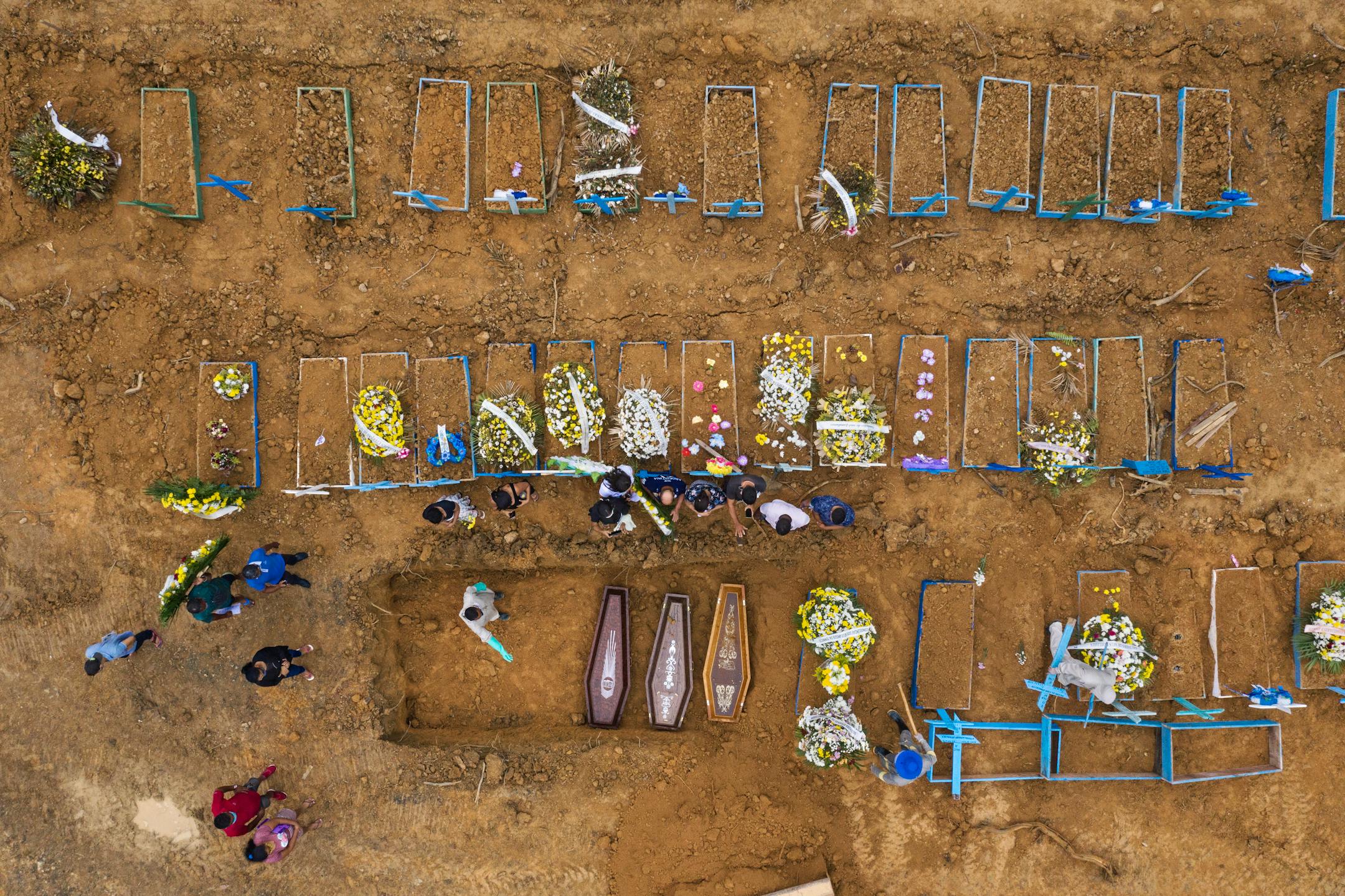
An ambitious effort by the World Health Organization to calculate the global death toll from the coronavirus pandemic has found that vastly more people died than previously believed — a total of about 15 million by the end of 2021, more than double the official total of 6 million reported by countries individually.
But the release of the staggering estimate — the result of more than a year of research and analysis by experts around the world and the most comprehensive look at the lethality of the pandemic to date — has been delayed for months because of objections from India, which disputes the calculation of how many of its citizens died and has tried to keep it from becoming public.
More than one-third of the additional 9 million deaths are estimated to have occurred in India, where the government of Prime Minister Narendra Modi has stood by its own count of about 520,000. The WHO will show the country's toll is at least 4 million, according to people familiar with the numbers who were not authorized to disclose them, which would give India the highest tally in the world, they said. The New York Times was unable to learn the estimates for other countries.
The WHO calculation combined national data on reported deaths with new information from localities and household surveys, and with statistical models that aim to account for deaths that were missed. Most of the difference in the new global estimate represents previously uncounted deaths, the bulk of which were directly from COVID-19; the new number also includes indirect deaths, like those of people unable to access care for other ailments because of the pandemic.
The delay in releasing the figures is significant because the global data is essential for understanding how the pandemic has played out and what steps could mitigate a similar crisis. It has created turmoil in the normally staid world of health statistics — a feud cloaked in anodyne language is playing out at the United Nations Statistical Commission, the world body that gathers health data, spurred by India's refusal to cooperate.
"It's important for global accounting and the moral obligation to those who have died, but also important very practically. If there are subsequent waves, then really understanding the death total is key to knowing if vaccination campaigns are working," said Dr. Prabhat Jha, director of the Centre for Global Health Research in Toronto and a member of the expert working group supporting the WHO's excess death calculation. "And it's important for accountability."
To try to take the true measure of the pandemic's effect, the WHO assembled a collection of specialists including demographers, public health experts, statisticians and data scientists. The Technical Advisory Group, as it is known, has been collaborating across countries to try to piece together the most complete accounting of the pandemic dead.
The Times spoke with more than 10 people familiar with the data. The WHO had planned to make the numbers public in January, but the release has continually been pushed back.


