

Even though President Donald Trump was forced by public outcry last week to reverse his administration's policy of separating families seeking asylum or crossing the border illegally, there doesn't seem to be an end in sight to the questions it raises and challenges that lie ahead.
The child-separation policy, spearheaded by Attorney General Jeff Sessions and defended by Trump's staunchest allies, sparked national outrage and bipartisan criticism in Congress.
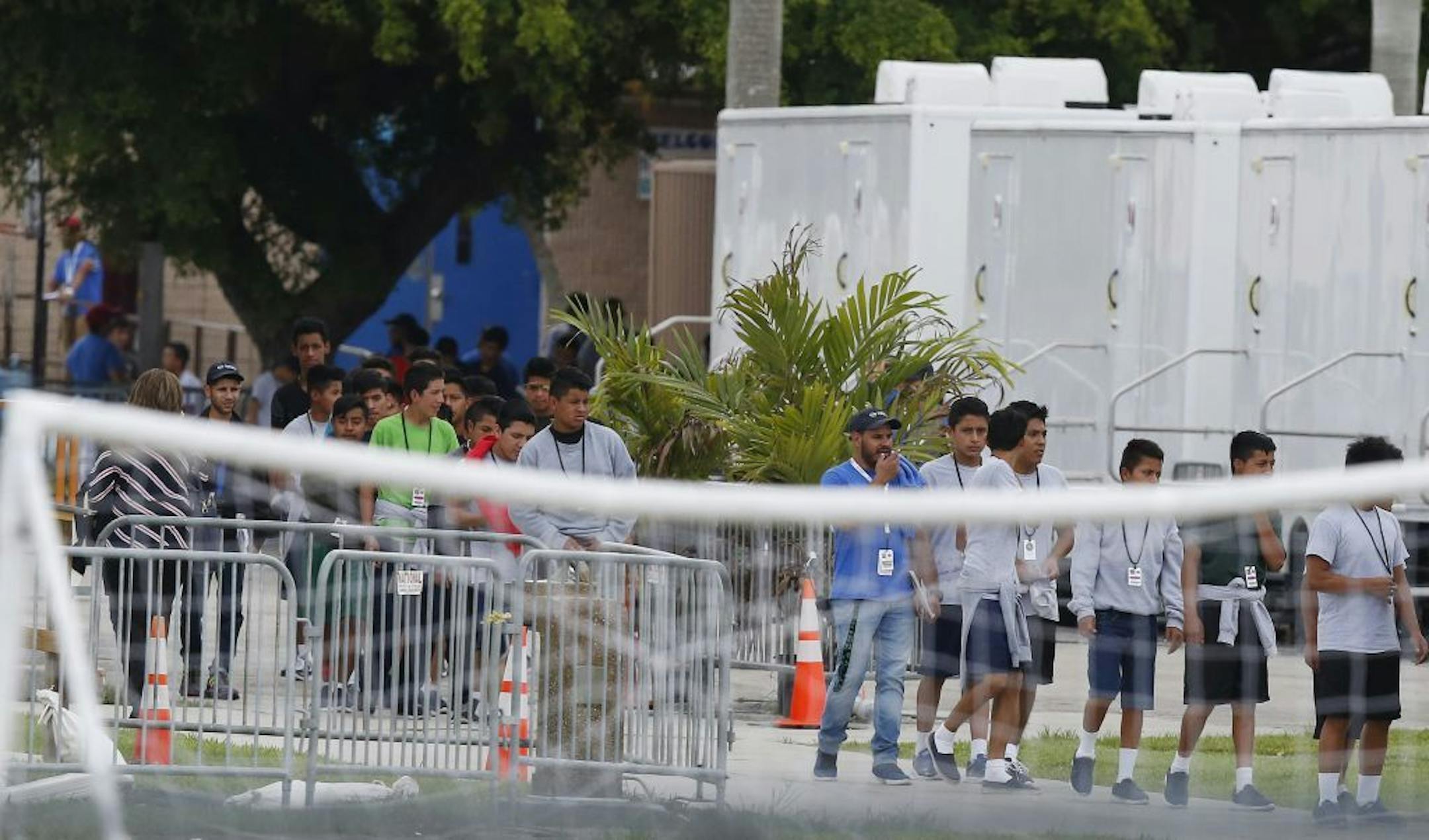
While in detention, the government regularly places the minors on multiple antidepressants, anti-anxiety and other psychotropic medications without telling them what the drugs are or consulting their parents, said lawyers from the Center for Human Rights and Constitutional Law and the National Center for Youth Law. If they refuse, they are told they will be denied release or privileges, or they are forcibly fed the drugs, they said.
After Trump's June 20 executive order to end family separation at the border, the Justice Department asked a federal judge in California to alter a 1997 national settlement agreement that bars immigration officials from detaining undocumented children for longer than 20 days so they can be held indefinitely with their families.
Trump further complicated things Sunday on Twitter by advocating immediate deportment without due process.
"We cannot allow all of these people to invade our country," he wrote on the social-media site. "When somebody comes in, we must immediately, with no judges or court cases, bring them back from where they came."
Previous administrations avoided the 20-day deadline entirely by releasing families after asking them to appear in court at a later date, according to Lee Gelernt, a lawyer at the American Civil Liberties Union. The Trump administration announced its "zero tolerance" policy in April — detaining families trying to cross the border without visas and separating the children from their parents. It now says that if the Los Angeles judge doesn't tweak the Flores settlement, as it's called, it will be forced to resume breaking up families.
Separate allegations in the 33-year-old lawsuit that led to the Flores settlement muddy things even further. Immigrant children in the care of the Health and Human Services Department are being locked up "without the most rudimentary procedural fairness" and are forced to take psychotropic drugs against their will and without their parents' consent, human rights lawyers allege.


