

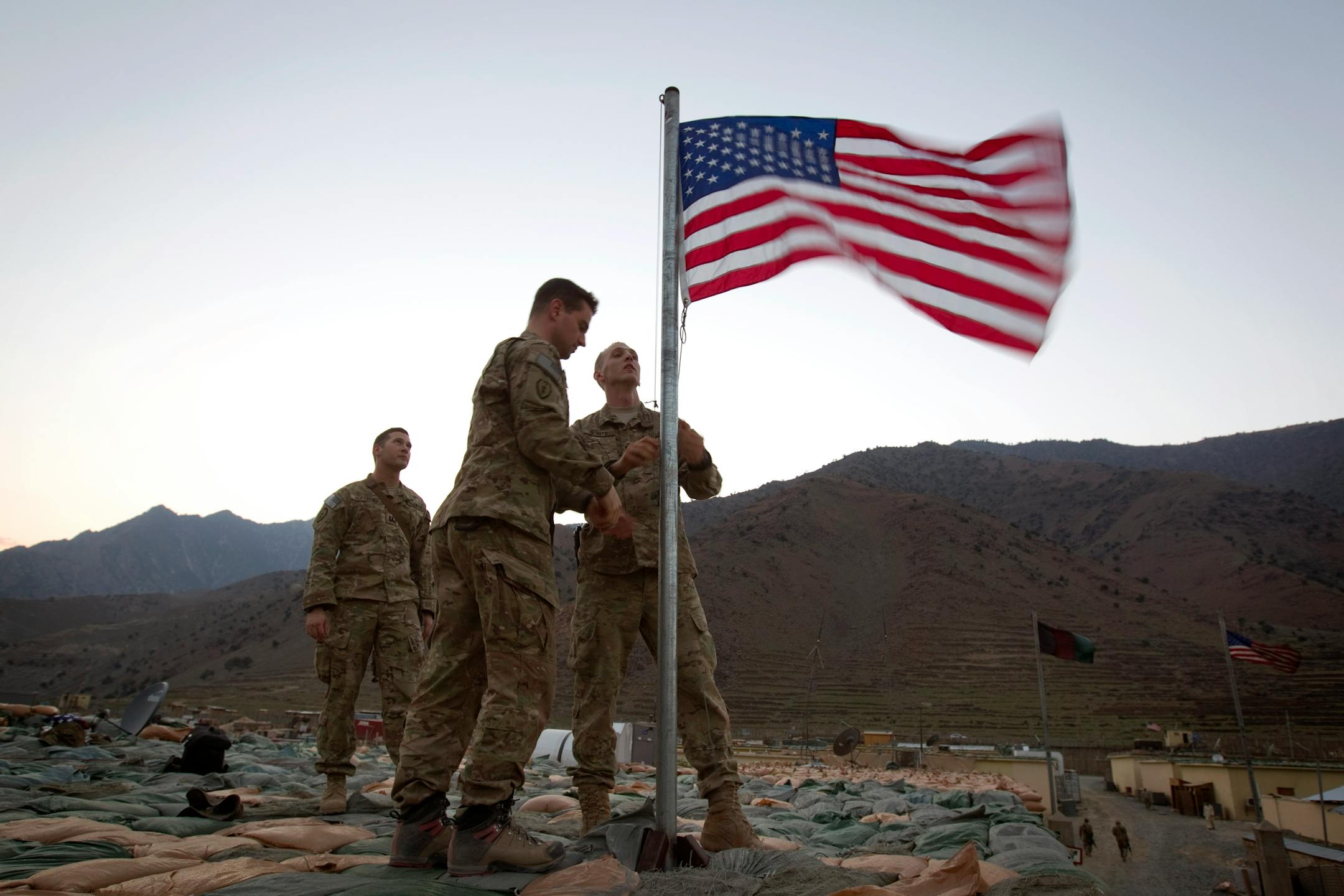
When President Jose Biden announced on Wednesday that the United States would withdraw all its troops from Afghanistan by Sept. 11, 2021, he appeared to be finally bringing this "forever war" to an end. Although I have waited for this moment for a decade, it is impossible to feel relief. The Sept. 11 attacks took place during my senior year of college, and the wars in Iraq and Afghanistan that followed consumed the entirety of my adult life. Although history books may mark this as the end of the Afghanistan war, it will never be over for many of my generation who fought.
Sometimes there are moments, no more than the span of a breath, when the smell of it returns and once again I'm stepping off the helicopter ramp into the valley. Covered in the ashen dust of the rotor wash, I take in for the first time the blend of wood fires burning from inside lattice-shaped mud compounds, flooded fields of poppies and corn, the sweat of the unwashed and the wet naps that failed to mask it, chicken and sheep and the occasional cow, the burn pit where trash and plastic smoldered through the day, curries slick with oil eaten by hand on carpeted dirt floors, and fresh bodies buried shallow, like IEDs, in the bitter earth.
It's sweet and earthy, familiar to the farm boys in the platoon who knew that blend of animal and human musk but alien to those of us used only to the city or the lush Southern woods we patrolled during training. Later, at the big bases far from the action, surrounded by gyms and chow halls and the expeditionary office park where the flag and field grade officers did their work, it was replaced by a cologne of machinery and order. Of common parts installed by low-bid contractors and the ocher windblown sand of the vast deserts where those behemoth bases were always located. Relatively safe after the long months at the frontier but dull and lifeless.
Then it's replaced by the sweet, artificial scents of home after the long plane ride back. Suddenly I'm on a cold American street littered with leaves. A couple passes by holding hands, a bottle of wine in a tote bag, dressed for a party, unaware of the veneer that preserves their carelessness.
I remain distant from them, trapped between past and present, in the same space you sometimes see in the eyes of the old-timers marching in Veterans Day parades with their folded caps covered in retired unit patches, wearing surplus uniforms they can't seem to take off. It's the space between their staring eyes and the cheering crowd where those of us who return from war abide.
My war ended in 2011, when I came home from Afghanistan eager to resume my life. I was in peak physical shape, had a college degree, had a half-year of saved paychecks and would receive an honorable discharge from the Marine Corps in a few months. I was free to do whatever I wanted, but I couldn't bring myself to do anything.
Initially I attributed it to jet lag, then to a need for well-deserved rest, but eventually there was no excuse. I returned to my friends and family, hoping I would feel differently. I did not.
"Relax. You earned it," they said. "There's plenty of time to figure out what's next." But figuring out the future felt like abandoning the past. It had been just a month since my last combat patrol, but I know now that years don't make a difference.


